
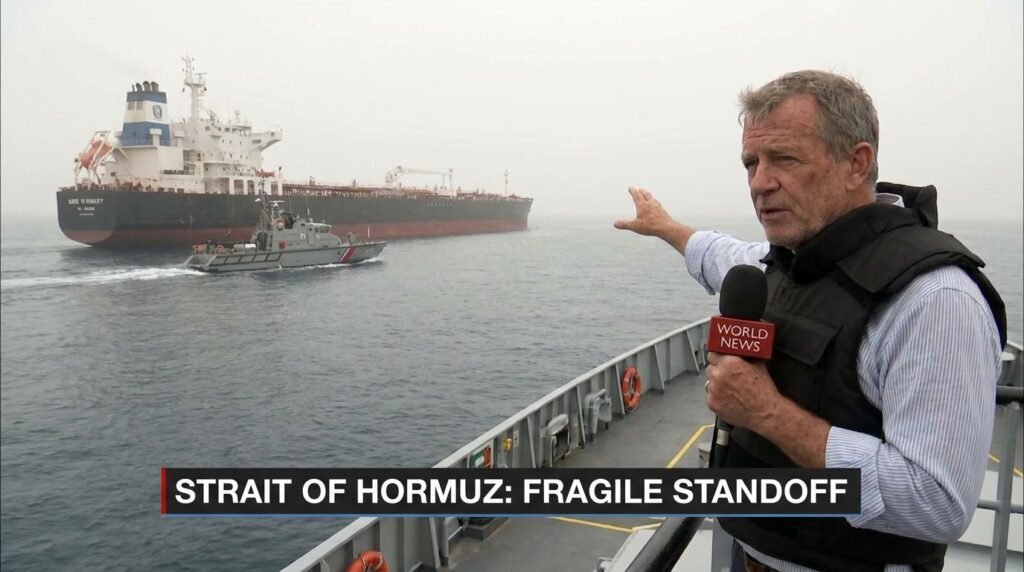
Strait of Hormuz News: Inside the Fragile Standoff Still Rattling Global Oil Markets
If you’ve been half-following headlines about the Strait of Hormuz over the past several months, here’s the short version of where things stand: a war that erupted between the United States, Israel, and Iran in late February 2026 turned this narrow stretch of water into the most contested shipping lane on the planet, and even now, with a ceasefire technically in place, tankers are still getting hit by missiles and nobody in the shipping industry is fully exhaling yet.
I’ve been tracking maritime security stories for years, and I can tell you this one is different from the periodic Hormuz scares of the past decade. This isn’t a case of Iran making threats and everyone waiting to see if they follow through. Ships have actually been struck, mines have actually been laid, and the global economy has actually felt it — at gas pumps, in fertilizer prices, and in grocery store aisles thousands of miles from the Persian Gulf. Let’s walk through what’s actually happened, what’s happening right now, and why this waterway keeps being the place where regional conflict turns into a worldwide economic headache.
What Is the Strait of Hormuz, and Why Does It Matter So Much?
The Strait of Hormuz is a narrow sea passage separating Iran to the north from Oman to the south, connecting the Persian Gulf to the Gulf of Oman and, from there, the open ocean. At its narrowest point it’s only about 21 miles wide, with the actual shipping lanes narrowed further by a system of traffic separation schemes designed to keep inbound and outbound tankers from colliding in waters Iran effectively borders on one side.
Before this year’s conflict, roughly a fifth of the world’s oil and liquefied natural gas moved through this channel every single day, alongside a sizable share of global fertilizer exports. <cite index=”7-1″>Before the war began, about a quarter of the world’s seaborne oil trade and a fifth of the world’s liquefied natural gas passed through the strait.</cite> There’s simply no other route that lets Gulf producers like Saudi Arabia, the UAE, Qatar, Kuwait, and Iraq get their oil and gas to Asian and European buyers without sailing thousands of extra miles around the Arabian Peninsula, which is a large part of why any disruption here sends shockwaves through energy markets almost instantly.
How the 2026 Crisis Started
This year’s crisis didn’t come out of nowhere. <cite index=”7-1″>Tensions between Iran, the United States, and Israel had been escalating in the lead-up to 2026, stemming from failed nuclear negotiations in Geneva and a prior 12-day air conflict in 2025.</cite> That earlier round of fighting in 2025 turned out to be a preview, not a resolution.
The real turning point came at the end of February. <cite index=”7-1″>On February 28, 2026, the United States and Israel launched coordinated airstrikes on Iran under an operation targeting military facilities, nuclear sites, and leadership, which resulted in the death of Iran’s Supreme Leader.</cite> Iran didn’t sit on its hands. <cite index=”7-1″>Iran responded with missile barrages on Israeli cities and US bases across the Gulf, including in the UAE, Qatar, and Bahrain, causing casualties and infrastructure damage, and the conflict expanded into Lebanon as Hezbollah launched rockets into Israel.</cite>
Within days, the fight moved onto the water. <cite index=”7-1″>On March 4, 2026, Iran announced that the Strait of Hormuz was “closed” and threatened to attack any ship attempting to pass through it.</cite> That wasn’t an idle threat, either — <cite index=”5-1″>by March 8, the UK Maritime Trade Operations Centre had already logged ten attacks on ships trying to transit the strait, with five crew members killed across two vessels.</cite>
Mines, Missiles, and a Selective Blockade
What made this closure unusual compared to past Hormuz scares was the mix of tactics Iran actually used rather than just threatened. <cite index=”5-1″>Reports from early March indicated Iran had laid fewer than ten mines in the strait during the conflict, prompting President Trump to warn on social media of severe military consequences if Iran didn’t remove them.</cite>
Iran also didn’t apply the blockade evenly. Instead, it built a system of exemptions based on political alignment. <cite index=”7-1″>On March 5, the IRGC announced Iran would keep the strait closed only to vessels tied to the US, Israel, and their Western allies, a position it reaffirmed a few days later.</cite> Turkey got an early break — <cite index=”7-1″>on March 13, Turkey’s transport minister said Iran had approved passage for a Turkish ship, and around the same time two Indian-flagged gas carriers and a Saudi oil tanker carrying a million barrels bound for India were also allowed through.</cite> By late March, the list of favored nations had expanded further: <cite index=”7-1″>on March 26, Iran’s foreign minister announced that ships owned by five countries — including China, Russia, India, Iraq, and Pakistan — would be permitted to transit the strait.</cite>
Meanwhile, the U.S. wasn’t just watching. <cite index=”5-1″>From April 13 to May 29, the United States simultaneously blockaded Iranian ports, turning the standoff into a two-directional siege of Gulf shipping lanes.</cite> On the military side, U.S. officials described near-total dominance early in the conflict — <cite index=”5-1″>CENTCOM’s commander reported at least 17 Iranian ships destroyed as of March 3, stating there wasn’t a single Iranian ship underway anywhere in the Gulf, the strait, or the Gulf of Oman.</cite>
The “Strait of Trump” Moment and the Confusing April Reopening
Amid the fighting, President Trump made headlines of his own by weighing in directly on the strait’s status and, at one point, floating the idea of a much bigger American role in it. <cite index=”3-1″>One CBS News report from early March quoted Trump saying the war was “very complete” and that he was considering having the US take over the Strait of Hormuz outright.</cite> Weeks later, he went further rhetorically, with CNBC reporting <cite index=”3-1″>that Trump referred to the waterway as the “Strait of Trump.”</cite>
Then came a genuinely confusing stretch in mid-April. Iran announced it was lifting its blockade, but the reopening didn’t actually restore normal shipping. <cite index=”3-1″>Shortly after Iran’s announcement, Trump posted on social media that the strait was completely open, but that the US naval blockade of Iranian ports would remain in force until negotiations concluded.</cite> Iran didn’t take that well. <cite index=”3-1″>On April 18, Iran said it had closed the Strait of Hormuz again in response to the US refusal to lift its own naval blockade.</cite> For a few days, shippers genuinely didn’t know whether the waterway was open or not, and CNBC even ran footage of vessels turning back mid-transit as the confusion played out in real time.
The Ceasefire, the MoU, and Why Attacks Kept Happening Anyway
By mid-June, exhaustion on all sides pushed things toward a preliminary deal. Oil markets reacted almost immediately, with prices tumbling on hopes the strait would fully reopen for the first time in nearly four months. <cite index=”13-1″>Crude prices, which had risen more than 50 percent during the conflict, were only about 7 percent above their pre-war level by the time the memorandum of understanding was being finalized in mid-June.</cite> The terms were straightforward in theory: <cite index=”13-1″>Iran was expected to end its near-total closure of the strait in exchange for the US lifting its blockade of Iranian ports, along with other concessions.</cite>
But signing a memorandum and actually restoring normal shipping turned out to be very different things. <cite index=”13-1″>More than 500 vessels were estimated to be waiting to exit the Gulf through the strait once the deal was announced, and clearing naval mines from the channel was expected to take weeks at minimum.</cite> Traffic did pick up — <cite index=”10-1″>by mid-to-late June, 70 vessels transited the waterway in a single day, more than double the previous day’s count and the highest figure since March 1</cite> — but the recovery was fragile from the start.
It didn’t take long for that fragility to show. <cite index=”10-1″>The International Maritime Organization had to suspend its planned evacuation of stranded ships after a cargo vessel reported being struck by an unidentified projectile while crossing the strait near the Omani coast, an attack US officials attributed to Iran.</cite> Iran’s own messaging afterward made clear it still considered itself the gatekeeper of the waterway: <cite index=”10-1″>the Persian Gulf Strait Authority, which claims regulatory authority over shipping through Hormuz, warned that any vessel using routes outside its designated framework would not be guaranteed safe passage.</cite>
Where Things Stand Right Now
This is where the story gets genuinely current, because as of this month, the ceasefire is looking shakier than at any point since it was signed. On June 27 and 28, fighting flared again despite the deal. <cite index=”9-1″>US Central Command announced strikes against Iran over that weekend, citing Iranian attacks on two commercial vessels transiting the strait, and Iran responded by launching missiles and drones at US military assets in Bahrain and Kuwait.</cite> The two sides talked their way back from the brink within days, agreeing to resume negotiations in Doha, though markets noticed the whiplash — <cite index=”9-1″>Brent crude climbed roughly 0.9 percent afterward as traders were reminded that the earlier ceasefire optimism had priced in more stability than the situation actually supported.</cite>
Then, in the first week of July, the situation deteriorated further and more seriously than at any point since the initial MoU. <cite index=”1-1″>A tanker caught fire off the coast of Oman after being struck by an unknown projectile in the strait, while separate reporting citing US officials said Iran’s Revolutionary Guard fired at least two missiles at commercial ships transiting the waterway that same night.</cite> The following morning brought a third strike: <cite index=”2-1″>the IRGC attacked a third commercial ship on Tuesday morning, according to a US official, with the attacks threatening to unravel a memorandum of understanding that had been signed less than three weeks earlier.</cite> Specific vessels were named in the days that followed — <cite index=”4-1″>a gas carrier called the Al Rekayyat was struck in the early hours of that Tuesday, and a Saudi crude oil tanker was separately damaged while leaving the strait.</cite>
Despite all of that, shipping data tells a more complicated story than pure panic. <cite index=”1-1″>Traffic through Hormuz actually showed what one data firm described as “resilience,” with 108 verified crossings logged over the weekend surrounding the attacks, broken down as 43 crossings on July 3, 34 on July 4, and 31 on July 5.</cite> That’s still well below the roughly 120 to 140 vessels that transited daily before the war, but it’s a far cry from the near-total shutdown of the conflict’s worst weeks, when <cite index=”1-1″>traffic collapsed to as few as two tankers a day at the height of the fighting.</cite>
Why Iran Restricted the Strait So Selectively
One detail that consistently confuses casual observers is why some ships got through during the worst of the closure while others didn’t. It wasn’t random. <cite index=”1-1″>Since early March, Iran had restricted shipping through the strait, at times allowing passage only to vessels from select countries that were required to negotiate transit directly with the Revolutionary Guard, with some operators reportedly paying as much as $2 million per ship at one point during the war.</cite>
That pay-to-pass dynamic, combined with the shifting list of “friendly” nations mentioned earlier, effectively turned Hormuz into a waterway where geopolitics determined maritime access on a ship-by-ship basis — something with very few precedents in modern shipping history.
The Ripple Effects: Oil, Gas, Food, and Everyday Prices
The economic fallout from all of this went well beyond oil traders watching screens in Singapore and London. <cite index=”6-1″>The closure of the strait and attacks on energy infrastructure across Iran and several Gulf Cooperation Council countries caused a large disruption in global oil supplies, pushing prices higher and triggering fuel shortages in countries that imported most of their fuel from the Persian Gulf region.</cite> The scale of it, according to energy officials, was historic. <cite index=”6-1″>Brent crude surged 10 to 13 percent to around $80 to $82 a barrel by early March before easing back toward $70 by July, in what the International Energy Agency characterized as the largest supply disruption in the history of the global oil market.</cite>
American consumers felt it directly at the pump. <cite index=”6-1″>US gas prices rose $1.16 a gallon since the war began, with forecasts warning of $5 a gallon if the strait wasn’t reopened by mid-April, while California saw gasoline top $6 a gallon in seven counties by late March.</cite> Air travel wasn’t spared either — <cite index=”6-1″>jet fuel in North America spiked 95 percent since the war began, pushing multiple airlines to raise checked-baggage fees, and delivery services including the Postal Service, Amazon, and FedEx added fuel surcharges.</cite> One airline didn’t survive the pressure at all: <cite index=”6-1″>Spirit Airlines ceased all operations on May 2 citing rising fuel costs, despite efforts by the Trump administration to keep the carrier afloat.</cite>
The pain wasn’t evenly distributed globally, either. <cite index=”6-1″>Asian countries remained the primary destination for Gulf crude, with nearly 70 percent of the oil moving through the strait heading to China, India, Japan, and South Korea, and Bangladesh in particular was projected to see recession-like conditions from the disruption.</cite> India took emergency action to protect its own fuel supply, <cite index=”6-1″>raising export duties on diesel and aviation fuel while its refiners increasingly turned to Russian crude to make up for disrupted Middle East supplies.</cite>
Food and fertilizer markets got hit too, which is easy to overlook in a story that’s mostly framed around oil. <cite index=”8-1″>Iraq, where oil and gas account for roughly 90 percent of state budget income, saw about 90 percent of its food, goods, and medicine imports also pass through the Strait of Hormuz, making it one of the hardest-hit economies in the entire conflict.</cite> Grain shipments backed up at sea as the fighting dragged on — <cite index=”8-1″>by March 6, nine grain ships bound for Iran’s main import harbor were sitting outside the strait, unable to complete their voyage.</cite>
Strait of Hormuz Crisis: Key Facts at a Glance
| Category | Detail |
|---|---|
| Conflict start date | February 28, 2026 |
| Share of global oil trade through the strait (pre-war) | Roughly 20–25% |
| Share of global LNG through the strait (pre-war) | Roughly 20% |
| Peak Brent crude price during the war | Approximately $80–83 per barrel |
| Lowest daily tanker traffic during closure | As few as 2 tankers per day |
| Pre-war average daily crossings | 120–140 vessels |
| Verified crossings, weekend of July 3–5, 2026 | 108 vessels |
| Estimated mines laid by Iran | Fewer than 10 |
| Countries granted “friendly” transit status | China, Russia, India, Iraq, Pakistan, Turkey (at various points) |
| U.S. blockade of Iranian ports | April 13 – May 29, 2026 |
Common Misconceptions About the Strait of Hormuz Crisis
A lot of casual coverage flattens this into a simple “Iran closed the strait, now it’s open” narrative, and that’s not really accurate. The closure was never absolute — it was a shifting, negotiated, and at times monetized system of exemptions rather than a blanket shutdown. It’s also a myth that the June ceasefire ended the danger; attacks have continued sporadically well after the memorandum of understanding was signed, including the serious flare-up in the first week of July. And while people often assume tanker traffic either fully stopped or fully resumed, the reality has moved in stages, with numbers recovering gradually rather than snapping back overnight.
Why This Keeps Happening: The Bigger Strategic Picture
None of this is actually new territory for the Strait of Hormuz — it’s just the most severe version yet of a recurring pattern. Iran has used the threat or reality of disrupting the strait as leverage before, including during the 1988 tanker war era and disputes in 2011-2012 and 2019. What’s different this time is the scale of direct military engagement layered on top of it, plus the sheer duration — months rather than days or weeks of disrupted shipping.
Gulf states aren’t waiting around for the next crisis, either. <cite index=”8-1″>Saudi Arabia is considering expanding its decades-old East-West pipeline, which currently delivers seven million barrels of oil a day to the Red Sea port of Yanbu, entirely bypassing Hormuz.</cite> There’s also renewed momentum behind alternative trade corridors that don’t depend on the strait at all, reflecting a broader recognition among regional governments that this chokepoint’s vulnerability isn’t going away just because one conflict eventually cools down.
What Comes Next
Nobody serious is predicting a clean, permanent resolution in the immediate term. The pattern so far has been ceasefire, attack, renewed talks, repeat — and the early July escalation suggests that cycle hasn’t broken yet. Shipping data showing resilience in crossings is a genuinely hopeful sign, but insurers, tanker operators, and energy traders are all still pricing in real risk rather than treating the memorandum of understanding as a done deal. Given how quickly this situation has shifted week to week, anyone making decisions based on the strait’s status right now should check the latest reporting rather than assuming today’s news will still be accurate next week.
Frequently Asked Questions
Is the Strait of Hormuz open right now? Traffic has partially recovered from the near-total shutdown earlier in the war, with over 100 verified crossings in the first week of July 2026, but the waterway remains subject to sporadic attacks and is not operating at pre-war capacity.
Why did Iran close the Strait of Hormuz in 2026? Iran declared the strait closed on March 4, 2026, in retaliation after the United States and Israel launched coordinated military strikes on Iranian targets on February 28, 2026.
How much oil passes through the Strait of Hormuz normally? In peacetime, roughly one-fifth to one-quarter of the world’s seaborne oil trade and about a fifth of global liquefied natural gas moves through the strait daily.
Did Iran actually attack ships, or just threaten to? Iran carried out real attacks, including missile strikes, boardings, and mine-laying, with the UK Maritime Trade Operations Centre documenting over a dozen attacks and multiple crew fatalities during the conflict’s early weeks.
What is the memorandum of understanding between the US and Iran? It’s a preliminary agreement reached in mid-June 2026 under which Iran agreed to halt attacks in the Strait of Hormuz in exchange for the US lifting its blockade of Iranian ports, though implementation has been repeatedly tested by renewed attacks.
Why do gas prices in the US go up because of a conflict near Iran? Global oil is priced on international markets, so a major supply disruption anywhere, especially through a chokepoint carrying a fifth of world oil trade, pushes up prices everywhere, including at American pumps.
Which countries were allowed to keep shipping through the strait during the closure? At various points, Iran granted exemptions to vessels from China, Russia, India, Iraq, Pakistan, and Turkey, while continuing to target ships linked to the US, Israel, and their allies.
How did the war affect countries outside the Middle East? Impacts included fuel shortages and panic buying in Vietnam, LPG shortages in India, a second potential energy crisis for Europe tied to disrupted Qatari LNG, and recession-like pressure in import-dependent economies like Bangladesh.
Are there alternatives to shipping oil through the Strait of Hormuz? Yes, though limited. Saudi Arabia’s East-West pipeline can move oil to the Red Sea bypassing Hormuz entirely, and regional planners have renewed interest in land-based trade corridors that avoid the strait altogether.
What does “Strait of Trump” refer to? It’s a phrase President Trump used publicly when discussing a potential expanded US role in controlling or securing the Strait of Hormuz during the conflict, as reported by CNBC in late March 2026.
Could the Strait of Hormuz close again? Given the pattern of attacks continuing even after the June ceasefire, including a serious escalation in early July, analysts consider renewed disruption a real possibility rather than a resolved risk.
How long did the worst of the shipping disruption last? Tanker traffic remained severely reduced for roughly four months, from the war’s start in late February through the mid-June memorandum of understanding, with meaningful recovery only beginning afterward.
Final Thoughts
The Strait of Hormuz has always been a geographic accident with outsized geopolitical weight — a narrow channel that happens to sit between a fifth of the world’s oil supply and the rest of the planet. What’s happened since February 2026 is the clearest demonstration in decades of just how quickly that geography can turn into a global economic event, from missile strikes on individual tankers to gas prices spiking in California and LPG shortages in Indian households thousands of miles away. The memorandum of understanding signed in June bought a fragile pause, but the attacks that followed it, right up through the first week of July, show that pause hasn’t turned into peace. For now, the safest assumption for anyone watching this space is that the story isn’t over, and the next update could come at any time.