



US-Iran War Escalation: How the Strait of Hormuz Crisis Impacts Global Shipping and Energy
If you have been watching the news lately, you know that the situation in the Middle East is reaching a boiling point. The strategic waters of the Persian Gulf are once again the epicenter of intense geopolitical friction, and the stakes could not be higher for global trade. The latest reports regarding the US-Iran war escalation indicate a dangerous shift from diplomatic stalemates to direct, kinetic naval confrontations.
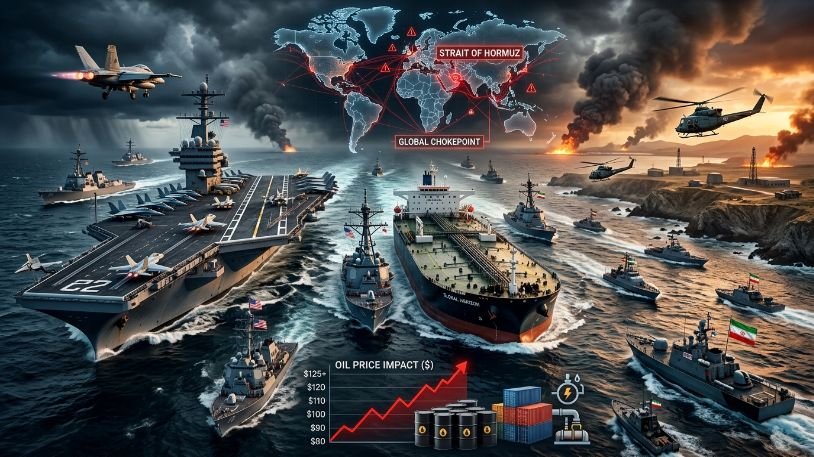
With Al Jazeera and international maritime monitors reporting intensifying direct friction between the United States and Iran, the reality of a “dual blockade” is heavily impacting commercial shipping. The US military recently confirmed it fired upon and disabled a non-compliant tanker attempting to avoid blockades. Meanwhile, Iran’s Islamic Revolutionary Guard Corps (IRGC) announced it intercepted and stopped four transit vessels attempting to navigate through the Strait of Hormuz.
But what does this escalating conflict mean for everyday consumers, international businesses, and the global energy market? Let us break down the recent events, understand the roots of the current crisis, and explore the far-reaching economic consequences.
The Breaking Point: Recent Naval Clashes in the Strait of Hormuz
The Strait of Hormuz is one of the world’s most critical maritime chokepoints. At its narrowest, it is only 34 kilometers wide, yet it accommodates roughly 20% of the world’s global seaborne oil trade. Over the past 24 hours, the already volatile situation has turned into a high-stakes maritime standoff.
The US Military’s Aggressive Blockade Enforcement
The United States has reinstated a strict naval blockade targeting all traffic traveling to and from Iranian ports. To enforce this, US Central Command has taken direct military action. On July 15, 2026, US aircraft fired Hellfire missiles into the smokestack of the Belma, a Curacao-flagged tanker.
According to military officials, the unladen vessel was observed transiting international waters toward Kharg Island and ignored multiple warnings to alter its course. By disabling the ship, the US has sent a clear message that it will strictly enforce its blockade. This recent strike brings back memories of earlier enforcement actions; during a previous phase of the blockade, Central Command reported disabling five commercial vessels and redirecting over a hundred others.
Iran’s IRGC and the “Omani Coast” Dispute
Iran is not backing down. The IRGC has aggressively defended what it considers its territorial waters and its right to control strait traffic. State television recently broadcasted a statement from the Guards confirming that their forces stopped four ships attempting to transit the strategic waterway.
The IRGC Navy fired warning shots, forcing the vessels to alter their course. According to Iranian authorities, these ships were attempting to navigate an “illegal and unsafe route” through the southern area of the Strait of Hormuz. This incident highlights a specific tactical dispute: the US has been encouraging vessels to use a widened route hugging the Omani coast, while Iran is using military pressure to force ships into its own waters where it can dictate terms and exact tolls for safe passage.
What Led to the Current US-Iran War Escalation?
To truly grasp the magnitude of these recent skirmishes, we have to look at the broader timeline of the 2026 crisis. The recent naval friction is not an isolated event but rather the latest chapter in a rapidly deteriorating relationship.
A Timeline of the 2026 Naval Standoff
The current crisis traces its origins back to late February 2026, when coordinated US and Israeli airstrikes on Iranian facilities ignited a broader conflict. Iran retaliated by largely blocking shipping traffic through the strait, utilizing a combination of speed boat swarms, drones, and sea mines to deter commercial vessels.
In mid-April, the US responded by blockading Iranian ports, effectively creating a “dual blockade” scenario where neither side’s preferred maritime traffic could easily pass. While a temporary ceasefire was signed in June 2026 by US and Iranian leadership, the truce completely broke down by early July. The breakdown occurred after the US-overseen Joint Maritime Information Center announced a widened transit route near Oman, which Iran viewed as a direct challenge to its sovereignty over the waterway. Since then, tit-for-tat strikes have resumed, leaving commercial shipping caught in the crossfire.
The Economic Shockwaves: Energy Markets and Global Shipping
When the Strait of Hormuz sneezes, the global economy catches a cold. The economic ramifications of this US-Iran war escalation are vast, affecting everything from international logistics to the price you pay at the gas pump.
How the Dual Blockade Affects Oil Prices
Before the war began, approximately 20 million barrels of oil passed through the strait every single day. A significant portion of the world’s liquefied natural gas (LNG), particularly from Qatar, also relies on this route to reach European and Asian markets.
Because of the ongoing conflict and the subsequent drop in tanker traffic, energy markets have experienced historic volatility. In March 2026, the world saw the largest-ever monthly increase in oil prices, with Brent crude briefly surpassing US$126 per barrel. While markets eventually adjusted, the recent resumption of hostiles and the disabling of tankers like the Belma have reintroduced a massive risk premium into global energy pricing. If the situation continues to degrade, analysts warn we could see prolonged supply shortages reminiscent of the 1970s energy crisis.
Impact on International Supply Chains
The danger in the Strait of Hormuz goes beyond oil. Thousands of mariners and commercial vessels have been stranded or forced to take incredibly long, expensive detours.
When a maritime choke point is compromised, the ripple effects are felt across the entire supply chain:
- Skyrocketing Insurance Premiums: War risk premiums for vessels entering the Persian Gulf have surged. Some insurers are refusing coverage altogether for ships taking the northern route near Iran.
- Delayed Deliveries: Ships that manage to secure insurance often have to wait for military escorts, adding weeks to delivery schedules.
- Increased Freight Costs: The combination of higher insurance, longer wait times, and the physical danger to crews has pushed freight rates to astronomical levels. These costs are ultimately passed down to consumers, fueling global inflation.
Practical Insights for Shipping Companies and Global Businesses
Navigating a business through a geopolitical crisis requires agility and foresight. For shipping companies, logistics managers, and businesses reliant on Middle Eastern imports, the current environment demands a proactive approach.
Here are several actionable tips and insights to help mitigate the risks associated with the Strait of Hormuz crisis:
- Diversify Supply Routes: If your business heavily relies on oil, petrochemicals, or goods transiting the Persian Gulf, it is time to look at alternative sourcing. While replacing Middle Eastern energy supplies entirely is nearly impossible in the short term, diversifying your suppliers across different geographic regions can cushion the blow of sudden price spikes.
- Enhance Maritime Intelligence: Shipping operators must rely on real-time intelligence. Organizations like the Joint Maritime Information Center (JMIC) provide crucial updates on safe corridors. However, as recent events show, even routes deemed “safe” by one faction can be targeted by another. Vessel captains must be briefed daily on the shifting zones of control.
- Invest in GNSS Anti-Jamming Technology: Iran has been documented using satellite spoofing and GNSS (Global Navigation Satellite System) jamming to confuse ships and lure them into territorial waters. Upgrading vessel navigation systems to detect and resist spoofing is no longer optional; it is a critical safety requirement.
- Prepare for Long-Term Volatility: This is not a dispute that will be resolved overnight. The ideological and strategic differences between the US and Iran are deeply entrenched. Businesses should stress-test their financial models against sustained high energy prices and prolonged supply chain disruptions extending well into 2027.
Looking Ahead: Can the Crisis Be Contained?
The immediate future of the Strait of Hormuz remains highly uncertain. The US military has shown no hesitation in using precision munitions to enforce its blockade, and Iran’s IRGC appears equally committed to asserting its dominance through the interception of transit vessels.
Diplomatic channels, while currently strained, offer the only realistic off-ramp. Previous attempts at memorandums and ceasefires, such as the Islamabad Talks, have faltered due to a lack of trust and overlapping regional conflicts. For a lasting peace to take hold, a comprehensive agreement that addresses both naval security and the broader political grievances between the US, Israel, and Iran will be necessary. Until then, commercial shipping companies find themselves navigating a literal minefield.
Conclusion
The ongoing US-Iran war escalation in the Strait of Hormuz is much more than a regional political dispute; it is a critical threat to global economic stability. The recent confirmations that the US military disabled a tanker to enforce its blockade, coupled with the IRGC’s interception of four transit vessels, signify a dangerous new phase in this conflict.
As military forces clash over control of the Omani coast routes and the dual blockades tighten, the global supply of oil and natural gas remains incredibly vulnerable. For international businesses, understanding these geopolitical shifts is essential for managing supply chain risks and bracing for energy market volatility.
If you found this analysis helpful, we encourage you to stay informed by exploring our other articles on global shipping logistics, Middle Eastern geopolitics, and strategies for navigating supply chain disruptions. Staying ahead of the news is the best way to prepare for an unpredictable future.