



Why Are People Protesting in Azad Kashmir? The 2026 Crisis Explained
Azad Kashmir has once again become the focus of regional attention as widespread protests continue across several districts in 2026. Demonstrations involving students, traders, civil society groups, political activists, and local residents have raised serious questions about governance, economic conditions, and public trust in the region’s institutions.
The protests are not driven by a single issue. Instead, they reflect a combination of long-standing economic concerns, demands for greater political accountability, dissatisfaction with public services, and calls for reforms. While each protest movement has its own local context, together they highlight broader frustrations that have been building over time.
Understanding why people are protesting in Azad Kashmir requires looking beyond the headlines. This article explains the background of the 2026 crisis, the key reasons behind the demonstrations, the government’s response, and what these developments could mean for the future of the region.
Understanding the 2026 Azad Kashmir Protests
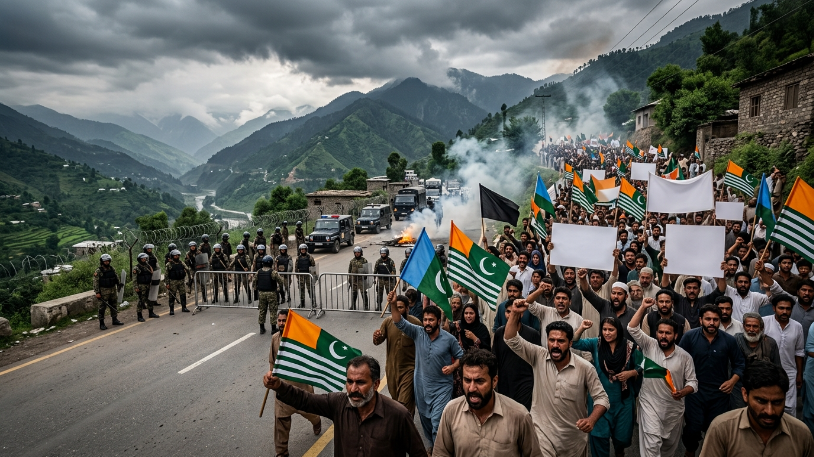
The 2026 protests represent one of the largest waves of public demonstrations witnessed in Azad Kashmir in recent years. Protest activity has spread across multiple towns and cities, with thousands of people participating in rallies, sit-ins, and peaceful marches.
Unlike isolated demonstrations focused on a single policy decision, the current movement combines several grievances that affect everyday life. Economic pressure, rising living costs, unemployment, electricity pricing, governance concerns, and political representation have all contributed to growing public frustration.
Social media has also played an important role by allowing protesters to organise quickly, share updates, and broadcast events to both domestic and international audiences.
Why Are People Protesting in Azad Kashmir?
Several interconnected factors have fuelled the protests.
1. Rising Cost of Living
One of the biggest concerns among residents is the increasing cost of basic necessities.
Many households have struggled with:
- Higher food prices
- Increased transportation costs
- Rising utility expenses
- Inflation reducing purchasing power
For families already facing limited employment opportunities, these economic pressures have become increasingly difficult to manage.
2. Electricity and Utility Issues
Electricity pricing has become a major source of public dissatisfaction.
Many residents argue that despite the region producing significant hydroelectric power, local communities continue to face:
- High electricity bills
- Frequent power outages
- Load management issues
- Limited infrastructure improvements
Protesters believe local populations should receive greater benefits from the natural resources generated within the region.
3. Unemployment Among Young People
Youth unemployment remains another important issue.
Graduates often report difficulties finding stable jobs despite obtaining higher education.
Many young people argue that:
- Government vacancies remain limited.
- Private-sector investment is insufficient.
- Economic opportunities continue to lag behind other regions.
This has created frustration among educated young adults who feel their career prospects remain uncertain.
4. Demands for Better Governance
Many protesters have also called for greater transparency and accountability in public administration.
Common demands include:
- Improved public services
- Efficient government spending
- Stronger anti-corruption measures
- Faster administrative reforms
- Better delivery of healthcare and education
These governance concerns have expanded the movement beyond purely economic issues.
The Political Dimension of the Crisis
Although economic issues sparked much of the public frustration, political developments have also influenced the protests.
Opposition groups, civil society organisations, and various political voices have expressed differing opinions regarding government policies and administrative decisions.
Some protesters argue that public consultation should play a larger role before implementing major policy changes affecting everyday citizens.
At the same time, government officials have emphasised the importance of maintaining law and order while continuing discussions with community representatives.
The political debate surrounding the protests has therefore become almost as significant as the original economic grievances.
How Social Media Has Shaped the Movement
The 2026 protests have demonstrated the growing influence of digital platforms.
Videos, photographs, and live broadcasts have spread rapidly across social media, allowing developments to reach audiences far beyond Azad Kashmir.
Social media has helped protesters:
- Organise demonstrations
- Share information quickly
- Highlight local concerns
- Coordinate peaceful gatherings
- Gain national and international attention
However, it has also contributed to misinformation, making fact-checking more important than ever.
Readers should rely on verified news sources when following fast-moving events.
Government Response
Authorities have adopted several approaches in response to the demonstrations.
These have included:
Public Statements
Government officials have acknowledged public concerns while appealing for calm and peaceful dialogue.
Security Measures
Law enforcement agencies have been deployed in several areas to maintain public order and protect government buildings.
Dialogue With Representatives
In some cases, discussions have taken place between officials and protest organisers regarding economic demands and policy reforms.
The effectiveness of these negotiations will likely determine whether tensions ease in the coming months.
Economic Impact of the Protests
Large-scale demonstrations inevitably affect local economies.
Some noticeable consequences include:
Business Disruptions
Temporary road closures and strikes have affected local businesses, markets, and transportation networks.
Tourism Concerns
Azad Kashmir is known for its mountains, lakes, and scenic landscapes.
Extended political unrest may discourage domestic and international tourism, affecting hotels, restaurants, transport operators, and small businesses that depend on visitors.
Investment Confidence
Political uncertainty often causes investors to delay new projects until conditions become more stable.
Reduced investment may further limit employment opportunities.
How the Situation Compares to Previous Movements
The 2026 protests differ from earlier demonstrations in several important ways.
| Earlier Protests | 2026 Crisis |
|---|---|
| Mostly localised | Region-wide participation |
| Limited online coordination | Extensive social media mobilisation |
| Focus on individual issues | Multiple economic and political concerns |
| Smaller public gatherings | Larger coordinated demonstrations |
This broader participation has made the current movement one of the most closely watched developments in recent years.
What Do Protesters Want?
Although demands vary between different groups, several common themes continue to emerge.
Many protesters are calling for:
- Reduced financial pressure on households
- Affordable electricity
- Employment opportunities
- Better governance
- Transparent decision-making
- Improved public services
- Economic reforms
- Greater accountability
These issues extend beyond short-term concerns and reflect broader aspirations for long-term development.
Possible Future Scenarios
Several outcomes remain possible depending on how negotiations progress.
Successful Dialogue
If constructive discussions continue, authorities may introduce reforms addressing some public concerns.
This could reduce tensions and restore confidence.
Continued Demonstrations
If protesters believe their demands are not being adequately addressed, demonstrations could continue for an extended period.
Policy Reforms
Governments sometimes respond to sustained public pressure by reviewing pricing policies, administrative structures, or development programmes.
Whether such reforms emerge remains to be seen.
Why This Matters Beyond Azad Kashmir
The events of 2026 are attracting attention far beyond the region itself.
Political analysts, economists, and regional observers are watching closely because the protests highlight wider challenges facing many developing regions, including:
- Rising inflation
- Youth unemployment
- Governance expectations
- Public accountability
- Economic inequality
The situation demonstrates how local economic pressures can evolve into broader political movements when communities feel their concerns remain unresolved.
Key Takeaways
The 2026 Azad Kashmir protests are the result of multiple interconnected issues rather than a single event. Economic hardship, rising living costs, unemployment, electricity-related concerns, and demands for greater transparency have combined to create widespread public dissatisfaction.
While governments and protest representatives continue discussions, the coming months will likely determine whether meaningful reforms emerge or whether demonstrations continue. Regardless of the eventual outcome, the crisis has already become an important example of how economic pressures and governance concerns can shape public movements in today’s interconnected world.
For readers seeking to understand regional politics, South Asian affairs, or emerging economic challenges, following developments in Azad Kashmir offers valuable insight into the complex relationship between public expectations, government policy, and social change.