

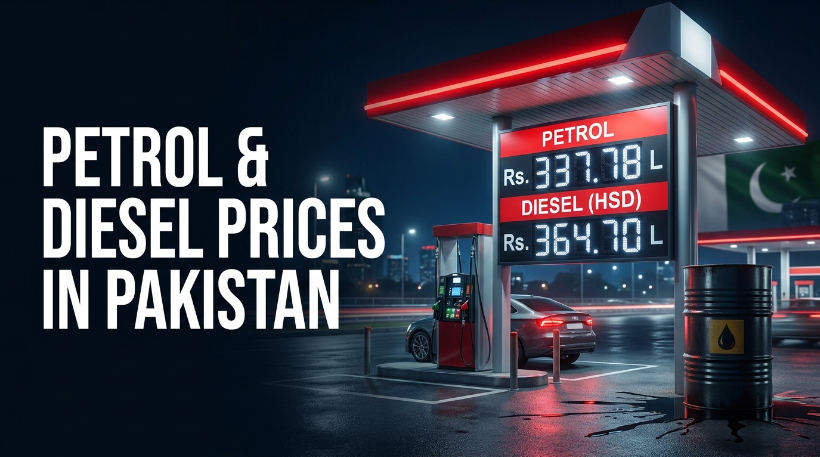
Fuel prices in Pakistan can change quickly, making diesel and petroleum prices in Pakistan an important topic for drivers, businesses, transporters, farmers, and households. As of August 21, 2026, petrol is priced at Rs. 337.78 per litre, while High-Speed Diesel (HSD) is selling at Rs. 364.70 per litre. These rates are part of Pakistan’s increasingly frequent fuel-pricing mechanism, which reflects changes in international oil markets and other pricing factors. (Geo News)
For consumers, fuel prices are more than just a number displayed at a petrol station. Changes in petrol and diesel rates can influence transportation costs, food prices, delivery charges, electricity generation expenses, and the overall cost of doing business. Understanding how petroleum prices in Pakistan are determined can therefore help consumers make better financial decisions.
Latest Diesel and Petroleum Prices in Pakistan
As of August 21, 2026, the latest officially announced retail rates are:
| Petroleum Product | Price per Litre |
|---|---|
| Petrol | Rs. 337.78 |
| High-Speed Diesel (HSD) | Rs. 364.70 |
The latest revision increased petrol by 27 paisas per litre and HSD by Rs. 1.64 per litre. The revised prices were announced for August 21 under the current pricing mechanism. (The Express Tribune)
The latest figures are particularly notable because diesel prices had changed sharply just one day earlier. On August 20, the government reduced HSD by Rs. 32.63 per litre, bringing it down to Rs. 363.06, while petrol increased by Rs. 2.97 to Rs. 337.51. (Dawn)
This shows how quickly petrol and diesel prices in Pakistan can move when market conditions and pricing calculations change.
Why Do Petrol and Diesel Prices Change in Pakistan?
Fuel prices are influenced by several factors rather than being determined by one single number. The international price of crude oil and petroleum products is one of the most important factors.
International Oil Prices
Pakistan imports a significant portion of the petroleum products and crude oil required to meet domestic demand. When international oil prices rise, the cost of importing fuel generally increases. If global prices fall, there can be room for lower domestic fuel prices, although the final retail price also depends on taxes, exchange rates, margins, and other components.
Global geopolitical developments can make these changes even more dramatic. Earlier in 2026, petroleum prices in Pakistan moved sharply as international markets reacted to tensions involving the United States and Iran. Petrol eventually reached a peak of Rs. 458.41 per litre, while HSD reached Rs. 520.35 per litre on April 3. (Dawn)
Exchange Rate and Import Costs
The value of the Pakistani rupee also matters. Since international oil transactions are generally conducted in U.S. dollars, a weaker rupee can increase the local-currency cost of imported petroleum.
This means that even if international crude prices remain relatively stable, changes in the exchange rate can affect the cost of fuel in Pakistan.
Taxes and Government Levies
Taxes and petroleum-related duties are another major component of the retail price.
According to the latest reported rates, the government is charging Rs. 114 per litre in taxes and duties on petrol and Rs. 100 per litre on HSD. (Dawn)
Consequently, the price consumers see at a fuel station is not simply the international cost of crude oil converted into Pakistani rupees. Several additional components contribute to the final price.
Petrol vs Diesel: Which Fuel Is More Expensive?
At the latest rates, diesel is more expensive than petrol.
Petrol currently costs Rs. 337.78 per litre, while HSD costs Rs. 364.70 per litre. That means diesel is approximately Rs. 26.92 per litre more expensive than petrol.
However, the difference between petrol and diesel prices can change frequently. In fact, the latest revisions demonstrate how quickly the gap can widen or narrow.
Petrol is commonly used by private cars, motorcycles, and many small vehicles. Diesel, meanwhile, is particularly important for trucks, buses, agricultural machinery, generators, and commercial transportation.
Because diesel powers much of Pakistan’s commercial transport sector, changes in its price can have a broader impact on the economy than the price movement alone might suggest.
How Higher Fuel Prices Affect Everyday Life
A change of a few rupees per litre may appear small when looking only at one vehicle’s fuel tank. However, the economic impact becomes much larger when millions of vehicles and businesses are involved.
Transportation Costs
Fuel is a major operating expense for buses, trucks, taxis, ride-hailing services, and delivery companies. When diesel becomes more expensive, transportation companies may face higher operating costs.
For example, a truck consuming 200 litres of diesel on a particular journey would spend an additional Rs. 2,000 if the diesel price increased by Rs. 10 per litre.
For companies operating dozens or hundreds of vehicles, such changes can quickly become significant.
Food and Grocery Prices
Fuel prices can also influence food prices because agricultural products must be transported from farms to markets and then distributed to shops.
Higher diesel prices can raise the cost of:
- Farm machinery
- Transportation
- Wholesale distribution
- Cold storage
- Delivery services
- Retail logistics
This does not mean every fuel-price increase immediately causes the same percentage increase in food prices. Instead, fuel is one of several costs that businesses consider when setting prices.
Household Budgets
For ordinary households, petrol prices directly affect monthly transportation expenses.
Consider a car that travels 1,000 kilometres per month and averages 12 kilometres per litre. At Rs. 337.78 per litre, fuel consumption would cost roughly Rs. 28,148 per month, assuming the vehicle consistently achieves that mileage.
Small improvements in fuel efficiency can therefore make a meaningful difference over an entire year.
How to Reduce the Impact of Rising Petrol Prices
Consumers cannot control international oil prices, but they can control some of their fuel consumption.
Improve Driving Habits
Aggressive acceleration, unnecessary braking, excessive idling, and high-speed driving can reduce fuel efficiency. Smooth acceleration and maintaining a steady speed can help reduce unnecessary fuel consumption.
Maintain Your Vehicle
Regular maintenance can also improve efficiency. Proper tyre pressure, timely oil changes, clean air filters, and correctly maintained engines can help a vehicle operate more efficiently.
Combine Trips
Instead of making several separate journeys, combining errands into one trip can reduce total kilometres travelled.
For people who commute daily, carpooling or using public transportation when practical can also lower monthly fuel expenses.
Track Your Fuel Consumption
Rather than simply monitoring how much money you spend at the pump, track your kilometres per litre.
This makes it easier to identify whether your vehicle’s fuel efficiency is improving or deteriorating.
Why Diesel Prices Matter to Businesses
Diesel has an especially important role in Pakistan’s commercial economy. Heavy vehicles, freight trucks, buses, construction equipment, agricultural machinery, and other commercial operations commonly depend on diesel.
A significant diesel-price change can therefore affect the cost of moving goods across the country.
For businesses, monitoring diesel prices in Pakistan can help with budgeting and transportation planning. Companies that regularly purchase large quantities of diesel may need to review delivery costs, vehicle routes, logistics contracts, and operating budgets when prices change.
The sharp HSD reduction announced for August 20, followed by another increase on August 21, illustrates why businesses need to monitor official daily notifications rather than relying on old fuel-price figures. (Dawn)
Pakistan’s Shift Toward More Frequent Fuel Price Updates
One of the most important developments in Pakistan’s petroleum market in 2026 has been the move toward more frequent price revisions.
The Petroleum Division has been publishing petroleum-product notifications regularly, including notifications dated August 18, 19, 20, and 21. (Petroleum Division)
This approach allows changes in international market conditions to be reflected more quickly in domestic fuel prices.
For consumers, however, it also means that a price seen online yesterday may no longer be accurate today. Anyone searching for the petrol price in Pakistan today or diesel price in Pakistan today should therefore check the latest notification before making financial calculations.
What Should Consumers Watch Next?
Future petrol and diesel prices will depend on several moving factors. International oil prices remain important, as do exchange-rate movements, domestic petroleum pricing decisions, taxes, refinery economics, and global geopolitical developments.
The recent August price movements show that both large and small changes are possible within a short period.
The best approach for consumers is not to assume that fuel prices will always rise or always fall. Instead, monitor official announcements and plan spending around the latest available rates.
For motorists, even simple measures such as improving fuel economy and reducing unnecessary driving can provide some protection against price volatility.
Final Thoughts on Diesel and Petroleum Prices in Pakistan
The latest diesel and petroleum prices in Pakistan highlight just how dynamic the country’s fuel market has become. As of August 21, 2026, petrol stands at Rs. 337.78 per litre and High-Speed Diesel is Rs. 364.70 per litre. These rates follow several significant changes during August, including a major Rs. 32.63 reduction in HSD on August 20. (The Express Tribune)
Fuel prices matter far beyond the petrol station. They influence household transportation budgets, commercial logistics, agricultural costs, delivery services, and the prices of goods throughout the economy.
Because petroleum rates can now change frequently, staying updated is more important than relying on an old monthly figure. Consumers and businesses should keep an eye on official Petroleum Division notifications and consider fuel efficiency, transportation planning, and budgeting as practical ways to manage changing costs.
For anyone tracking petrol prices in Pakistan, diesel prices in Pakistan, or broader petroleum-market trends, regular updates can provide a clearer picture of where fuel costs are heading and how those changes may affect everyday expenses.