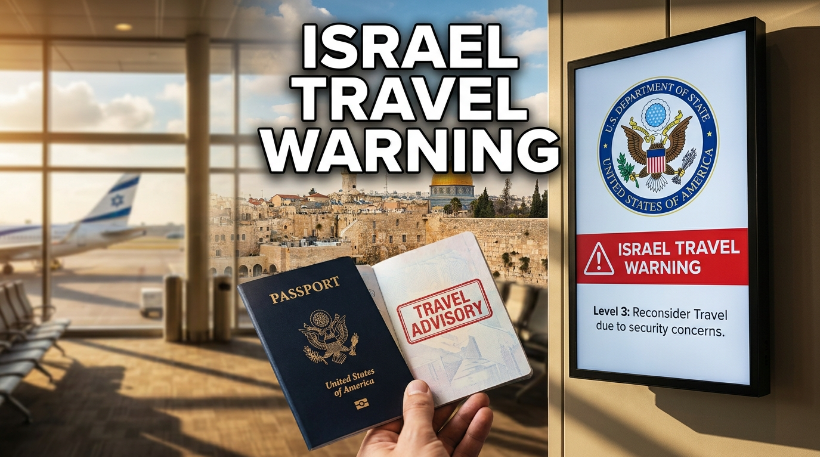


Travel plans to Israel require more careful preparation than a typical international vacation. The Israel travel restrictions State Department guidance is currently shaped by terrorism, armed conflict, civil unrest, and rapidly changing security conditions. As of August 26, 2026, the U.S. Department of State classifies Israel as Level 3: Reconsider Travel, while specific areas are under a stricter Level 4: Do Not Travel warning.
For travelers considering Israel, Jerusalem, the West Bank, or nearby border regions, understanding these restrictions is important before booking flights or planning an itinerary. The situation can change quickly, and airline schedules, border access, local movement restrictions, and security procedures may be affected with little notice.
Here is what the latest State Department guidance means, which areas are most restricted, and how travelers can prepare.
What Is the Current Israel Travel Advisory?
The U.S. Department of State currently lists Israel at Level 3: Reconsider Travel because of terrorism and unrest. This does not mean that all travel to Israel is prohibited. Instead, the advisory recommends that travelers carefully reconsider whether their trip is necessary and understand the elevated security risks.
The advisory also identifies specific areas where the risk is substantially higher. Those locations carry a Level 4: Do Not Travel warning because of armed conflict.
The current Level 4 areas include:
- Areas north of Route 85 to Route 90 and Route 87
- Areas within 11.3 kilometers, or 7 miles, of the Gaza Strip
- Areas within 2.4 kilometers, or 1.5 miles, of the Israel-Egypt border, except the Taba border crossing
The State Department says Israeli authorities restrict access to some of these areas because of military presence and activity.
Does a Level 3 Advisory Mean Americans Cannot Visit Israel?
No. A Level 3 advisory is not the same as a blanket travel ban.
U.S. citizens can still potentially travel to Israel, but the State Department strongly encourages travelers to understand the security environment and make informed decisions. Conditions can change rapidly, including the possibility of sudden violence, transportation disruptions, or changes to movement restrictions.
The important distinction is between travel advice for U.S. citizens and movement restrictions placed specifically on U.S. government personnel. Restrictions affecting government employees do not automatically mean that every American tourist is legally prohibited from entering an area.
Which Parts of Israel Have the Strictest Travel Restrictions?
Travel restrictions are not uniform throughout Israel. Risk levels can vary considerably depending on the region.
Northern Israel
Certain areas in northern Israel are subject to Level 4 warnings because of armed conflict and military activity. The State Department specifically advises against travel to areas north of Route 85 to Route 90 and Route 87.
Travelers should therefore avoid assuming that a destination is safe simply because it is geographically within Israel. Border areas and locations affected by military operations can face significantly different conditions from major population centers.
Gaza Border Area
The State Department advises travelers not to travel within 7 miles of the Gaza Strip because of armed conflict.
This is one of the clearest examples of why checking a current travel advisory matters. A destination that might appear close enough for a day trip on a map could fall within an area subject to a serious travel warning.
Israel-Egypt Border
The State Department also advises against travel within 1.5 miles of the Israel-Egypt border, with an exception for the Taba border crossing, also known as the Menachem Begin crossing.
Because border policies can change quickly, travelers planning to cross between countries should verify current requirements and operating conditions before beginning the journey.
What About Jerusalem and Tel Aviv?
The State Department’s Israel advisory applies nationally, but travelers should not interpret the Level 3 rating as meaning every city has identical conditions.
Jerusalem and Tel Aviv remain major destinations for international visitors, but the State Department warns that the security environment can change quickly and that violence may occur without warning.
Travelers should maintain situational awareness, avoid demonstrations and large crowds when security conditions are uncertain, and follow instructions from local authorities.
A normal-looking day in a tourist district does not necessarily mean that regional security risks have disappeared.
Are There Restrictions on Travel to the West Bank?
Yes. The State Department separately classifies the West Bank at Level 3: Reconsider Travel because of terrorism and unrest.
The guidance notes increased violence and Israeli military operations in parts of the West Bank. Israeli authorities may also restrict access to or movement within the area during periods of unrest, and some locations can be placed under curfew.
For U.S. government employees and their family members, additional personal travel restrictions currently apply. Certain routes and destinations, including travel to Jericho and Bethlehem under specified conditions, remain exceptions to those restrictions.
For ordinary tourists, the practical lesson is simple: do not assume that a normal tourist itinerary automatically applies to the West Bank. Check conditions for each destination before traveling.
What About Gaza?
Gaza has a Level 4: Do Not Travel advisory. The State Department cites terrorism, unrest, and limited health infrastructure as major reasons for the warning.
U.S. government employees are prohibited from traveling to Gaza, and the U.S. government states that it is unable to provide routine or emergency consular services to U.S. citizens there.
For travelers, this makes Gaza fundamentally different from visiting ordinary tourist destinations in Israel. Anyone considering travel connected to Gaza should review the latest State Department guidance rather than relying on older travel information.
Can Travelers Still Enter Israel?
A U.S. State Department travel advisory is different from Israel’s immigration and border-entry rules.
The Israeli government controls immigration and security procedures at airports and international land crossings. Travelers entering or leaving Israel can be subject to immigration and security screening, including questioning and physical searches. The State Department notes that travelers may be denied entry or exit under Israeli law.
This means travelers should check two separate things before a trip:
- The U.S. Department of State’s current security advisory.
- Israel’s current entry, passport, visa, and border requirements.
Meeting entry requirements does not eliminate security risks, and a State Department travel advisory does not itself replace Israeli immigration rules.
How Can Travelers Prepare for Israel Travel?
If you decide to travel despite the current advisory, preparation becomes especially important.
Register With STEP
The State Department recommends that U.S. citizens enroll in the Smart Traveler Enrollment Program (STEP). This allows the U.S. embassy or consulate to provide important updates and helps officials contact travelers or their emergency contacts during an emergency.
Monitor Flight Conditions
Regional security developments can affect commercial aviation. The State Department warns that increased regional tensions may cause airlines to cancel or limit flights into and out of Israel.
Before leaving for the airport, check your airline directly rather than relying solely on the original booking confirmation.
It is also wise to have a backup plan if your return flight is canceled or delayed.
Know Where Shelters Are
The State Department recommends learning the location of the nearest bomb shelter or hardened shelter. It also recommends using the Home Front Command Red Alert application, or similar services, for real-time alerts about rocket and missile attacks and armed UAV intrusions.
This is particularly important for visitors who are unfamiliar with local emergency procedures.
Avoid Demonstrations and Crowds
Travelers should avoid demonstrations and large gatherings, particularly when political or security tensions are elevated. The State Department recommends maintaining a high degree of situational awareness and following instructions from security and emergency-response officials.
Consider Comprehensive Travel Insurance
Travel insurance can be especially important when visiting a destination affected by security uncertainty.
The State Department recommends purchasing travel insurance and checking whether the policy includes emergency evacuation assistance, medical coverage, and trip cancellation protection.
Not every policy covers losses connected to war, terrorism, or government travel warnings, so read the exclusions carefully before purchasing.
Israel Travel Restrictions vs. U.S. Government Employee Restrictions
One common source of confusion is the difference between restrictions for tourists and restrictions for U.S. government personnel.
The State Department currently imposes specific movement restrictions on U.S. government employees working in Israel. These employees may be prohibited from entering certain areas without approval from the embassy’s security office. Additional restrictions can also be imposed with little or no notice.
These rules should not automatically be interpreted as a legal travel ban on American tourists.
Instead, they provide an indication of areas where the U.S. government considers the security risk particularly serious.
Why Travelers Should Check the Advisory Before Every Trip
Travel information can become outdated quickly during periods of regional conflict.
The current Israel advisory was reissued on August 26, 2026, with the State Department maintaining the Level 3 rating for Israel. The latest update also clarified that family members may join U.S. government employees working in Israel, while maintaining specific restrictions for high-risk areas.
That means information from a travel blog, social media post, or even an older news article may no longer accurately describe the situation.
A safer approach is to check the State Department advisory shortly before departure and again during the trip.
Israel Travel Restrictions State Department: Quick Checklist
Before traveling, consider this checklist:
- Check the latest Israel Travel Advisory.
- Review restrictions for your specific destination.
- Avoid all Level 4 areas.
- Check airline and airport operating conditions.
- Review Israeli entry and border requirements.
- Enroll in STEP if you are a U.S. citizen.
- Keep emergency contacts accessible.
- Know the location of nearby shelters.
- Monitor official security alerts.
- Avoid demonstrations and large crowds.
- Purchase appropriate travel insurance.
- Have an emergency departure plan that does not depend entirely on U.S. government assistance.
Final Thoughts on Israel Travel Restrictions State Department Guidance
The latest Israel travel restrictions State Department guidance shows that travel to Israel remains possible for some visitors, but it carries elevated security considerations. As of August 26, 2026, Israel is classified as Level 3: Reconsider Travel, while several specific areas—including locations near Gaza, the Egypt border, and parts of northern Israel—are classified as Level 4: Do Not Travel.
The West Bank is also under a Level 3 advisory, while Gaza remains under Level 4.
For anyone planning a trip, the most important step is to distinguish between general travel advisories, government-employee movement restrictions, and Israel’s own immigration and security controls. Conditions can change with little notice, so travelers should verify official information immediately before departure.
Ultimately, careful planning, flexible travel arrangements, reliable alerts, appropriate insurance, and awareness of local security conditions can help travelers make better-informed decisions about whether and where to travel in Israel.