

Introduction
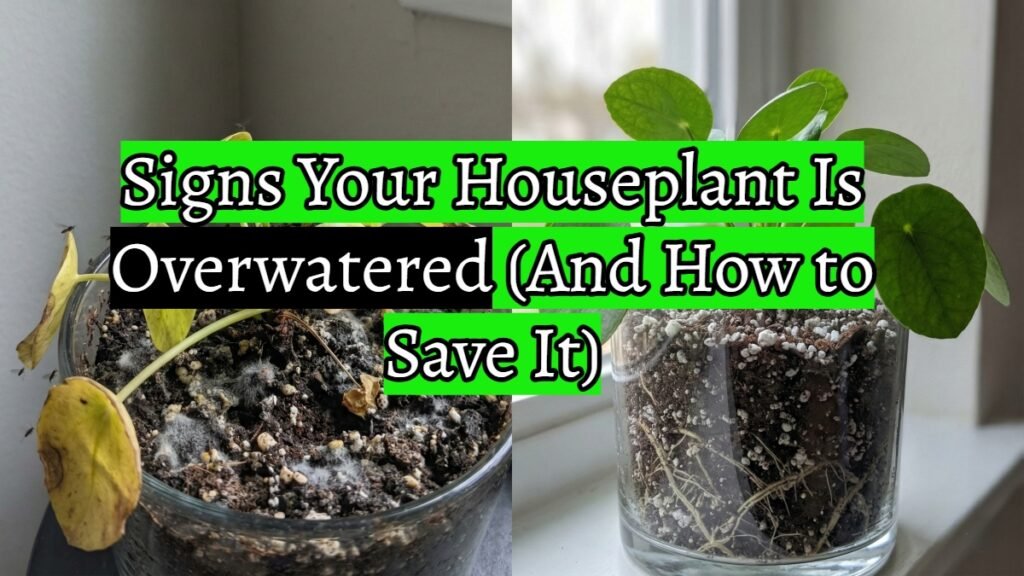
Signs Your Houseplant Is Overwatered (And How to Save It)
I’ve lost count of how many reader emails start with “Help—my plant is dying and I water it every day!” Overwatering is hands-down the #1 houseplant killer. In my years writing thousands of gardening articles, I’ve seen it claim more fiddle leaf figs, peace lilies, and monsteras than pests, neglect, or bad light combined.
The irony? Most people overwater out of love. But plants don’t need daily drinks like pets. Too much water suffocates roots, invites rot, and creates a cascade of problems. The good news: if you catch the signs early, almost every overwatered plant can be saved. In this guide, I’ll show you exactly how to spot trouble and nurse your green friend back to health.
Common Signs Your Houseplant Is Overwatered
These symptoms usually appear in order, from mild to severe:
- Yellowing lower leaves — Often the first clue. Leaves turn yellow and drop even though soil is wet.
- Wilting despite wet soil — Counterintuitive, but overwatered plants wilt because damaged roots can’t uptake water.
- Mushy or soft stems — Feel the base; if it’s squishy, root rot has started.
- Fungus gnats — Tiny black flies buzzing around soil love constantly damp conditions.
- White mold or fuzzy growth on soil surface — Classic sign of excess moisture.
- Foul, swampy smell from soil — Advanced root rot; smells like decay.
- Brown, black, or slimy roots — The ultimate confirmation when you unpot the plant.
- Stunted growth or leaf edema — Bumpy, blister-like spots on leaves from cells bursting with water.
Why Overwatering Happens So Often
Beginners especially fall into the trap because:
- We follow generic “water weekly” advice without checking soil.
- Small pots or poor drainage keep soil soggy.
- We mistake drooping for thirst (peace lilies are notorious for this drama).
- Indoor heating or AC dries the air, making us think plants need more water when they actually need less.
Step-by-Step: How to Save an Overwatered Houseplant
Act fast—the sooner, the better the recovery odds.
- Stop watering immediately — Let the soil dry out completely.
- Remove from pot and inspect roots — Gently tip the plant out. Healthy roots are white/firm; rotten ones are brown/black/mushy.
- Trim damaged roots — Use clean, sharp scissors or pruners sterilized with alcohol. Cut away all rotten sections until only healthy tissue remains.
- Clean the pot — Wash thoroughly with soap and hot water (or dilute bleach) to kill pathogens.
- Repot in fresh, well-draining soil — Use a mix with perlite or orchid bark. Choose a pot with drainage holes.
- Water sparingly at first — Give a light drink only after new growth appears.
- Improve environment — Move to brighter light if possible and increase airflow.
Severe cases? Propagate healthy stem cuttings in water—they root faster than trying to save the whole plant.
Common Mistakes When Rescuing Overwatered Plants
- Repotting into the same wet soil.
- Watering “just a little” too soon.
- Not trimming enough rotten roots (leaving any invites reinfection).
- Using cold water straight from the tap (shocks weakened roots).
Prevention Tips That Actually Work
- Always check soil 2 inches down before watering.
- Use pots with drainage and saucers (empty saucers!).
- Bottom-water when possible.
- Group thirsty plants together so you don’t overcompensate for drought-tolerant ones.
FAQs
- Can an overwatered plant recover? Yes—if caught early, most recover fully in 4–8 weeks.
- How long does it take for root rot to kill a plant? Days to weeks, depending on severity.
- Why do overwatered leaves turn yellow? Roots can’t absorb nutrients properly.
- Are some plants more prone to overwatering? Yes—peace lilies, ferns, calatheas hate soggy soil.
- Should I use hydrogen peroxide on overwatered plants? A diluted soak (1 part 3% H2O2 to 4 parts water) can help oxygenate roots once.
- Is it better to underwater or overwater? Always underwater—easier to fix.
Conclusion
Recognizing the signs of an overwatered houseplant and acting quickly can turn a near-death experience into a comeback story. Trust the soil test, not the calendar, and your plants will thank you with healthier growth. After rescuing hundreds of reader plants through my articles, I know this works—now it’s your turn.
External Sources
- https://www.rhs.org.uk/problems/overwatering
- https://extension.umaine.edu/gardening/manual/houseplants/overwatering/
- https://www.thespruce.com/signs-of-overwatering-plants-1902686
- https://www.gardeningknowhow.com/houseplants/hpgen/overwatered-plant-rescue.htm