
By Saad
Sleep is no longer just a biological need — it’s a cultural signature.
From Gen Z’s surprising sleep habits to billionaires’ routines and countries that barely close their eyes, global sleep patterns reveal how modern life is shaping human energy, health, and happiness.
This guide answers every major sleep question people are searching for, all in one place.
🕰️ What Is the Average Bedtime in the United States?
The average bedtime in the US is:
- Adults: Between 10:30 PM – 11:30 PM
- Weekdays: Closer to 11:30 PM
- Weekends: Often after midnight
However, bedtime varies by age:
- Millennials & Gen X: Later nights
- Gen Z: Surprisingly earlier (we’ll explain why)
🧠 What Time Does Gen Z Go to Bed?
Contrary to stereotypes, Gen Z often goes to bed earlier than Millennials.
- Average bedtime: 9:30 PM – 10:30 PM
- Many Gen Z users follow structured routines
- Early sleep is linked to mental health awareness
😴 Why Does Gen Z Go to Bed So Early?
Gen Z sleeps earlier because:
- Higher mental health awareness
- Burnout from digital overload
- Preference for work-life balance
- Less nightlife culture than previous generations
- Popularity of “soft life” & self-care trends
Early sleep = emotional regulation + productivity.
💤 Why Does Gen Z Sleep So Much?
Gen Z doesn’t sleep too much — they sleep correctly.
Reasons:
- Recovery from constant screen stimulation
- Anxiety and stress recovery
- Higher awareness of sleep’s impact on mood
- Irregular gig & remote work schedules
🛌 Why Does Gen Z Nap So Much?
Napping is Gen Z’s survival strategy.
- Short naps (20–45 mins)
- Used to manage screen fatigue
- Helps reset dopamine levels
- Common among students & remote workers
⏳ How Many Hours of Sleep Does Gen Z Get?
- Average: 7.5 – 9 hours
- Many aim for the ideal 8–9 hour range
- Still affected by late-night scrolling
📏 What Is the 3-2-1 Bedtime Rule?
The 3/2/1 Rule improves sleep quality:
- 3 hours before bed: No heavy meals or alcohol
- 2 hours before bed: Stop working
- 1 hour before bed: No screens
This rule is popular among high performers and Gen Z alike.
📐 What Is the 123 Sleep Rule?
A simplified sleep discipline rule:
- 1 consistent bedtime
- 2 hours device-free
- 3 key habits: dark room, cool temperature, silence
🇯🇵 What Time Do People Go to Bed in Japan?
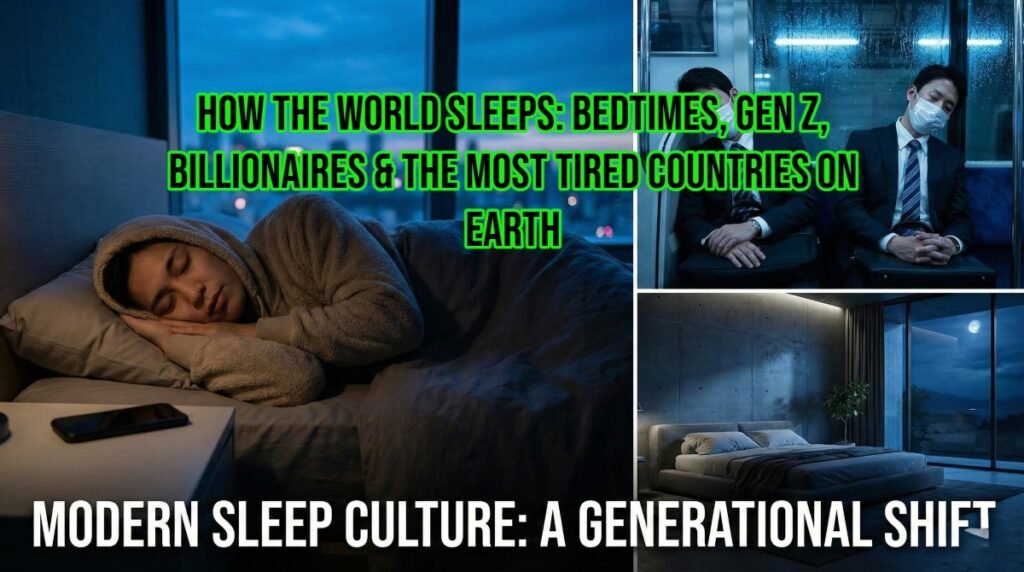
Japan is famous for short sleep culture.
- Average bedtime: 11:30 PM – 12:30 AM
- Long work hours
- Late commuting
- Cultural acceptance of exhaustion
⏱️ How Long Do Japanese Sleep?
- Average: 6 – 6.5 hours per night
- Among the shortest sleepers globally
- Daytime napping (“inemuri”) is common
🌍 What Country Sleeps the Longest?
Countries with the longest average sleep:
- Netherlands – ~8.2 hours
- New Zealand – ~8.1 hours
- Australia – ~8.0 hours
These nations prioritize work-life balance.
🌎 What Country Gets the Least Sleep?
- Japan
- South Korea
- Saudi Arabia
Urban stress + long workdays = chronic sleep deprivation.
😵 What Is the Most Tired Country?
Japan consistently ranks as the most sleep-deprived nation.
🧬 How Many Hours Do Billionaires Sleep?
Contrary to hustle myths:
- Most billionaires sleep 7–8 hours
- Sleep is treated as a performance tool, not laziness
🚀 How Many Hours Does Elon Musk Sleep?
- Reported: ~6 hours
- Musk has admitted chronic sleep deprivation affected his health
- Encourages better sleep for others — ironically
⏱️ What Is Elon Musk’s “5-Minute Rule”?
- Break work into 5-minute productivity chunks
- Used to maximize output during extreme schedules
- Not recommended long-term without proper sleep
🖥️ How Many Hours Does Bill Gates Sleep?
- 7 hours per night
- Gates strongly advocates sleep for memory & decision-making
📦 How Many Hours Does Jeff Bezos Sleep?
- 8 hours
- Bezos credits sleep for better leadership & creativity
🧠 How Many Hours Did Albert Einstein Sleep?
- 10–11 hours per day
- Included naps
- One of history’s strongest examples of sleep = genius
😞 What Is the Unhappiest Generation?
Multiple studies suggest:
- Gen Z reports the highest stress & anxiety
- Sleep helps manage emotional overload
- Better sleep ≠ less stress, but worse sleep = more stress
💤 Who Sleeps for 90% of the Day?
- Newborn babies
- Certain animals (koalas, sloths)
- Humans sleeping 90% of the day usually indicates illness
😭 What Does 😭 Mean in Gen Z Language?
The 😭 emoji doesn’t always mean sadness.
It can mean:
- Laughing uncontrollably
- Emotional overwhelm
- “I can’t handle this (in a funny way)”
Context > literal meaning.
🌐 Average Hours of Sleep Per Night by Country (Snapshot)
- Netherlands: 8.2 hrs
- Australia: 8.0 hrs
- USA: 7.2 hrs
- UK: 7.1 hrs
- Japan: 6.2 hrs
🔚 Final Thought: Sleep Is the New Status Symbol
In modern culture:
- Hustle is optional
- Sleep is strategic
- Rest is intelligence, not weakness
Gen Z understands this better than anyone.
📌 FAQs
Q: What is the average bedtime in the US?
A: Around 10:30 PM to 11:30 PM.
Q: Why does Gen Z sleep so much?
A: Mental health awareness, burnout recovery, and healthier routines.
Q: Which country sleeps the longest?
A: The Netherlands.
Q: How many hours does Elon Musk sleep?
A: About 6 hours.
Q: How many hours should adults sleep?
A: 7–9 hours per night.
External Sources
- Avocado Green Mattress Study: https://www.1029thebuzz.com/2025/08/04/study-reveals-the-average-american-bedtime-is-1118-pm/
- Apple Watch Data: https://www.axios.com/2025/09/01/bedtime-average-sleep-apple-data
- Pokemon Sleep Japan: https://www.japantimes.co.jp/news/2025/03/14/japan/science-health/sleep-day-japan-least/
- World Population Review: https://worldpopulationreview.com/country-rankings/average-sleep-time-by-country
- Business Insider (Musk/Bezos/Gates): https://www.businessinsider.com/elon-musk-nocturnal-sleeps-6-hours-spacex-2022-8
Disclaimer: Facts from 2025 studies, trackers, and interviews as of December 2025. Individual needs vary; consult doctors for sleep issues.