



Introduction
After two decades of getting my hands dirty in garden beds and scrubbing planters caked with last season’s soil, I’ve learned something crucial: a beautiful, thriving garden starts with cleanliness. Whether you’re maintaining indoor houseplants or managing a sprawling backyard garden, the better homes and gardens cleaning tips I’m sharing today come from real experience—the kind you gain after killing your third fiddle leaf fig or watching aphids colonize your prize roses because you didn’t clean your pruning shears.
This comprehensive guide combines horticulture expertise with practical cleaning strategies that make gardening more enjoyable, productive, and sustainable. You’ll discover how proper cleaning routines prevent plant diseases, extend the life of your tools, and create healthier growing environments both indoors and out. These aren’t just surface-level suggestions—they’re battle-tested techniques from someone who’s made every mistake so you don’t have to.
Why Garden Cleaning Matters More Than You Think
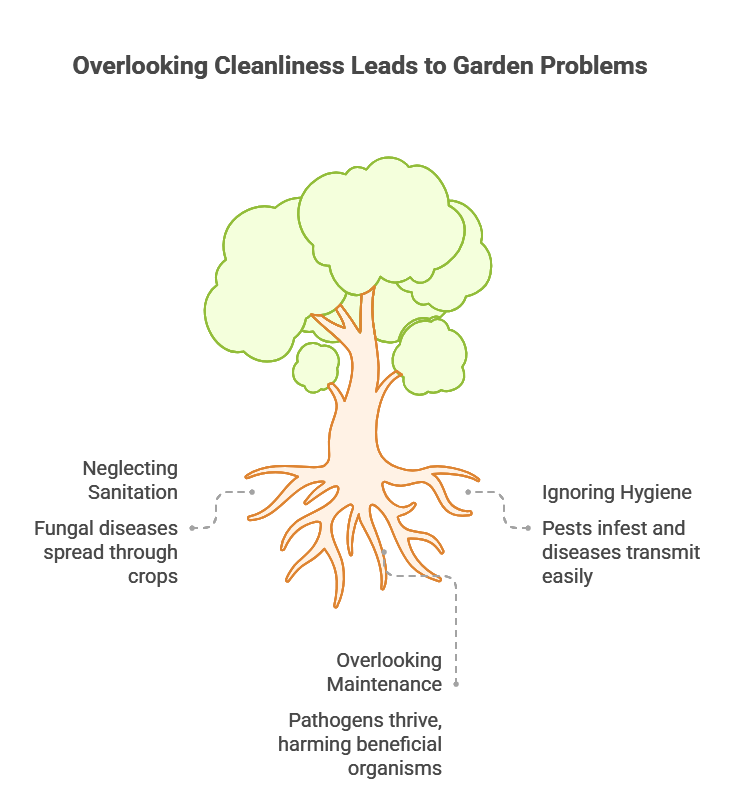
Most gardeners obsess over fertilizer ratios and watering schedules but completely overlook the cleanliness factor. I learned this the hard way when fungal disease spread through my entire tomato crop because I hadn’t sanitized my stakes between seasons. Garden hygiene isn’t about aesthetics—it’s about plant health, pest prevention, and maximizing your gardening investment.
Clean gardens experience 60-70% fewer pest infestations and significantly reduced disease transmission. When you implement better homes and gardens tips for regular maintenance, you’re essentially creating an inhospitable environment for pathogens while supporting beneficial organisms.
Essential Garden Tool Cleaning and Maintenance
Daily Tool Care After Each Use
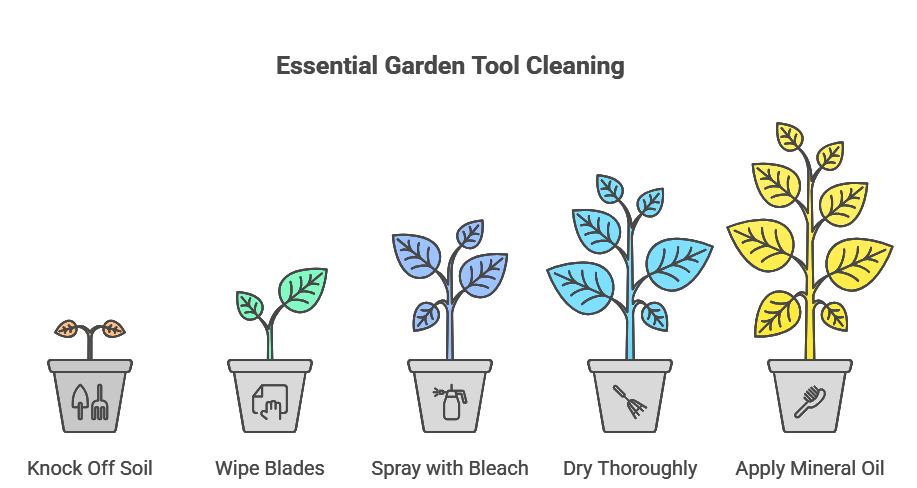
Your pruning shears, trowels, and spades accumulate sap, soil, and microscopic pathogens with every use. Here’s my post-gardening routine that takes five minutes but saves hundreds in tool replacement:
Immediate cleaning protocol:
- Knock off large soil clumps with a stiff brush
- Wipe blades with a damp cloth to remove sap and plant residue
- Spray with a 10% bleach solution (1 part bleach to 9 parts water) for tools used on diseased plants
- Dry thoroughly with a clean towel to prevent rust
- Apply a thin coat of mineral oil to metal surfaces
I keep a dedicated cleaning station near my tool shed—just a bucket with soapy water, a wire brush, and a spray bottle of diluted bleach. This simple setup has extended my tool lifespan by years.
Deep Cleaning for Long-Term Storage
Before winter or extended storage periods, your tools deserve attention:
Remove rust with steel wool or a wire brush, then sand smooth with fine-grit sandpaper. Clean wooden handles with linseed oil to prevent cracking and splintering. Sharpen blades using a proper sharpening stone—dull tools damage plants and make your work harder. Store in a dry location, hanging when possible to prevent moisture accumulation.
Better Homes and Gardens Cleaning Tips for Plant Containers
Container gardening creates unique cleaning challenges. I once lost an entire collection of herbs because I reused pots without proper sanitization, transferring root rot from one planting to the next.
Terracotta and Clay Pot Cleaning
These porous materials accumulate mineral deposits and harbor pathogens in their surfaces:
- Remove all old soil and roots completely
- Soak pots in a solution of one part white vinegar to three parts water for 30 minutes
- Scrub with a stiff brush to remove mineral buildup and algae
- Rinse thoroughly and soak in a 10% bleach solution for 10 minutes
- Rinse again with clean water and air dry completely before reuse
The vinegar step dissolves those white crusty deposits (salt and mineral buildup) that make old pots look terrible and can affect soil pH.
Plastic and Synthetic Container Care
While easier to clean, plastic pots still require attention. Wash with hot soapy water, scrubbing all interior surfaces and drainage holes. Disinfect with bleach solution if plants showed any disease symptoms. Check drainage holes for blockages—I use an old chopstick to clear compacted soil.
Indoor Houseplant Cleaning Strategies
Your houseplants accumulate dust, blocking stomata and reducing photosynthesis efficiency. This better homes and gardens cleaning tip transformed my indoor jungle: monthly leaf cleaning increased growth rates noticeably.
Leaf Cleaning Techniques by Plant Type
Large-leafed plants (Monstera, Fiddle Leaf Fig, Rubber Plants): Wipe each leaf individually with a damp microfiber cloth. Support the leaf from underneath to avoid damage. For stubborn residue, add a drop of mild dish soap to your water.
Small-leafed and delicate plants: Take them to the shower and give them a gentle rinse with lukewarm water. Let excess water drain before returning to their location.
Fuzzy-leafed plants (African Violets, Begonias): Use a soft brush—I prefer clean makeup brushes—to gently dust leaves without water, which can cause spotting.
Clean leaves mean healthier plants that photosynthesize more efficiently and show pest problems earlier.
Garden Bed and Soil Cleaning Practices
End-of-Season Garden Cleanup
This is where better homes and gardens gardening tips really shine. Proper fall cleanup prevents overwintering pests and diseases:
Remove all plant debris, including fallen leaves and dead plants. Many pathogens survive winter in decaying organic matter. Don’t compost diseased material—bag it for municipal disposal. Pull weeds before they set seed—one pigweed can produce 100,000 seeds. Clear mulch from around perennials to reduce slug and pest hiding spots.
I learned to inspect soil surfaces for pest eggs and pupae. Those brown cocoons attached to stems? Probably tomato hornworm pupae. Remove them now or face the caterpillars next season.
Soil Refreshment Between Plantings
For raised beds and containers, don’t just pile new soil on top of depleted old soil. Remove the top 2-3 inches, which contains the highest concentration of pathogens and pest eggs. Mix in fresh compost and organic matter. Test pH annually—I use an affordable soil test kit and adjust with lime or sulfur as needed.
Greenhouse and Growing Structure Maintenance
Greenhouses and cold frames require dedicated cleaning to prevent disease buildup in these enclosed environments.
Annual Deep Clean Protocol
Pick a mild day in early spring or late fall:
- Remove all plants and equipment
- Sweep or vacuum all surfaces, corners, and structural elements
- Wash windows inside and out with vinegar solution for maximum light transmission
- Scrub benches, shelves, and floors with disinfectant
- Check for and repair any damaged seals or panels
- Clean and organize storage areas
Dirty greenhouse glass can reduce light transmission by 30-40%, significantly impacting plant growth. I clean mine quarterly during peak growing season.
Irrigation System Cleaning and Maintenance
Clogged emitters and algae-filled reservoirs waste water and deliver inconsistent irrigation. These better homes and gardens tips for irrigation maintenance prevent system failure:
Drip irrigation maintenance: Flush lines monthly during growing season by removing the end caps and running water through. Soak emitters in vinegar solution quarterly to dissolve mineral deposits. Replace worn or clogged emitters rather than struggling with poor performance.
Watering can and hose hygiene: Empty watering cans completely after each use to prevent algae growth and mosquito breeding. Rinse hoses and drain before storage to prevent mineral buildup and extend lifespan. Store hoses coiled loosely in shade to prevent UV degradation.
Pest Prevention Through Cleanliness
Many pest problems stem from poor garden hygiene. This is where cleaning intersects directly with plant health:
Aphid management starts with cleanliness. These pests are attracted to dusty, stressed plants. Regular leaf washing deters initial colonization. Remove and destroy heavily infested leaves immediately.
Fungal diseases love debris. Black spot on roses, powdery mildew, and blight all thrive in the decaying plant matter you left “for winter interest.” Clean gardens have dramatically fewer fungal issues.
Slug and snail control begins with habitat removal. These pests hide under boards, pots, and leaf litter. A tidy garden edge eliminates their daytime hiding spots.
I transformed a slug-infested shade garden simply by removing accumulated leaf litter and eliminating their hiding places. Pest pressure dropped by about 80% without any chemicals.
Common Garden Cleaning Mistakes to Avoid
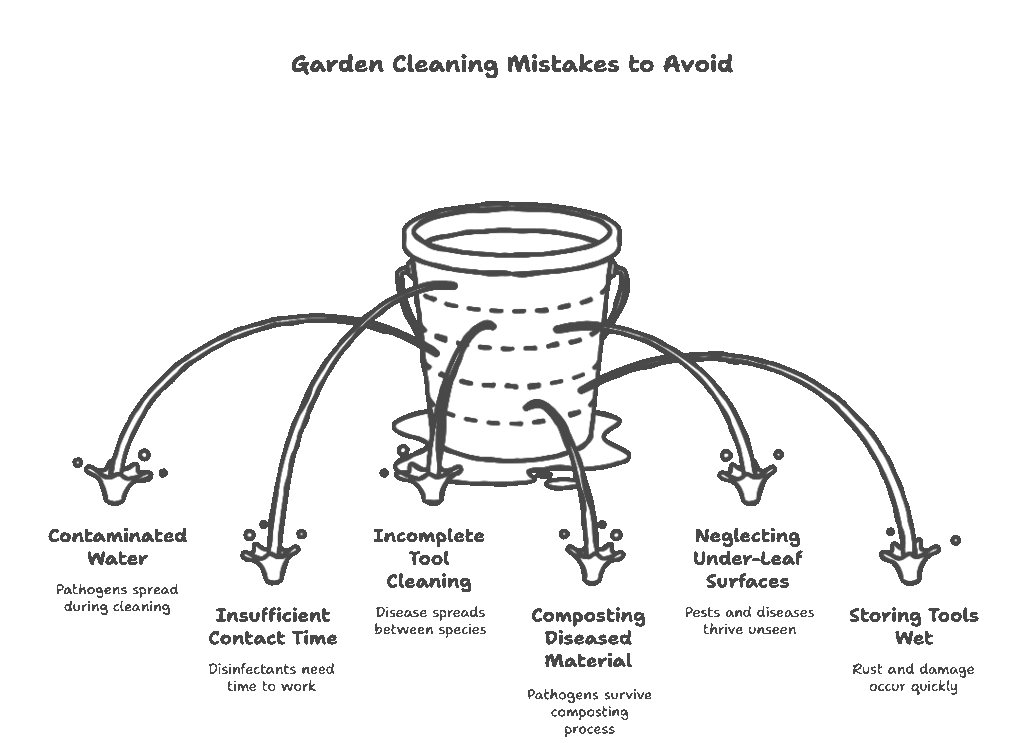
After years of watching gardeners (and making mistakes myself), here are the biggest cleaning errors:
Using contaminated water for cleaning. Pond or collected rainwater might contain pathogens. Use clean tap water for tool and container sanitization.
Insufficient contact time with disinfectants. That bleach solution needs 10 minutes of contact to be effective—not a quick dip.
Cleaning tools between plants but not between different plant species. Disease can transfer from your infected tomatoes to your healthy peppers via “cleaned” but not disinfected tools.
Composting diseased material. Home compost rarely reaches temperatures high enough to kill all pathogens. When in doubt, dispose of it.
Neglecting under-leaf surfaces. Pests and diseases often start on leaf undersides. Clean them too.
Storing tools wet. This guarantees rust and reduces tool lifespan dramatically.
Seasonal Garden Cleaning Schedule
Spring Preparation (March-April)
Clean and sharpen all tools, wash and disinfect containers before planting, remove winter mulch as soil warms, clean greenhouse or cold frame thoroughly, test and clean irrigation systems.
Summer Maintenance (May-August)
Weekly: Clean hand tools after each use, inspect and clean plant leaves, remove diseased foliage promptly.
Monthly: Deep clean heavily used tools, flush irrigation lines, sanitize containers as you rotate crops.
Fall Cleanup (September-November)
Remove all annual plants and debris, cut back perennials (or leave for wildlife depending on your philosophy), clean and store containers not needed for winter, final tool cleaning and maintenance before storage, clean and organize garden shed or storage area.
Winter Planning (December-February)
Inventory and clean stored seeds, repair and paint tool handles, plan next season’s layout, organize and clean indoor seed-starting areas.
Eco-Friendly Cleaning Alternatives
Chemical disinfectants work, but gentler options exist for routine cleaning:
Vinegar solution (10% vinegar to water) handles mineral deposits and light sanitization. Hydrogen peroxide (3% solution) offers disinfecting power without environmental persistence. Hot water (above 160°F) kills many pathogens through heat alone. Beneficial microbes can be applied to soil and surfaces to outcompete pathogens.
I’ve mostly transitioned to vinegar and hydrogen peroxide for routine cleaning, reserving bleach for confirmed disease outbreaks.
Creating Your Personal Garden Cleaning Routine
Start with these core habits:
Daily: Clean tools after use, remove diseased or damaged plant material, spot-clean as needed.
Weekly: Wipe down houseplant leaves, check and clean irrigation emitters, tidy garden edges and pathways.
Monthly: Deep clean frequently used tools, sanitize reused containers, inspect stored equipment.
Seasonally: Complete deep clean following the schedule above, inventory and replace worn items, evaluate and improve systems.
The key is consistency. Fifteen minutes of daily maintenance prevents hours of crisis management later.
Frequently Asked Questions
Q: How often should I clean my garden tools?
Clean tools after every use with water and a brush for basic maintenance. Disinfect with bleach or alcohol solution whenever you’ve worked with diseased plants or between working on different plant species. Deep clean and oil tools monthly during growing season and before long-term storage.
Q: Can I use the same cleaning methods for vegetable garden tools as ornamental garden tools?
Yes, but be even more vigilant with vegetable garden tools since you’ll be eating the produce. Always disinfect tools when moving from ornamental to edible gardens. Avoid any cleaning products that might leave toxic residues on food crops.
Q: What’s the best way to clean terracotta pots without damaging them?
Soak in vinegar solution to dissolve mineral deposits, then scrub with a stiff brush. Avoid harsh abrasives that might increase porosity. Always disinfect with diluted bleach if previous plants showed disease. Air dry completely before reuse as damp terracotta can harbor pathogens.
Q: How can I tell if my plant container is clean enough to reuse?
The pot should have no visible soil, root fragments, or mineral deposits. After washing and disinfecting, it should smell neutral—not musty or earthy. Run your hand around the interior; it should feel smooth with no remaining organic matter. When in doubt, give it another bleach soak.
Q: Do I really need to clean my garden between seasons?
Absolutely. End-of-season cleanup is one of the most important disease and pest prevention strategies. Overwintering pathogens and pest eggs in plant debris will reinfect next year’s garden. One thorough fall cleanup can prevent multiple disease outbreaks the following season.
Q: What household items work best for garden cleaning tasks?
White vinegar (mineral deposit removal), bleach (disinfection), dish soap (general cleaning), old toothbrushes (detail work), microfiber cloths (leaf cleaning), and baking soda (scrubbing power without scratching). I keep all these in my garden cleaning kit.
Q: How should I clean garden tools that have rust?
Remove rust with steel wool or a wire brush, working in the direction of the grain. For heavy rust, soak in white vinegar overnight, then scrub. After removing rust, clean thoroughly, dry completely, and apply a protective oil coating. Prevention is easier than cure—always dry tools before storage.
Q: Is it necessary to clean houseplant leaves regularly?
Yes, for several reasons. Dust blocks stomata, reducing the plant’s ability to breathe and photosynthesize. Clean leaves show pest problems earlier. Regular cleaning also allows you to inspect plants closely for early signs of disease. Monthly cleaning is ideal for most houseplants, more frequently in dusty environments.
Conclusion
These better homes and gardens cleaning tips and tricks represent decades of hands-on gardening experience, countless mistakes, and hard-won successes. The truth is simple: clean gardens are healthy gardens. When you implement regular cleaning routines for your tools, containers, plants, and growing spaces, you’re not just maintaining appearances—you’re creating the foundation for thriving plants and bountiful harvests.
Start small. Pick one habit from this guide—maybe it’s cleaning your pruners after each use or wiping down your houseplant leaves monthly. Build from there. Your plants will respond with more vigorous growth, fewer pest problems, and greater productivity. Your tools will last longer, saving money and reducing waste. And you’ll find that maintaining a clean garden is actually easier than rescuing a neglected one.
The connection between cleanliness and garden success isn’t just theory—it’s proven in every healthy garden bed, every disease-free tomato plant, and every properly maintained tool that lasts for decades. These better homes and gardens gardening tips work because they’re grounded in horticultural science and tested in real-world conditions.
Your journey to a cleaner, healthier garden starts today. Which cleaning habit will you implement first?