
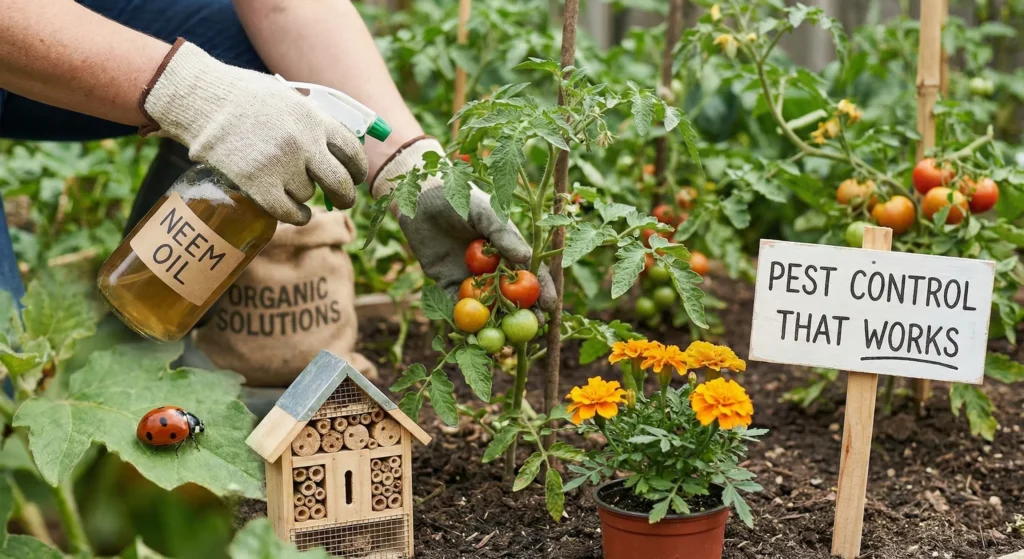
Introduction: Why Organic Pest Control Methods Matter More Than Ever
If you’ve ever stepped into your garden early in the morning only to find chewed leaves, sticky residue, or mysteriously wilting plants, you’re not alone. I’ve been there—standing between raised beds and container plants, inspecting tomatoes, herbs, and roses that looked perfect just yesterday. Over the years, I learned one thing the hard way: chemical sprays might offer quick relief, but they often create bigger problems later.
That’s where organic pest control methods come in. These natural approaches protect your plants, soil, pollinators, and your own health—without compromising results. When done correctly, organic pest control is not weak or slow. It’s strategic, sustainable, and incredibly effective.
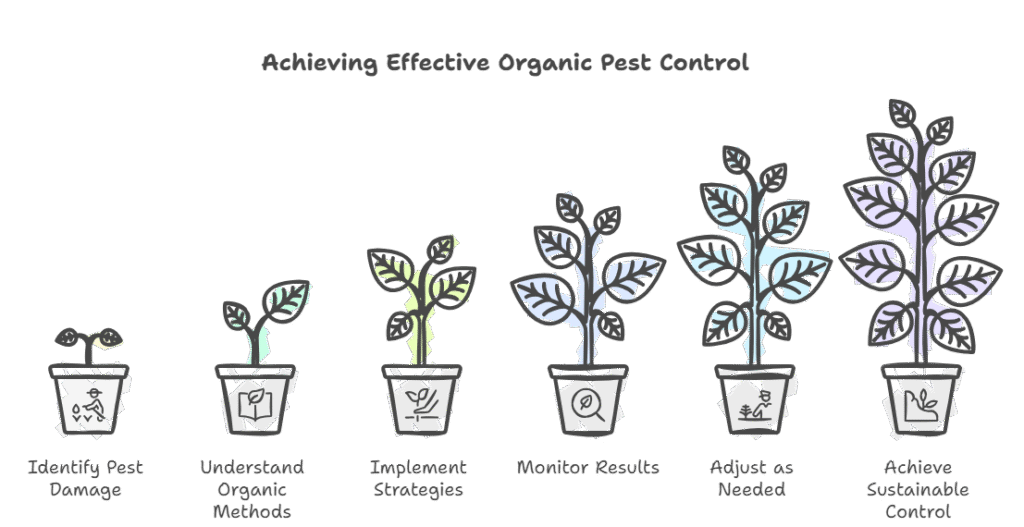
In this guide, I’ll walk you through real-world organic pest control methods I’ve personally used in backyard gardens, balcony containers, lawns, and raised beds—what works, what doesn’t, and how to apply them correctly.
Understanding Garden Pests Before Controlling Them
Before jumping into treatments, it’s important to understand one key principle: not all insects are pests. Early in my gardening journey, I made the mistake of trying to eliminate everything that crawled or flew. That disrupted the balance and made infestations worse.
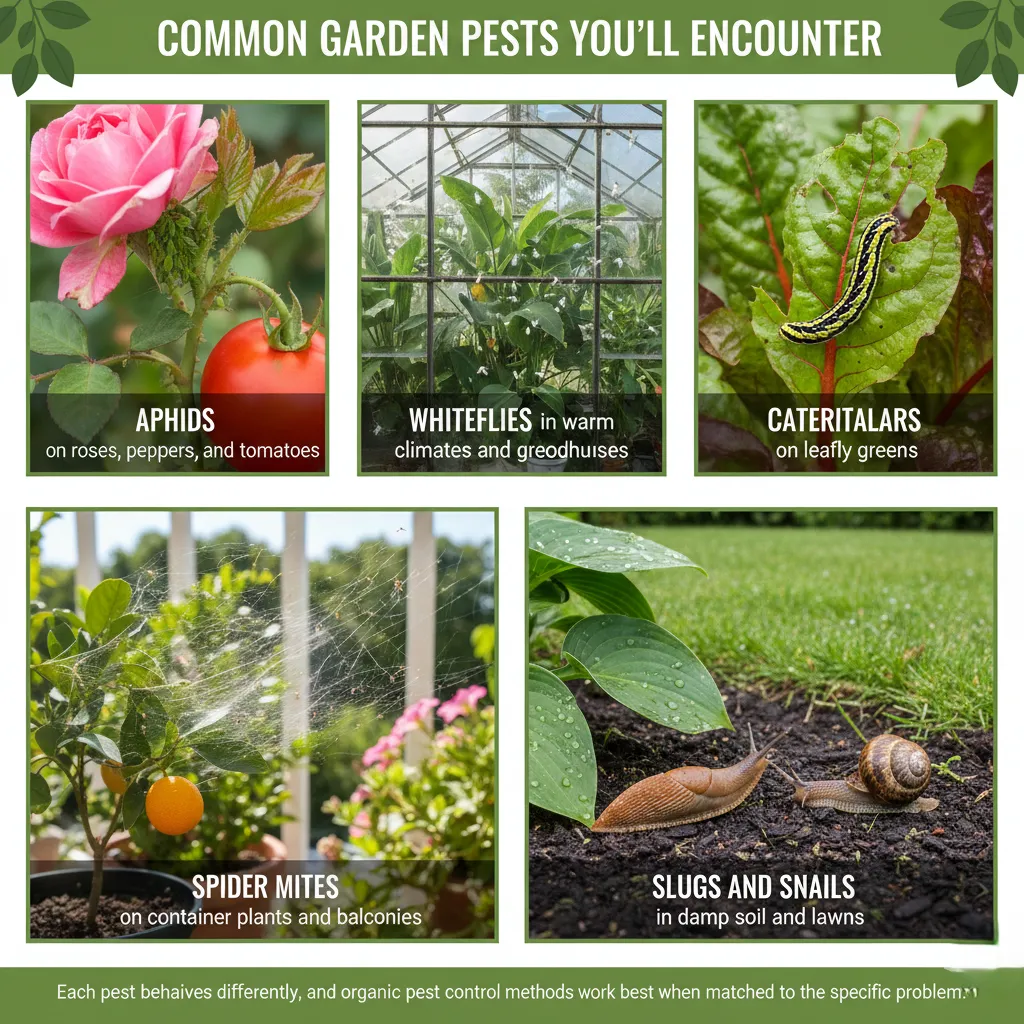
Common Garden Pests You’ll Encounter
- Aphids on roses, peppers, and tomatoes
- Whiteflies in warm climates and greenhouses
- Caterpillars on leafy greens
- Spider mites on container plants and balconies
- Slugs and snails in damp soil and lawns
Each pest behaves differently, and organic pest control methods work best when matched to the specific problem.
Core Organic Pest Control Methods (Proven & Practical)
Hand Removal: The Simplest Organic Pest Control Method
It may sound old-school, but manual removal is one of the most effective organic pest control methods—especially for beginners.
When it works best:
- Small gardens
- Early infestations
- Large pests like caterpillars and beetles
How I do it:
I inspect plants early morning when pests are slow. Aphids can be pinched or washed off. Caterpillars go into a bucket of soapy water. It’s surprisingly satisfying and prevents chemical dependence.
Neem Oil: A Staple in Organic Gardening
Neem oil is one of the most widely trusted organic pest control methods—and for good reason.
Controls:
- Aphids
- Whiteflies
- Spider mites
- Thrips
Practical tip from experience:
Always spray neem oil in the evening. I once sprayed during midday sun and burned half my basil leaves. Neem works by disrupting pest feeding and reproduction, not by instant kill.
Insecticidal Soap (Homemade & Store-Bought)
Insecticidal soap is gentle on plants but deadly to soft-bodied insects.
Best for:
- Aphids
- Mealybugs
- Spider mites
Homemade method:
- Mild liquid soap
- Water
- Spray directly on pests (underside of leaves is key)
This method saved my balcony peppers during a spider mite outbreak.
Beneficial Insects: Let Nature Do the Work
One of the smartest organic pest control methods is introducing allies.
Beneficial insects include:
- Ladybugs (aphids)
- Lacewings (whiteflies, thrips)
- Parasitic wasps (caterpillars)
Instead of wiping out insects, you create balance. After planting dill and marigolds, I noticed pest pressure dropped naturally within weeks.
Companion Planting as an Organic Pest Control Strategy
Companion planting isn’t folklore—it’s science-backed and field-tested.
Effective combinations:
- Basil near tomatoes to deter flies
- Marigolds near vegetables for nematodes
- Mint near cabbage (in containers only—mint spreads!)
This organic pest control method works especially well in raised beds and backyard gardens.
Organic Sprays You Can Make at Home
Garlic & Chili Spray
Strong-smelling sprays confuse and repel pests.
Works against:
- Aphids
- Caterpillars
- Leaf miners
I’ve used this successfully during monsoon season when pests multiply rapidly.
Diatomaceous Earth (Use Carefully)
This natural powder damages insects’ exoskeletons.
Best for:
- Ants
- Slugs
- Crawling insects
Mistake to avoid:
Don’t apply when pollinators are active. I only use it around soil, never flowers.
Soil Health: The Hidden Organic Pest Control Method
Healthy soil equals pest-resistant plants. This took me years to truly understand.
What helps:
- Compost
- Mulching
- Avoiding synthetic fertilizers
Weak plants attract pests. Strong plants resist them naturally.
Common Mistakes Gardeners Make (And How to Avoid Them)
Mistake 1: Overusing Organic Treatments
Even organic pest control methods can harm beneficial insects if overused.
Solution:
Target pests precisely, not broadly.
Mistake 2: Ignoring Early Signs
Aphids don’t appear overnight. I’ve learned to check leaf undersides weekly.
Mistake 3: Expecting Instant Results
Organic pest control is not about instant death—it’s about long-term balance.
Seasonal Organic Pest Control Advice
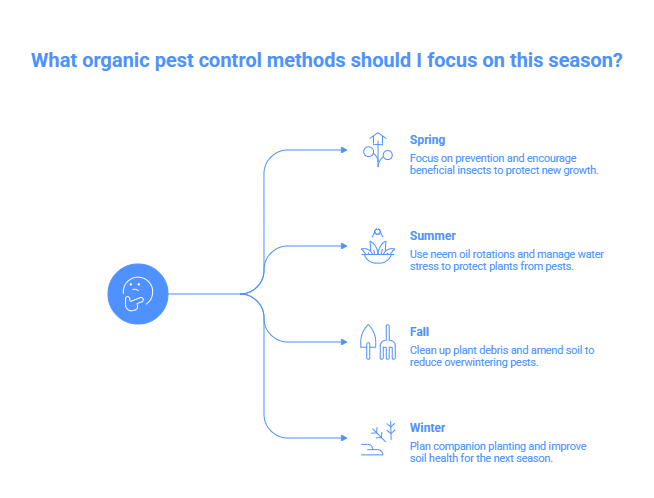
Spring
- Focus on prevention
- Encourage beneficial insects
- Monitor new growth closely
Summer
- Neem oil rotations
- Water stress management
- Shade for containers
Fall
- Clean up plant debris
- Soil amendments
- Reduce overwintering pests
Winter
- Plan companion planting
- Improve soil health
- Tool sanitation
Organic Pest Control for Beginners vs Advanced Gardeners
Beginners Should Focus On:
- Hand removal
- Neem oil
- Healthy soil
Advanced Gardeners Can Add:
- Beneficial insect release
- Crop rotation
- Integrated organic pest management systems
Conclusion: Trust the Process of Organic Pest Control Methods
After years of trial, error, and seasonal failures, I can confidently say that organic pest control methods are not just safer—they’re smarter. They work with nature, not against it. Whether you’re gardening in containers on a balcony or managing a full backyard vegetable garden, these methods build long-term resilience, healthier plants, and better harvests.
Organic pest control isn’t about perfection—it’s about balance, observation, and patience. Stick with it, and your garden will reward you.
FAQs
1. What are the most effective organic pest control methods?
Neem oil, insecticidal soap, hand removal, beneficial insects, and healthy soil management.
2. How often should I apply organic pest control treatments?
Only when pests are present and in cycles, not daily or weekly without reason.
3. Are organic pest control methods safe for vegetables?
Yes, when used correctly and as directed.
4. Can organic pest control completely eliminate pests?
No—and it shouldn’t. The goal is control, not total elimination.
5. Do organic methods work for severe infestations?
Yes, but they require persistence and combined approaches.
6. Is neem oil safe for bees?
When applied in the evening and not sprayed on flowers, it is generally safe.
7. Can I mix multiple organic pest control methods?
Yes, integrated approaches work best when applied thoughtfully.
6. External Sources
- University extension horticulture departments
- USDA organic gardening resources
- Royal Horticultural Society pest guides
- Integrated Pest Management (IPM) research publications