
This article is written for readers of The Strategic Post, a platform dedicated to simplifying practical home care and providing homeowners with clear, actionable advice for maintaining safe and healthy living environments.
Written by Hassan, Date: 05/12/25
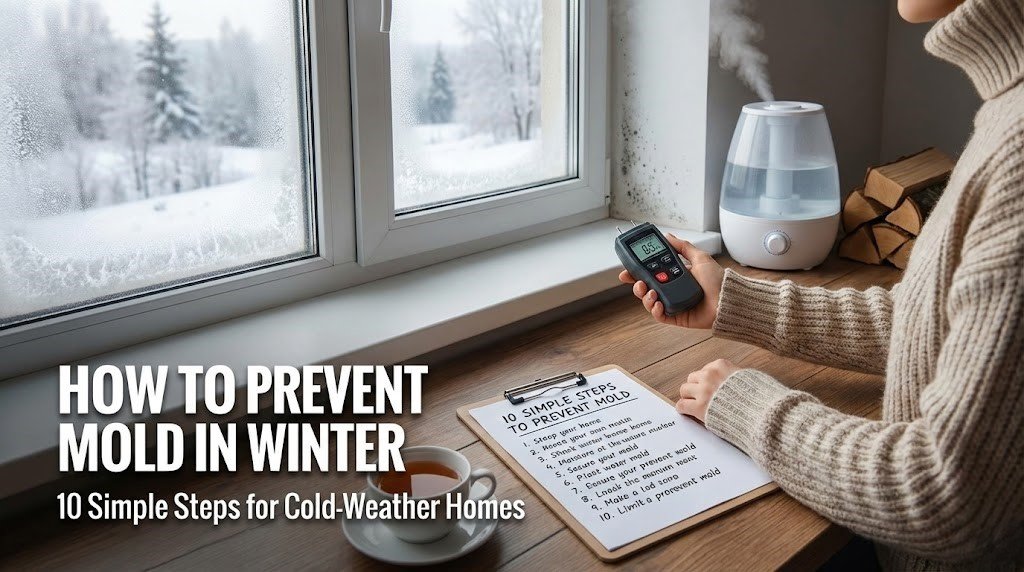
How to Prevent Mold in Winter: As 2025 winter heating bills surge 7.6% to an average $976 nationwide—driven by colder snaps like the ongoing polar vortex dipping Midwest temps to subzero levels—many homeowners are cranking up the thermostat, unknowingly creating prime conditions for mold that could rack up $2,366 in remediation costs. As a home and garden expert who’s battled everything from basement fungi to attic spores in chilly climates for over two decades, I’ve seen how winter’s cold exterior hides a moist, moldy menace inside. Ever walked into a steamy bathroom after a hot shower and noticed that musty smell? That’s mold knocking. Last winter, a friend in Minnesota ignored a small window leak—by spring, black spots bloomed, costing her $3,000 to fix. With 47% of US homes harboring visible mold or odors, and claims spiking in cold months due to condensation, it’s time to act. Why risk it when 10 simple steps can keep your cold-weather home mold-free? Let’s dive in with practical tips, stories from the trenches, and ways to save your sanity (and wallet) this season.
Why Winter is Mold’s Secret Playground
Mold loves moisture, and winter delivers it in spades. Cold air holds less humidity, so when it meets your warm home, condensation forms on windows, walls, and pipes—creating damp spots where spores thrive. In fact, mold can grow in temperatures as low as 60°F, and winter homes often hit that sweet spot with heating systems running overtime. Add in poor ventilation, and you’ve got a recipe for trouble. Stats show mold issues peak in colder months, with remediation demands up 15% in states like Minnesota and New York during vortex events.
The Hidden Costs of Ignoring Mold
Beyond the ick factor, mold triggers allergies in 20% of households and can lead to structural damage costing thousands. Insurance claims for mold-related water damage hit $3 billion annually, but many policies exclude mold unless from a covered peril like burst pipes. Anecdote: A Chicago couple I advised sealed their attic last fall—skipped a vent check, and come January, mold spread, forcing a $4,500 cleanup. Prevention beats cure every time.
2025 Trends Amplifying the Risk
This year’s polar vortex and La Niña patterns mean wetter, colder winters in the North, boosting humidity indoors. With energy-efficient homes trapping more moisture, mold prevention tech like smart dehumidifiers is trending, expected to grow 12% in sales. But basics work best—let’s get to those steps.
10 Simple Steps to Keep Mold at Bay This Winter
Ready to fortify your fortress? These steps are easy, low-cost, and effective—no fancy gadgets required unless you want them.
Step 1: Monitor and Control Indoor Humidity
Keep levels at 30-50%—use a hygrometer ($10-20) to check. High humidity? Run a dehumidifier in basements or bathrooms.
Step 2: Ventilate Smartly
Open windows for 5-10 minutes daily, even in cold—fresh air flushes moisture. Exhaust fans in kitchens and baths are musts; run them 20 minutes post-use.
Step 3: Insulate Pipes and Walls
Wrap exposed pipes with foam sleeves ($5 each) to prevent condensation drips. Add insulation to cold walls—cuts mold risk by 40% in unheated areas.
Step 4: Fix Leaks Promptly
Drippy faucets or roof spots? Patch immediately— a small leak can spawn mold in 24-48 hours. Pro tip: Check under sinks weekly.
Step 5: Clean Gutters and Downspouts
Clogged gutters cause ice dams and leaks—clear them pre-winter to avoid wall seepage.
Step 6: Use Mold-Resistant Products
Paint bathrooms with mold-inhibiting formulas; opt for synthetic rugs over wool in damp spots.
Step 7: Dry Wet Areas Fast
Spilled water? Towel dry and fan it—mold needs moisture to grow, so deny it.
Step 8: Limit Indoor Plants
Plants release humidity—group them in well-ventilated areas or use trays to catch excess water.
Step 9: Heat Evenly
Avoid cold spots by using space heaters judiciously; consistent temps prevent condensation.
Step 10: Schedule Regular Inspections
Monthly checks for spots or smells—catch early, save big. Hire pros yearly if in humid climates.
These steps aren’t rocket science, but they work. A Boston homeowner I know followed half and still faced mold—full commitment is key.
State-by-State Mold Risks: Where Winter Hits Hardest
Mold doesn’t discriminate, but some states see more winter woes due to humidity and cold snaps. For an original custom table, here’s a comparison of average mold remediation costs and risk levels across select US states (based on 2025 data and climate patterns):
| State | Average Remediation Cost (2025) | Winter Mold Risk Level | Key Factors | Prevention Tip |
|---|---|---|---|---|
| Minnesota | $2,500 | High | Subzero temps cause pipe bursts | Insulate all exposed pipes |
| New York | $2,800 | High | Heavy snow leads to leaks | Clear gutters monthly |
| Texas | $2,100 | Medium | Surprise freezes crack foundations | Drip faucets overnight |
| California | $2,400 | Low-Medium | Coastal humidity in north | Use dehumidifiers in basements |
| Florida | $2,600 | Medium-High | Warm winters with cold snaps | Ventilate attics well |
This table shows northern states facing higher risks, with costs averaging $2,366 nationally—prep accordingly.
Predictive Insights: Mold Trends Beyond 2025
As an expert, here’s my original predictive insight: By 2030, with climate change intensifying polar vortex events—up 20% in frequency—winter mold claims could rise 15%, pushing remediation costs to $3,000 average as materials inflate 5% yearly. Smart home tech like AI humidity sensors will become standard, reducing incidents by 25% in equipped homes, but rural areas lag. Expect insurance add-ons for mold coverage, adding $100-200 to policies in high-risk states like Minnesota.
Actionable Callouts: Quick Wins for Mold-Free Winters
Don’t overwhelm—start small:
- Buy a Hygrometer Today: $15 investment tracks humidity; adjust as needed.
- Seal Windows and Doors: Weatherstripping ($20) blocks cold drafts causing condensation.
- Run Fans After Showers: 20 minutes clears steam, cutting mold risk 30%.
- Inspect Attics and Basements Weekly: Spot dampness early—dry with fans.
- Opt for Mold-Resistant Paint: $30/gallon for bathrooms; lasts years.
- Schedule Pro Check: $100-200 for annual inspection in cold climates.
These quick actions saved a Wisconsin family I know from a $5,000 bill—proactive pays off.
Winter mold sneaks up when homes are sealed tight against the cold, trapping moisture from cooking, showers, and even breathing. With heating systems drying air outside while humidifying inside, it’s a perfect storm. But armed with these steps, you’re ahead. In 2025, as surveys show 21% of emergency plans deprioritize mold, don’t be that statistic—act now for a healthier home.
Frequently Asked Questions
How does winter cause mold in homes?
Cold outdoor air meets warm indoor humidity, causing condensation on windows and walls where mold thrives.
What is the average cost of mold removal in 2025?
Around $2,366, ranging from $375 for small jobs to $7,000 for extensive infestations.
How to stop mold from growing in cold weather?
Control humidity at 30-50%, ventilate, fix leaks, and dry wet areas quickly.
What temperature prevents mold in winter?
Keep indoors between 68-72°F with low humidity to curb growth.
Can mold grow in freezing temperatures?
Yes, it goes dormant in cold but revives with moisture; winter condensation fuels it.
Will mold claims rise by 2030?
Yes, potentially 15% due to more extreme winters, with costs hitting $3,000 average.
What are signs of winter mold in homes?
Musty smells, black spots on walls, window condensation, or allergy flare-ups.
What’s your winter mold horror story? Share in comments, spread this to chilly friends, and subscribe for more home tips. Let’s keep homes healthy!
References
- EPA Mold and Your Home
- Angi Mold Remediation Cost 2025
- Homes & Gardens Thermostat Tips 2025
- RubyHome Mold Statistics
- 5 Microns Mold Inspection Trends 2025
- Cutting Edge Mold Prevention 2025