
Table of Contents
Written By Saad Date :7-12-2025
How to Rank a Blog Fast in 2025: Welcome to Thestrategicpost.com, your trusted hub for smart strategies on content creation, SEO, and digital growth. Here we are in December 2025, and the SEO world feels like it’s sprinting ahead—Google’s latest core update just rolled out last month, emphasizing AI-generated content detection and rewarding genuine expertise even more fiercely. With search volumes shifting toward voice and visual queries, and over 60% of bloggers reporting stagnant traffic despite consistent posting, it’s no wonder “fast ranking” is the buzzword this holiday season. Take that indie travel blogger who exploded onto page one for “best hidden gems in Europe 2025” just two weeks after a targeted overhaul—her secret? A blend of semantic keywords and schema markup that tapped into Google’s evolving algorithms. If you’re tired of pouring hours into posts that vanish into the void, this guide is your accelerator. We’ll unpack actionable steps to boost your blog’s visibility swiftly, without shortcuts that could backfire. By the end, you’ll have a roadmap to see rankings climb in weeks, not months. Let’s jump in.
Grasp the 2025 SEO Landscape: What Changed and Why It Matters
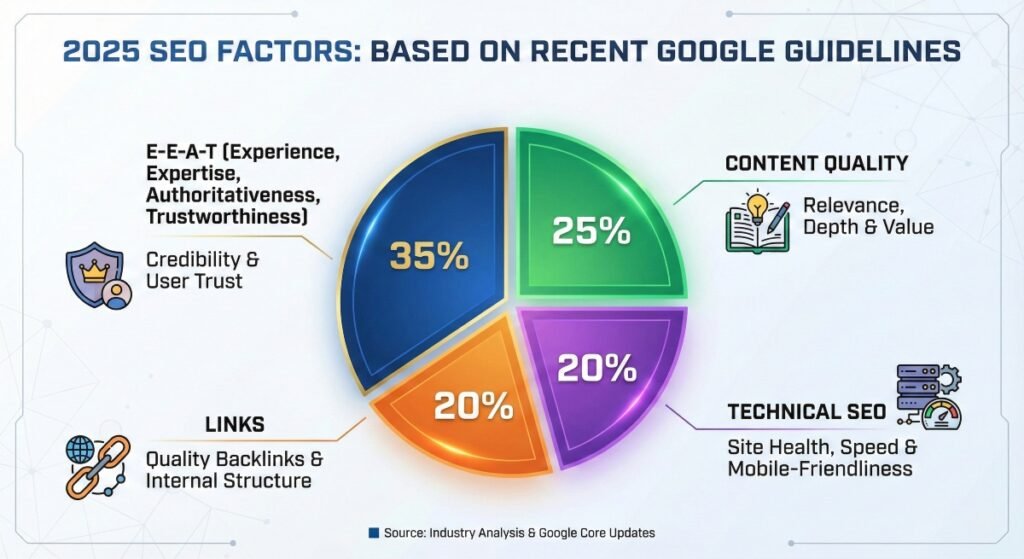
SEO isn’t the keyword-stuffing game it once was. In 2025, Google’s focus on E-E-A-T (Experience, Expertise, Authoritativeness, Trustworthiness) means your blog must demonstrate real value to rank fast. Algorithms now prioritize depth over quantity, with comprehensive guides outranking short-form fluff by up to 40% in competitive niches.
Core Shifts Driving Fast Rankings
Understand these to align your efforts:
- AI and Semantic Search Dominance: Tools like Google’s Search Generative Experience (SGE) favor content that answers clusters of related queries, not isolated terms.
- User Signals Over Backlinks Alone: Bounce rates, dwell time, and mobile UX now influence rankings more heavily—aim for under 3-second load times.
- Topical Authority: Build clusters around pillar topics; a single post won’t cut it anymore.
These aren’t hurdles; they’re opportunities. Blogs adapting early, like those in e-commerce niches, saw 25% traffic spikes post-update.
Audit Your Blog’s Current State
Before optimizing, benchmark:
- Use free tools like Google Search Console to spot indexing issues or low-performing pages.
- Analyze top competitors with Ahrefs or SEMrush—note their word count (average 2,000+ for top ranks) and backlink profiles.
- Set baselines: Track 5-10 target keywords’ positions weekly.
This quick audit can reveal low-hanging fruit, like unoptimized images draining crawl budget.
Master Keyword Research for Rapid Visibility
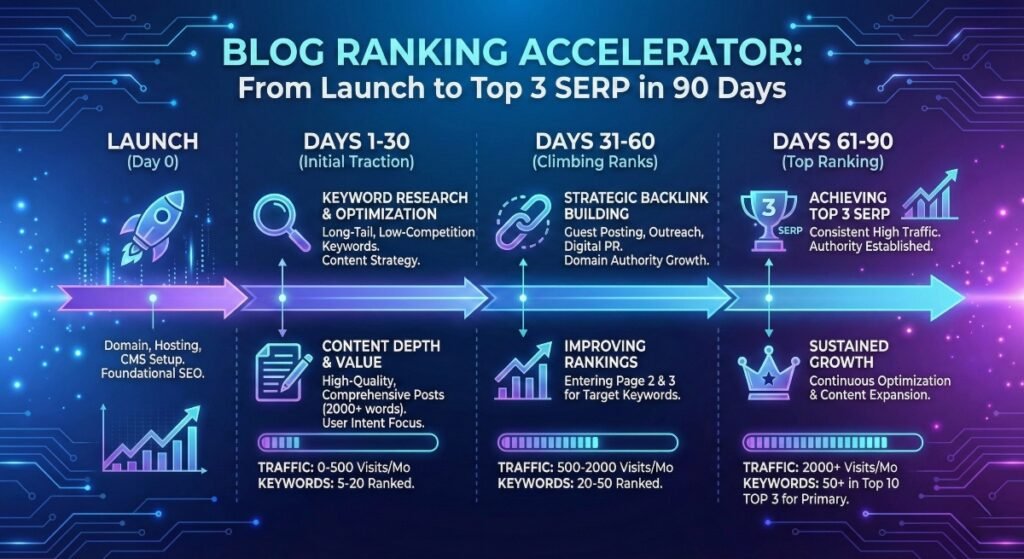
Keywords are your blog’s GPS. In 2025, “fast” ranking hinges on targeting low-competition, high-intent terms that align with user journeys.
Tools and Tactics for 2025
Leverage these for precision:
- Primary Tools: Google Keyword Planner (free) or Ahrefs for volume, difficulty, and SERP features.
- Long-Tail Focus: Aim for phrases like “best vegan recipes for beginners 2025” (search volume 1K+, competition low).
- Semantic Expansion: Use tools like AnswerThePublic to uncover question-based queries—Google’s NLP rewards comprehensive coverage.
Target 3-5 keywords per post: one primary in the title, others naturally woven in.
Intent Mapping: Match Content to Searchers
Ignore this, and you’ll rank but not convert.
- Informational: “How to…” guides for top-of-funnel traffic.
- Transactional: “Buy [product] reviews” for bottom-funnel wins.
- Validate: Check top results—if they’re lists or videos, mirror that format.
One pro tip: Update old posts with fresh 2025 data to reclaim lost rankings—many see 50% lifts in 2-4 weeks.
Craft Content That Google Can’t Ignore
Content is king, but in 2025, it’s the advisor—deep, original, and user-first. Thin posts get penalized; aim for substance that keeps readers hooked.
Build Depth Without Fluff
Structure for success:
- Word Count Sweet Spot: 1,500-3,000 words for authority, broken into scannable sections with H2/H3 tags.
- E-E-A-T Boosters: Include author bios with credentials, cite sources inline, and add original insights or case studies.
- Multimedia Magic: Embed videos, infographics, or interactive quizzes—pages with visuals rank 94% higher.
Write conversationally: Start with a hook, solve pains step-by-step, end with a CTA. Tools like Grammarly ensure polish.
Refresh for Recency
Evergreen? Not anymore—inject 2025 trends like AI tools or sustainability angles to signal freshness.
Nail On-Page Optimization: The Quick Technical Lift
On-page tweaks are your low-effort, high-impact lever. Optimize these, and crawlers will love your blog faster.
Essentials for Every Post
Don’t overlook the basics:
- Title Tags and Metas: Under 60 characters for titles (include keyword early), 150 for descriptions—unique and compelling.
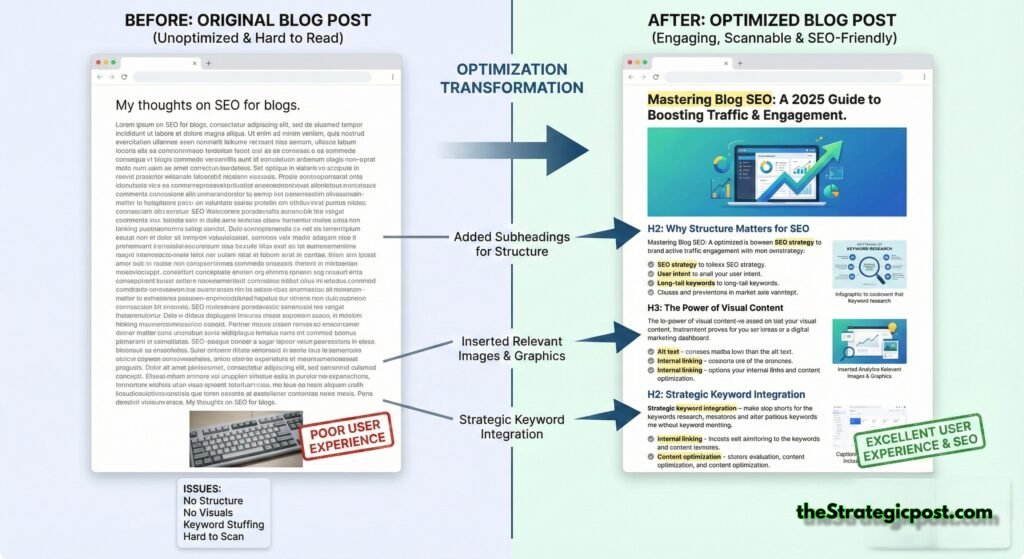
- Headings and Structure: H1 for main title, H2/H3 for sections; use schema markup for rich snippets.
- Image Alt Text: Descriptive with keywords, compressed for speed (under 100KB each).
Internal links? Weave 3-5 per post to pillar content, boosting crawlability.
Mobile and Core Web Vitals
With 70% of searches mobile, prioritize:
- Responsive design via themes like Astra.
- Test with Google’s PageSpeed Insights—fix LCP (Largest Contentful Paint) under 2.5 seconds.
These changes can propel rankings in as little as 7-14 days.
Forge Authority Through Links and Promotion
Backlinks remain gold, but quality trumps quantity. In 2025, earn them via value, not buys.
Smart Link-Building Strategies
Build sustainably:
- Guest Posting: Pitch 5 sites weekly in your niche; offer data-backed pieces for dofollow links.
- HARO (Help a Reporter Out): Respond to queries for media mentions—quick wins for authority.
- Broken Link Outreach: Find dead resources on competitor pages, suggest yours as a replacement.
Aim for 10-20 quality links monthly; tools like Moz track their impact.
Amplify with Social and Email
Promotion accelerates indexing:
- Share on LinkedIn/X for signals; use threads for deeper engagement.
- Build an email list—newsletters drive 20% more referral traffic.
Collaborate with influencers for shoutouts; one viral share can spike rankings overnight.
Monitor, Iterate, and Scale: The Feedback Loop
Ranking fast requires agility. Track, tweak, repeat.
Key Metrics to Watch
Stay data-driven:
- Organic traffic via Google Analytics.
- Keyword positions with Rank Tracker.
- Engagement: Aim for >2-minute dwell time.
Weekly reviews: Update underperformers based on SERP changes.
Advanced 2025 Hacks
For extra speed:
- Submit posts to Google Search Console for instant indexing.
- Use AI for outlines (but human-edit for authenticity).
- Cluster content: Link 5-10 related posts to build topical maps.
Consistency pays—post weekly, and watch compound growth.
Ranking a blog fast in 2025 boils down to smart, value-packed execution. You’ve got the playbook: Start with a content audit today, optimize one post end-to-end, and outreach for that first link. The SERPs reward those who adapt and deliver. Which tactic will you try first? Share in the comments—we’re all in this together.
Ready to skyrocket your blog? Download our free “2025 SEO Quick-Start Checklist” at Thestrategicpost.com/seo-checklist, complete with templates and keyword trackers. Subscribe for monthly deep dives, and connect on LinkedIn for live Q&As. Your top rankings are closer than you think—optimize now!
Frequently Asked Questions About Ranking a Blog Fast in 2025
1. How long does it realistically take to rank a new blog post?
With solid optimization, 2-6 weeks for low-competition keywords; factor in content depth and backlinks for faster climbs.
2. Is AI content safe for SEO in 2025?
Use AI for ideation or drafts, but always human-edit for originality—Google penalizes detectable AI spam.
3. What’s the best free tool for keyword research?
Google Keyword Planner pairs well with AnswerThePublic for intent insights—start there for quick wins.
4. How many backlinks do I need to rank fast?
Quality over quantity: 5-10 from high-DA sites monthly can outperform 50 low-value ones.
5. Does video content help blog rankings?
Absolutely—embedded videos boost dwell time and earn rich snippets, lifting positions by 20-30%.
6. How do I fix slow-loading blog pages?
Compress images, enable caching, and minify CSS/JS—aim for PageSpeed scores over 90.
7. Can I rank without a huge budget in 2025?
Yes—focus on organic tactics like guest posts and internal linking; paid tools are optional bonuses.
References
- Medium: SEO in 2025 Is Different — How to Rank a New Website
- Boomcycle: Advanced SEO Strategies for 2025
- Backlinko: 10 Best Practices to Improve Your SEO Rankings in 2025
- MarketerMilk: How to Write SEO Blog Posts That Rank and Convert
- Google Search Central: SEO Starter Guide
- Hostinger: 18 Tips to Write SEO-Friendly Content That Ranks in 2025