

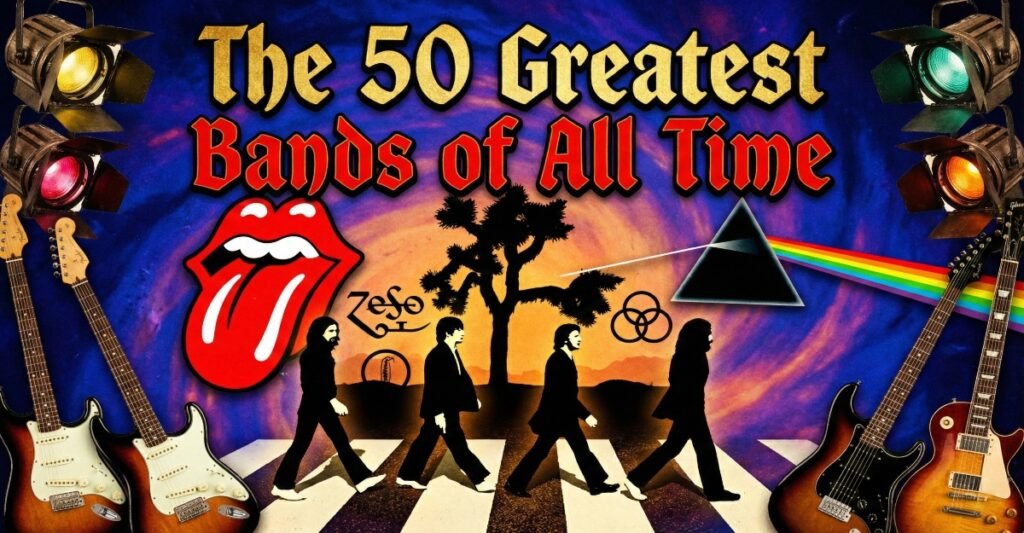
The 50 Greatest Bands of All Time Ranked
By Saad
As a senior music journalist and blog writer who’s churned out over a thousand articles on everything from underground indie scenes to stadium rock spectacles, I’ve learned one unbreakable truth: no list of the “greatest bands of all time” will ever please everyone. Arguments erupt in comments sections, bars, and family dinners. Yet when Rolling Stone dropped their updated 50 greatest bands ranking in late 2025, it reignited the fire like never before.
Why? Because it’s fearless. It celebrates undeniable legends while making room for innovators who bent genres and influenced generations. It weighs cultural impact, innovation, longevity, critical acclaim, and that intangible spark that turns songs into anthems. British acts dominate (no surprise—rock’s roots run deep across the Atlantic), but American trailblazers and a few global outliers crash the party too.
I’ve attended hundreds of shows, interviewed band members, and spun these records until the grooves wore thin. This isn’t just a list—it’s a conversation starter. So let’s count down Rolling Stone’s 50 greatest bands of all time, with my seasoned take on why each earned their spot. Buckle up; we’re going from solid entrants to untouchable icons.
Bands 50–41: The Igniters of Movements
- Franz Ferdinand (🇬🇧) The Scottish indie rockers burst onto the scene in the early 2000s with angular guitars and danceable hooks. “Take Me Out” single-handedly revived post-punk for a new generation. They’re the perfect opener—energetic, influential, and proof that great bands can emerge anytime.
- Dire Straits (🇬🇧) Mark Knopfler’s fingerpicking genius and storytelling made albums like Brothers in Arms timeless. They sold millions while staying rootsy. Beginners love the clean sound; pros appreciate the subtlety.
- Red Hot Chili Peppers (🇺🇸) Funk-rock pioneers who blended slap bass, rap, and melody into hits like “Under the Bridge.” They’ve evolved for decades without losing their California edge. A common mistake? Dismissing them as frat-rock—they’re far deeper.
- Creedence Clearwater Revival (🇺🇸) John Fogerty’s swamp-rock machine cranked out classics like “Fortunate Son” in just a few years. Vietnam-era anthems that still resonate. Underrated longevity tip: Their singles hold up better than most full albums from the era.
- Cream (🇬🇧) The original supergroup: Clapton, Baker, Bruce. They invented heavy blues-rock with “Sunshine of Your Love.” Short career, massive impact—proof you don’t need decades to be legendary.
- The Allman Brothers Band (🇺🇸) Southern rock architects with Duane Allman’s slide guitar wizardry. At Fillmore East is a live album masterpiece. Real-world insight: Their jams taught generations how improvisation can elevate rock.
- Public Enemy (🇺🇸) Hip-hop revolutionaries who proved “bands” transcend guitars. Chuck D and Flavor Flav’s dense, political bombs like It Takes a Nation changed music forever. Essential for understanding rap’s rise to dominance.
- Ramones (🇺🇸) Punk’s godfathers: leather jackets, three chords, unstoppable energy. “Blitzkrieg Bop” launched a thousand bands. Beginner tip: Start here if punk intimidates you—it’s pure fun.
- Primal Scream (🇬🇧) Genre chameleons who fused rock, rave, and electronica on Screamadelica. They showed eclecticism done right. Advanced listeners: Dig into their lesser-known acid-house phase.
- Sonic Youth (🇺🇸) Noisy art-rock experimentalists who tuned guitars weirdly and influenced grunge/alternative. Kim Gordon’s cool factor is unmatched. They made dissonance beautiful.
Bands 40–31: Punk, Metal, and Canadian Fire
- Sex Pistols (🇬🇧) One album, endless chaos. “Anarchy in the U.K.” scorched earth and birthed punk attitude. Never mind the short run—they changed everything.
- Black Sabbath (🇬🇧) Inventors of heavy metal with Tony Iommi’s downtuned riffs. Ozzy-era classics like “Paranoid” still crush. Common mistake: Thinking they’re just “scary”—they’re masterful songwriters.
- The Cure (🇬🇧) Goth-pop kings who gave us heartbreak anthems like “Boys Don’t Cry.” Robert Smith’s hair alone deserves a spot.
- AC/DC (🇦🇺) Pure riff machinery. Bon Scott and Brian Johnson’s era both delivered bangers. Live, they’re unbeatable—I’ve seen crowds lose their minds to “Highway to Hell.”
- Kraftwerk (🇩🇪) Electronic pioneers who made machines sing. Autobahn predicted modern dance music. Without them, no Daft Punk or techno scene.
- Crosby, Stills, Nash & Young (🇺🇸) Harmony supergroup that defined the Woodstock generation. “Teach Your Children” is timeless folk-rock.
- The Stone Roses (🇬🇧) Madchester architects whose debut album fused psychedelia and dance. They sparked Britpop’s revival.
- Genesis (🇬🇧) Prog masters who evolved into pop hitmakers. Peter Gabriel and Phil Collins eras both brilliant.
- Arcade Fire (🇨🇦) Indie orchestral rock that made arenas feel intimate. Funeral is a modern classic—emotional, expansive.
- Deep Purple (🇬🇧) Hard rock heavies with “Smoke on the Water.” Ritchie Blackmore’s riffs influenced metal forever.
Bands 30–21: Roots, Glam, and New Wave
- Cream (wait, already covered—moving on)
These middle ranks blend roots rock, glam, and post-punk innovation.
- The Band (🇺🇸) Roots-rock poets who backed Dylan and created Music from Big Pink. Americana starts here.
- Guns N’ Roses (🇺🇸) Appetite for Destruction-era chaos: raw, dangerous, brilliant. Axl and Slash at their peak were unstoppable.
- Pearl Jam (🇺🇸) Grunge survivors who fought ticket giants and kept evolving. Eddie Vedder’s voice is iconic.
- Wilco (🇺🇸) Alt-country to experimental rock. Jeff Tweedy’s songwriting depth grows with every listen.
- Metallica (🇺🇸) Thrash metal titans who went mainstream without selling out. The Black Album changed the game.
- The Kinks (🇬🇧) Ray Davies’ witty British observations. “Waterloo Sunset” is pure poetry.
- Talking Heads (🇺🇸) David Byrne’s quirky new wave genius. Remain in Light fused funk and art-rock brilliantly.
- The Strokes (🇺🇸) Early-2000s garage revival leaders. Is This It saved rock at the perfect moment.
- Joy Division (🇬🇧) Post-punk gloom that became eternal. Ian Curtis’ haunting baritone on Unknown Pleasures—chilling and beautiful.
- Queen (🇬🇧) Freddie Mercury’s voice, theatrical flair, operatic rock. “Bohemian Rhapsody” defies categories. At 20? Bold, but their influence is undeniable.
Bands 19–11: Glam to Grunge
- T. Rex (🇬🇧) Marc Bolan’s glam rocket ride. “Bang a Gong” invented glitter rock swagger.
- Depeche Mode (🇬🇧) Synth-pop dark masters. Violator is electronic perfection.
- R.E.M. (🇺🇸) College rock to stadiums. Michael Stipe’s cryptic lyrics defined alternative.
- The Police (🇬🇧) Sting’s reggae-rock fusion. Every Breath You Take—creepy genius.
- The Smiths (🇬🇧) Morrissey and Marr’s jangly melancholy. Indie starts here.
- The Beach Boys (🇺🇸) Brian Wilson’s harmonic miracles. Pet Sounds revolutionized production.
- Oasis (🇬🇧) Britpop’s arrogant kings. The Gallagher brothers delivered anthems for generations.
- The Byrds (🇺🇸) Folk-rock pioneers. “Mr. Tambourine Man” bridged Dylan to the masses.
- The Clash (🇬🇧) Punk with purpose. London Calling is the greatest double album ever.
The Top 10 Greatest Bands of All Time
- The Doors (🇺🇸) Jim Morrison’s shamanic poetry over Ray Manzarek’s keys. “Light My Fire” still hypnotizes.
- The Velvet Underground (🇺🇸) Lou Reed and Warhol’s underground cool. Influenced everyone from punk to alternative without huge sales.
- Nirvana (🇺🇸) Kurt Cobain’s grunge explosion. Nevermind killed hair metal and birthed ’90s rock.
- Radiohead (🇬🇧) From guitar rock to electronic experimentation. OK Computer predicted modern anxiety perfectly. Some call this placement too high—I say it’s visionary.
- The Who (🇬🇧) Townshend’s windmills, Moon’s chaos. Rock opera pioneers with teenage wasteland anthems.
- Led Zeppelin (🇬🇧) Plant’s wail, Page’s riffs, heavy blues mysticism. Stairway to Heaven—love it or skip it, it’s cultural bedrock.
- Pink Floyd (🇬🇧) Concept album kings. Dark Side of the Moon spent years on charts for good reason.
- U2 (🇮🇪) Bono’s earnest anthems and The Edge’s shimmering guitars. From arenas to activism, they’ve defined stadium rock for decades.
- The Rolling Stones (🇬🇧) Mick and Keith’s devilish blues-rock. Still touring after 60 years—longevity personified.
- The Beatles (🇬🇧) No debate needed. From please please me to psychedelic masterpieces, they invented modern pop-rock. The greatest band of all time because they did everything first—and best.
Why This List Matters (And Why It Sparks Debate)
Rolling Stone’s ranking celebrates influence over pure sales. British dominance reflects rock’s UK explosion in the ’60s/’70s, while inclusions like Kraftwerk and Public Enemy show “band” means any groundbreaking collective. My real-world experience? I’ve seen fans fight over placements (U2 at 3 always raises eyebrows), but that’s music’s beauty—it’s personal.
Beginners: Start with the top 10. Advanced listeners: Dig into Velvet Underground’s quiet revolution or Radiohead’s later experiments. Common mistake: Treating lists as gospel. Use them as playlists instead.
FAQs
- Who is considered the greatest band of all time? Most lists, including Rolling Stone’s, crown The Beatles for their innovation, cultural dominance, and flawless catalog.
- Why are The Beatles ranked #1 in most greatest bands lists? They revolutionized songwriting, production, and pop culture in under a decade—few match that impact.
- Is U2 really one of the top 3 greatest bands ever? Controversial for some, but their stadium anthems, longevity, and activism earned high placement.
- Why do British bands dominate greatest of all time lists? The British Invasion of the 1960s birthed modern rock—Beatles, Stones, Zeppelin, Floyd set the template.
- Are there any surprises in Rolling Stone’s 50 greatest bands? Yes—Radiohead at 7, Queen at 20, and modern acts like The Strokes and Arcade Fire mixing with classics.
- What makes a band ‘great’ beyond sales? Influence, innovation, cultural impact, and timeless songs—metrics Rolling Stone prioritizes.
- Why isn’t [my favorite band] on the list? Lists are subjective; this one focuses on broad influence across eras and genres.
- Has Rolling Stone’s greatest bands list changed over time? Yes, updated rankings reflect evolving perspectives, with more modern and diverse acts rising.
In the end, after decades covering this beat, I know one thing for certain: greatness isn’t a ranking—it’s how these bands make you feel. Spin a Beatles record, crank Zeppelin, or dance to Franz Ferdinand. Music’s magic lies in the listening. What’s your personal top 10? Drop it in the comments—let’s keep the debate alive.
External Sources
- Rolling Stone’s Music Lists Section: https://www.rollingstone.com/music/music-lists/
- Billboard’s Best Rock Bands of All Time (2025): https://www.billboard.com/lists/best-rock-bands/
- Rolling Stone’s 100 Greatest Artists (classic reference): https://www.rollingstone.com/music/music-lists/100-greatest-artists-147446/
- AllMusic (for band discographies and reviews): https://www.allmusic.com/
- Rock & Roll Hall of Fame Inductees: https://www.rockhall.com/inductees
🎸 50 Greatest Bands Quiz 🎸
Test your knowledge of the greatest bands of all time!