


By Saad
Introduction
The Chinese diaspora is one of the world’s most widespread and influential migration stories. Millions of people with Chinese ancestry live, work, and thrive far beyond China’s borders, shaping economies, cuisines, and cultures wherever they settle. If you’ve ever wondered which countries host the largest Chinese communities outside China, you’re not alone—this topic consistently draws interest from travelers, business professionals, researchers, and anyone curious about global demographics.
In this comprehensive guide, we’ll reveal the top 13 countries with the most people of Chinese ancestry (excluding mainland China), based on recent estimates compiled from reliable sources like Wikipedia and national censuses. These figures focus on ancestry rather than just recent immigrants, capturing multi-generational communities. Numbers vary slightly by source and year, but they paint a clear picture: Southeast Asia dominates, with surprising standouts in the Americas and Europe.
As someone who’s written hundreds of in-depth articles on global migration, culture, and demographics, I’ve seen how these communities create unique blends of tradition and local flavor. Whether you’re planning travel to experience authentic Chinese festivals abroad or researching business opportunities, understanding these populations adds real value. Let’s dive in.
Understanding the Chinese Diaspora
The term “overseas Chinese” or “Chinese diaspora” refers to people of full or partial Chinese ancestry living outside mainland China, Hong Kong, Macau, and Taiwan. Estimates put the global total at around 50–60 million, making it one of the largest diasporas on earth.
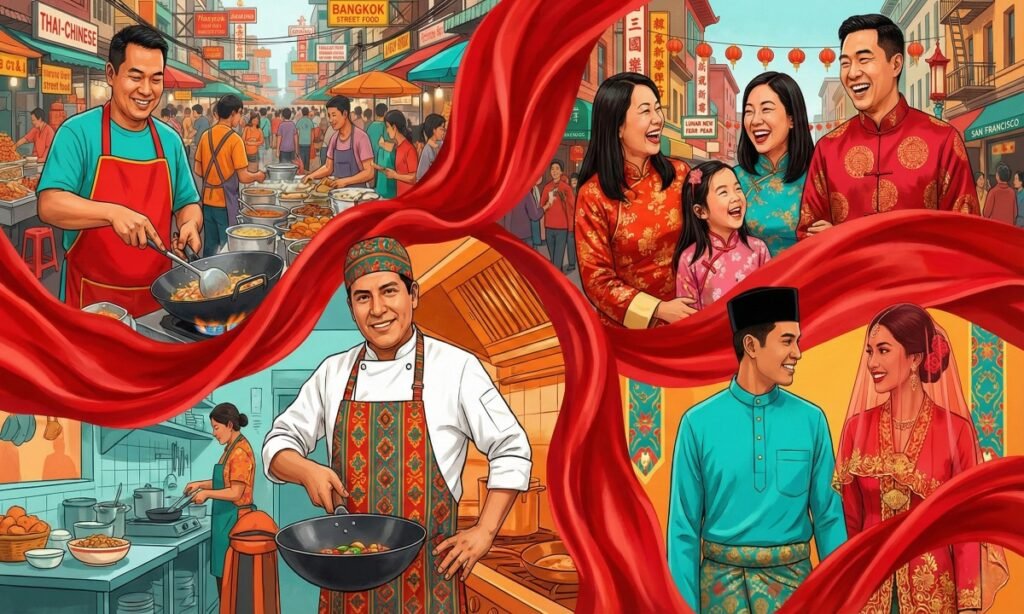
These communities aren’t uniform. Some are highly assimilated, with descendants speaking local languages as their first. Others maintain strong ties to Chinese traditions through language schools, temples, and festivals. Most trace roots to southern provinces like Guangdong, Fujian, and Hainan, with dialects like Teochew, Hokkien, Cantonese, and Hakka still spoken in pockets.
What drives this spread? Economic opportunity, historical labor demands, and family networks. The result: vibrant enclaves that contribute disproportionately to trade, entrepreneurship, and innovation.
A Brief History of Chinese Migration Waves
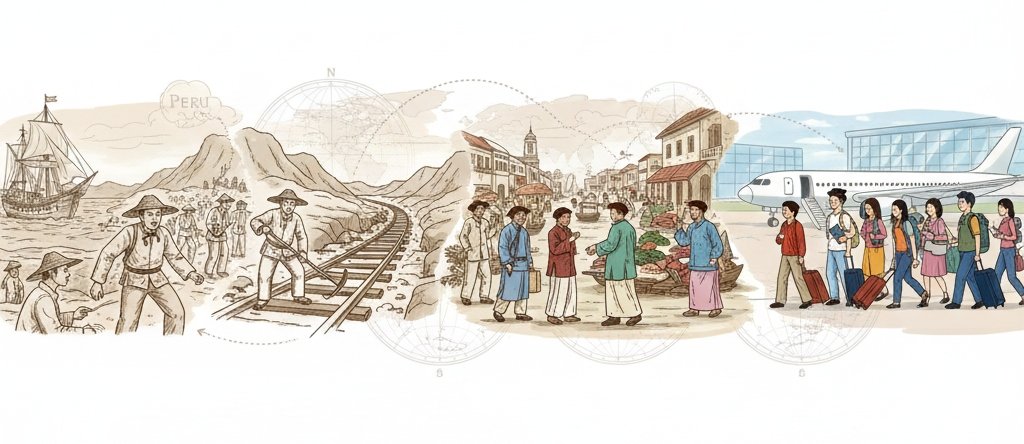
Chinese migration isn’t new—it dates back centuries—but major waves shaped today’s distribution.
- 19th Century Coolie Trade: Poverty, wars, and colonial demands pushed millions from southern China to Southeast Asia, the Americas, and Australia as indentured laborers on plantations, mines, and railroads.
- Early 20th Century: Political instability, including the fall of the Qing Dynasty and civil war, spurred outflows to safer havens.
- Post-WWII Era: Refugees fled communism, while others sought education and opportunity in the West.
- Late 20th–21st Century: Economic reforms in China enabled new emigration, especially to developed nations, alongside established chains pulling family members.
These patterns explain why countries with the most Chinese ancestry today often have deep historical ties.
Top 13 Countries with the Most Chinese Ancestry Outside China
Here’s the ranking based on recent estimates of people with Chinese ancestry. Note that data comes from varying years and includes both full and partial descent.
- Thailand – 9,392,792 Thailand boasts the world’s largest Chinese diaspora community. Deeply integrated, many Thai-Chinese trace roots to Teochew immigrants. They dominate business sectors and include prominent figures in politics and entertainment. Bangkok’s Yaowarat Chinatown is a food lover’s paradise—think street-side dim sum and bustling night markets.
- Malaysia – 7,527,793 Ethnic Chinese make up about 23% of Malaysia’s population. The unique Peranakan (Baba-Nyonya) culture blends Chinese and Malay elements in food, clothing, and architecture. Cities like Penang and Kuala Lumpur feature stunning clan houses and fusion cuisine.
- United States – 5,457,033 Chinese Americans form the largest Asian group in the U.S. Historic waves built railroads and laundromats; modern ones include tech professionals and students. Iconic Chinatowns in San Francisco, New York, and Los Angeles host massive Lunar New Year parades.
- Peru – 3,000,000 A surprising entry—Peru’s Chinese community is one of the largest per capita in the Americas. 19th-century laborers introduced rice farming and created “chifa,” the beloved Chinese-Peruvian fusion that’s now national cuisine. Lima’s Barrio Chino remains a cultural hub.
- Indonesia – 2,832,510 Despite historical challenges, including past discrimination, Chinese Indonesians wield significant economic influence. Many are totok (full Chinese) or peranakan (mixed). Jakarta’s Glodok district offers classic temples and markets.
- Singapore – 2,675,521 Ethnic Chinese form the majority (about 75%) here, making Singapore a modern Chinese cultural powerhouse. Hokkien, Teochew, and Cantonese influences shine in hawker centers and festivals.
- Myanmar – 1,725,794 Long-established but affected by political instability, Myanmar’s Chinese community clusters in Mandalay and Yangon. Many trace Burmese-Chinese roots to Yunnan traders.
- Canada – 1,715,770 Rapidly growing, with large communities in Vancouver (sometimes called “Hongcouver”) and Toronto. Recent immigrants join historic families for a mix of old-school dim sum and contemporary tech scenes.
- Australia – 1,390,637 Concentrated in Sydney and Melbourne, Australian-Chinese contribute to vibrant food scenes and universities. Historic gold rush roots meet modern multiculturalism.
- Philippines – 1,350,000 Known as Tsinoys, Filipino-Chinese are well-integrated and influential in business. Manila’s Binondo is the world’s oldest Chinatown, dating to 1594.
- South Korea – 1,070,566 A newer community, many are students, workers, or entrepreneurs from mainland China. Seoul’s Daerim district has emerged as a mini-Chinatown.
- France – 1,200,000 Europe’s largest, spread across Paris (multiple districts), Lyon, and Marseille. Waves from Wenzhou and former Indochina colonies bring entrepreneurial energy—think wholesale fashion hubs.
- Japan – 1,000,000 Growing fast with recent immigrants, alongside historic communities. Yokohama’s Chinatown is Japan’s largest and a tourist favorite with gates, temples, and panda buns.
Surprising Standouts and Cultural Impact
Peru, France, and even South Korea often surprise readers—proving the diaspora’s reach extends far beyond Asia. These communities enrich host nations through food (chifa, Nyonya, American-Chinese takeout), festivals, and business networks. Chinese New Year celebrations abroad rival those in China, with dragon dances and red envelopes everywhere.
Practical Tips for Experiencing Chinese Communities Abroad
From my experience covering global cultures, here are real-world insights:
Beginner Tips:
- Start with major Chinatowns for safe, accessible immersion.
- Download translation apps—many older generations speak dialects.
Advanced Insights:
- Seek lesser-known enclaves, like Mandalay in Myanmar or Daerim in Seoul.
- Connect via WeChat groups for authentic local recommendations.
Seasonal Advice:
- Time visits for Chinese New Year (January/February) or Mid-Autumn Festival (September/October) for spectacular events.
Common Mistakes to Avoid:
- Assuming all members are recent immigrants—most are multi-generational citizens.
- Overlooking fusion cultures; don’t just seek “authentic” Chinese—embrace local blends like chifa or Nyonya.
- Ignoring safety in politically sensitive areas (e.g., past tensions in Indonesia).
FAQs
1. Which country has the most Chinese ancestry outside China? Thailand, with over 9.3 million people of Chinese descent.
2. Why does Peru have such a large Chinese community? 19th-century labor recruitment for guano mines and plantations, leading to deep integration and the invention of chifa cuisine.
3. Is Singapore counted in Chinese diaspora statistics? Yes, though ethnic Chinese are the majority, many trace ancestry to 19th-20th century immigrants from China.
4. Which country outside Asia has the most Chinese ancestry? The United States, followed closely by Peru and Canada.
5. How do these numbers compare to recent Chinese immigrants only? Ancestry figures are much higher; recent PRC-born emigrants total around 10–11 million globally.
6. Where are the best Chinese New Year celebrations outside China? Standouts include Bangkok (Thailand), San Francisco (USA), Sydney (Australia), and London (though UK didn’t make top 13).
7. Are Chinese communities well-integrated in these countries? Varies—highly in Thailand and Singapore, more distinct in others like Indonesia historically.
8. Has the Chinese diaspora grown recently? Yes, driven by education, investment, and new emigration from China since the 1980s.
Conclusion
The countries with the most Chinese ancestry outside China showcase a remarkable story of resilience, adaptation, and contribution. From Thailand’s massive integrated community to Peru’s flavorful chifa legacy, these populations remind us how migration builds bridges between cultures.
If you’re inspired to explore, start planning—authentic experiences await worldwide. As global connections deepen in 2025, the Chinese diaspora continues to shape our shared future with entrepreneurial spirit and rich traditions.
Read More Posts
External Sources
- Wikipedia: Overseas Chinese (main source for compiled estimates)
- U.S. Census Bureau (American Community Survey data)
- Statistics Canada (2021 Census)
- Australian Bureau of Statistics (2021 Census)
- National censuses and migration reports from Thailand, Malaysia, and Indonesia