
Table of Contents
⚔️ From Hype to Headaches: A Closer Look at the $One-Punch Man$ Season 3 Controversy and Why Blaming Bandai Namco Misses the Real Battle ⚔️
The Anatomy of a Boycott: Understanding the Frustration
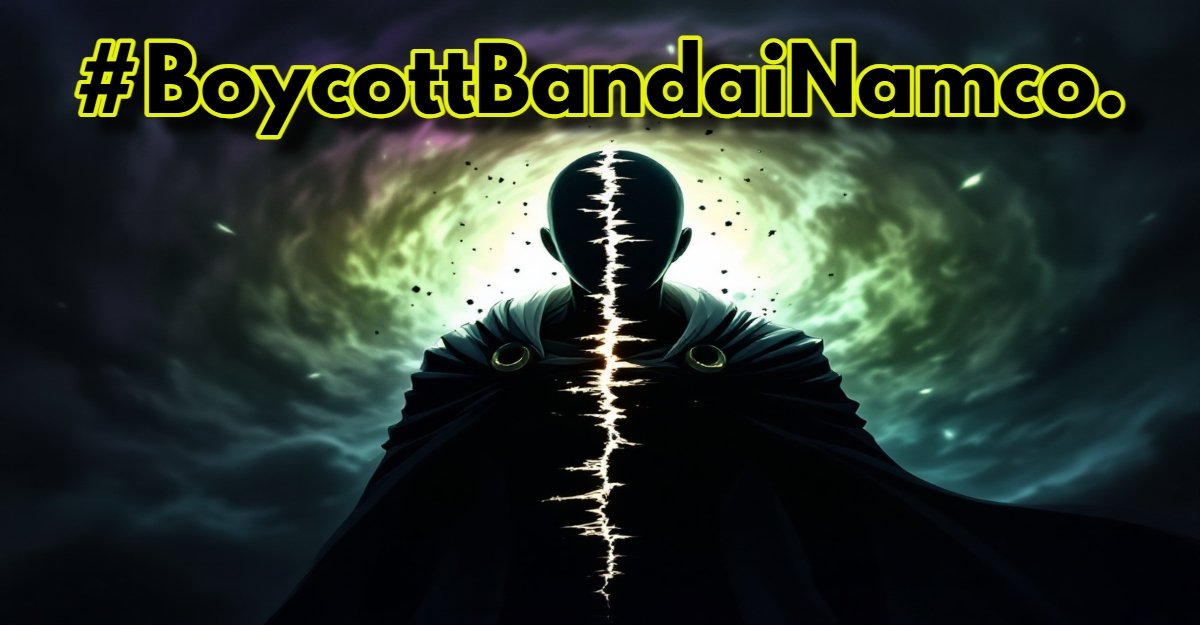
The internet is a powerful place. Right now, the collective anger of the One-Punch Man fandom—a passionate, loyal, and massive global audience—is aimed squarely at one entity: Bandai Namco. The call to action is simple: #BoycottBandaiNamco.
The charge is clear: That Bandai Namco, as a key member of the Season 3 production committee, is acting as the financial supervillain, choking the life out of the anime by imposing impossible deadlines and severely limiting the budget. The narrative goes that J.C. Staff, the studio responsible for animating the season, is the heroic underdog, valiantly fighting against a monstrous corporate overlord with nothing but a stick and a prayer.
And look, the frustration is absolutely understandable. Season 1, animated by Madhouse, is often held up as a pinnacle of action animation. The jump to J.C. Staff for Season 2—and now Season 3—has been met with criticism regarding the visual fidelity and flow of the action sequences, particularly in comparison to the legendary standards set by the first season. When the end product doesn’t meet the community’s sky-high expectations, someone has to take the blame. It’s easier to point a finger at the massive corporation, Bandai Namco, than to dissect the nuanced, murky waters of anime production committees.
But what if the simple, outrage-fueled narrative is wrong? What if the boycott campaign is targeting the wrong villain? In the complex, high-stakes world of Japanese animation production, the real financial and scheduling pressures are rarely the fault of a single company, and often, Bandai Namco’s role is far more complex than just “budget cutter.”
This post isn’t about defending a corporation. This is about providing a counter-narrative that is more grounded in the realities of the anime industry. It’s time to put down the pitchforks for a moment and consider a different perspective: one where Bandai Namco is not the root cause, but a vital piece of the financial engine required to get the show made at all.
The Detailed Counter-Narrative Outline
This section lays out the detailed arguments you will use to build your $1200 – 1500$ word blog post.
I. Deconstructing the “Production Committee” Myth
- The Reality of the Committee: Explain what a production committee ($Seisaku Iinkai$) actually is. It’s a group of investors (publishers, toy/merchandise companies, music/distribution labels) pooling resources to mitigate risk.
- Bandai Namco’s Primary Role: Bandai Namco (or Bandai Namco Arts/Entertainment) is rarely the primary creative decision-maker. Their main incentive is merchandising and licensing. They invest to ensure the anime exists so they can sell figures, games, and toys.
- The Investment/Reward Loop: Argue that a bigger budget means a bigger risk for every partner. Bandai Namco’s investment is contingent on a return on merchandise, not just Blu-ray sales. The committee agrees on a budget collectively, and it’s driven by market forecasts, not malice.
- Key takeaway: The budget is a consensus among all investors, including Shueisha/Jump (the manga publisher). Targeting only Bandai Namco ignores the collective financial decision.
II. J.C. Staff: The Inherited Burden
- The Season 2 Switch: Briefly revisit the massive challenges J.C. Staff faced taking over from Madhouse. The community’s expectations were an impossible bar.
- The One-Punch Man Problem: The manga’s unique complexity (by Murata) and sheer scale of action require an insane level of key-frame animation and talent. This isn’t a standard show.
- Internal Studio Dynamics (The Talent Crisis): The issue might not be a lack of money, but a lack of available, elite-level talent. The best animators are booked years in advance by major studios (MAPPA, Ufotable) for projects with even larger committees.
- Scheduling: The committee sets the release date, but the studio handles the production schedule. Tight deadlines are an industry-wide problem, exacerbated by the sheer volume of anime being produced. J.C. Staff likely agreed to a schedule that, in retrospect, was too ambitious, or they had a mandatory release window to hit for merchandise/manga timing.
III. The True Financial Lever: The Manga Publisher
- Shueisha/Shueisha’s Jump and ONE: The true core of the committee’s power often lies with the company that owns the IP—in this case, Shueisha (via Jump).
- The Goal of the Anime: The primary goal of any adaptation is to drive manga/source material sales. The anime is essentially a high-budget commercial.
- The Timing Imperative: A new season is often timed to coincide with a major manga arc, a new volume release, or a promotional push. These deadlines are non-negotiable and are driven by the publisher’s marketing calendar, not the merchandise company (Bandai Namco).
- The Big Budget Paradox: If the committee invested Season 1 money into Season 3, the production time would be 4+ years. The publisher (Shueisha) would lose crucial marketing momentum and sales in that gap. The real villain is the need to produce anime on a commercial, timely schedule. The limited budget is a symptom of the tight timeline, which is often dictated by the publisher.
IV. The Bandai Namco Ecosystem: A Necessary Evil
- The Good Bandai Namco Does: Bandai Namco is one of the few companies with the financial muscle to back a high-profile, high-risk project like One-Punch Man. Without their investment in the committee, the budget would likely be even smaller, or the show might not be made at all.
- The Global Strategy: Their investment secures global distribution and merchandise rights, which means the show reaches more people globally and has a stable financial backing, allowing for the potential of future seasons.
- Other Projects: Briefly mention their involvement in other top-tier anime (e.g., Gundam, Dragon Ball). They clearly know how to back high-quality animation when the production window allows for it. The issue is context-specific.
- The Boycott’s Vain Target: Point out that boycotting a massive conglomerate over one part of one production committee is unlikely to change the industry’s practices but could jeopardize future seasons of One-Punch Man by making it look like a toxic and unprofitable IP to invest in.
The Conclusion: Redirecting the Punch
The anger of the One-Punch Man fandom is a testament to the show’s importance. When an anime is this beloved, anything less than perfection feels like a betrayal. The impulse to find a scapegoat is strong, and a major corporate player like Bandai Namco makes for an easy target.
However, labeling Bandai Namco as the sole, malicious cause of One-Punch Man Season 3’s production woes ignores the multi-layered, complex reality of the Japanese anime industry. The “villain” isn’t a single company holding back a budget; it’s a structural industry challenge involving a global demand for impossible quality, impossible schedules driven by publishing imperatives, and a critical shortage of elite animators.
Boycotting Bandai Namco won’t magically produce more key-frames or extend the production schedule. If anything, it sends a dangerous signal to all investors: that financing this show is not worth the PR risk.
Instead of fighting the committee, the fandom’s energy should be redirected: Support J.C. Staff and the animators who are pouring their hearts into this impossible job. Support the manga creator, ONE, and Murata-sensei by buying the source material. And most importantly, we must adjust our expectations to the realities of a demanding production schedule.
A good-enough Season 3, produced under immense pressure, is a testament to the dedication of the animators—not the greed of the investors. Let’s appreciate the effort being made and hope that the committee, collectively, learns from this experience to allocate the necessary time and resources for the next phase. The real battle isn’t with Bandai Namco; it’s recognizing that even the greatest heroes face limitations.