

The Global Beef Powerhouse: 2024 Export Leaders Ranked
By Saad
A 2024 Post-Mortem of Beef Exports
If there is one thing the global economy proved in 2024, it’s that the world has an insatiable appetite for high-quality protein. On the surface, beef exports might seem like a simple matter of moving cattle from Point A to Point B, but for the strategic minds at thestrategicpost.com, it’s a high-stakes chess game played with climate cycles, trade tariffs, and logistics.
The year 2024 was a watershed moment for the industry. We saw historic shifts in supply chains: the United States faced its tightest cattle inventory in decades, while Brazil and Australia raced to fill the void. Whether you are an investor, a trade analyst, or a curious reader, understanding who led the pack—and why—reveals the hidden mechanics of global food security.
Let’s break down the billion-dollar leaders of the 2024 beef market and explore the strategies that keep them on top.
The 2024 Global Leaderboard of exporters: By the Numbers
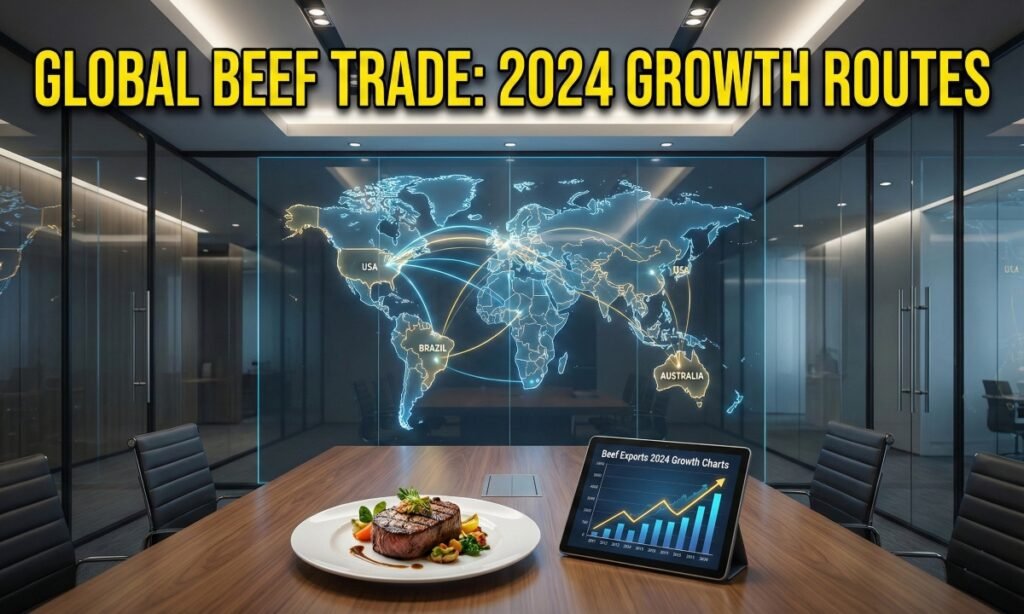
According to data from World’s Top Exports, here is how the top 15 nations stacked up in total beef export value for 2024:
- Brazil: $9.3 billion
- Australia: $8 billion
- United States: $7.2 billion
- India: $3.2 billion
- New Zealand: $3.1 billion
- Argentina: $3 billion
- Uruguay: $2.85 billion
- Paraguay: $2.76 billion
- Ireland: $2.5 billion
- Poland: $2.2 billion
- Canada: $2.1 billion
- Netherlands: $1.9 billion
- Nicaragua: $1.6 billion
- Germany: $1.4 billion
- Spain: $1.2 billion
 Did You Know About Top 40 Cities With The Best Quality Of Life In 2026? – TheStrategicPost
The “Big Three”: Why Brazil, Australia, and the USA Dominate
1. Brazil ($9.3 Billion): The Volume King
Brazil didn’t just win; they dominated. With a commercial herd exceeding 230 million head, Brazil leverages massive land availability and an incredibly efficient processing sector (led by giants like JBS and Marfrig). In 2024, Brazil’s strategy was clear: capture the Chinese market. By securing approval for dozens of new meatpacking plants, they ensured that every time a consumer in Shanghai ordered a steak, there was a high probability it came from the Cerrado or the Amazon frontiers (hopefully under their new, stricter sustainability protocols).
2. Australia ($8 Billion): The Quality Specialist
Australia’s 2024 performance was nothing short of “well-done.” While Brazil wins on volume, Australia wins on “clean, green” branding. Proximity to Asia gives them a logistical edge, but it’s their biosecurity standards that build trust. In 2024, Australia capitalized on the U.S. herd liquidation, stepping in to provide lean grinding beef to American fast-food giants while simultaneously shipping premium wagyu to Japan and South Korea.
3. United States ($7.2 Billion): The Marbling Master
The U.S. is in a unique position—it is both a top exporter and a top importer. In 2024, the U.S. exported high-value, grain-fed cuts known for intense marbling. While their total export value was slightly hampered by high domestic prices and a shrinking herd, the “Brand America” seal still commands a premium price in high-end steakhouses from Dubai to London.
The Strategic “Dark Horses”: India and New Zealand
- India ($3.2 Billion): India’s entry at number four often surprises outsiders. Their secret? Carabeef (water buffalo meat). It is leaner, cheaper, and Halal-certified by default, making it the go-to protein source for the Middle East and Southeast Asia. India’s strategy is purely about price-point accessibility.
- New Zealand ($3.1 Billion): NZ is the boutique shop of the beef world. Almost exclusively grass-fed, their beef is marketed to the “conscious consumer.” In 2024, they leaned heavily into “regenerative agriculture” branding, successfully fetching higher margins despite having a smaller landmass than their competitors.
Regional Powerhouses: The Mercosur Factor
Argentina, Uruguay, and Paraguay collectively represent nearly $9 billion in exports. These three nations are the backbone of the “Southern Cone” beef culture.
- Argentina ($3 Billion): Despite internal economic hurdles, Argentinian beef remains a legendary global benchmark.
- Uruguay ($2.85 Billion): Often called the “Switzerland of South America,” Uruguay leads the world in traceability. Every single cow in Uruguay is electronically tagged—a “Trust” signal that allows them to access the most restrictive European markets.
Expert Insights: 3 Strategies for Global Beef Success
Based on years of tracking trade flows, here is what separates the winners from the losers in beef exports:
- Traceability is Non-Negotiable: If you can’t prove where your beef came from, you can’t sell to the EU or the premium U.S. retailers. Countries like Uruguay and Australia are winning because they invested in “Digital IDs” for cows a decade ago.
- Market Diversification: Relying solely on China is a rookie mistake. In 2024, smart exporters (like those in Australia) shifted focus toward the UK (post-FTA) and North America to hedge against Chinese economic cooling.
- Climate-Smart Branding: The modern consumer cares about methane. Brazil is currently fighting a PR battle over deforestation, while Ireland is winning by showcasing their “Rain-Fed” credentials.
Common Mistakes to Avoid in Beef Analysis
- Confusing Volume with Value: Brazil exports the most tons, but the U.S. often gets more “dollar per pound.” Don’t look at shipping containers alone; look at the cut of meat.
- Ignoring the “Herd Cycle”: Cattle production takes years. When the U.S. is “destocking” (killing more cows due to drought), exports might temporarily spike, but it signals a massive supply crash coming in two years.
- Underestimating Buffalo Meat: Ignoring India’s carabeef market is a mistake. It is the silent engine of the global low-cost protein trade.
Seasonal Trends in Beef Exports
The beef market isn’t static. It breathes with the seasons:
- Q4 (The Festive Surge): Demand for premium cuts (ribeye, tenderloin) peaks in the U.S. and Europe for the holidays.
- Q1 (Lunar New Year): A massive spike in exports to China and Vietnam.
- The “Grilling Season” (May-Sept): In the Northern Hemisphere, demand for manufacturing beef (burgers) sky-rockets, benefiting exporters like Australia and Uruguay.
Conclusion: The Future is Lean and Smart
The 2024 beef exports data tells a story of a world in transition. While Brazil sits on the throne of volume, the real battle is moving toward sustainability, traceability, and premiumization. For the thestrategicpost.com readers, these rankings are more than just numbers—they are a map of which nations are successfully navigating the complexities of a hungrier, more climate-conscious planet.
As we look toward the future, expect to see the “Underdog” nations like Nicaragua and Poland climb the ranks as they professionalize their supply chains. The stakes have never been higher, and in the world of global trade, you either adapt or you’re left out of the herd.
FAQs
- Who is the world’s largest beef exporter in 2024? Brazil remains the world leader, with an export value of $9.3 billion, driven by massive production capacity and high demand from China.
- Why does the U.S. both export and import beef? The U.S. exports high-value, grain-fed “premium” cuts and imports leaner “manufacturing” beef (used for hamburgers) from countries like Australia and New Zealand.
- What is carabeef, and why is India a top exporter? Carabeef is meat from the water buffalo. India is a leader because it has a massive buffalo population and provides a cost-effective, Halal-compliant protein source.
- How do drought conditions affect beef exports? Drought forces farmers to sell cattle early (increasing short-term supply) but leads to a long-term shortage because the breeding herd is reduced.
- Which country has the best beef traceability? Uruguay is considered a global leader in traceability, with 100% of its national herd electronically tracked from birth to slaughter.
- Why is Australian beef so expensive? Australia focuses on “clean and green” grass-fed and high-grade grain-fed products, backed by some of the strictest biosecurity and quality control standards in the world.
External Sources
- World’s Top Exports: worldstopexports.com
- USDA Foreign Agricultural Service: fas.usda.gov
- Meat & Livestock Australia (MLA): mla.com.au
- ABIEC (Brazilian Beef Exporters Association): abiec.com.br
Disclaimer: All data provided is based on 2024 market reports and official trade statistics. Global markets are subject to rapid change due to geopolitical and environmental factors.
🥩 The Beef Export Genius Quiz
Test Your Knowledge of Global Beef Trade!