

Could El Niño Return in 2026? Here’s How It Could Affect Insurance Costs, Homeowners, and Farmers Worldwide
As climate experts monitor signs of a possible return of El Niño, insurers, farmers, businesses, and homeowners are preparing for another period of unpredictable weather.
El Niño is a naturally occurring climate pattern that develops when sea surface temperatures in the central and eastern Pacific Ocean become warmer than average. Toggle above to compare.
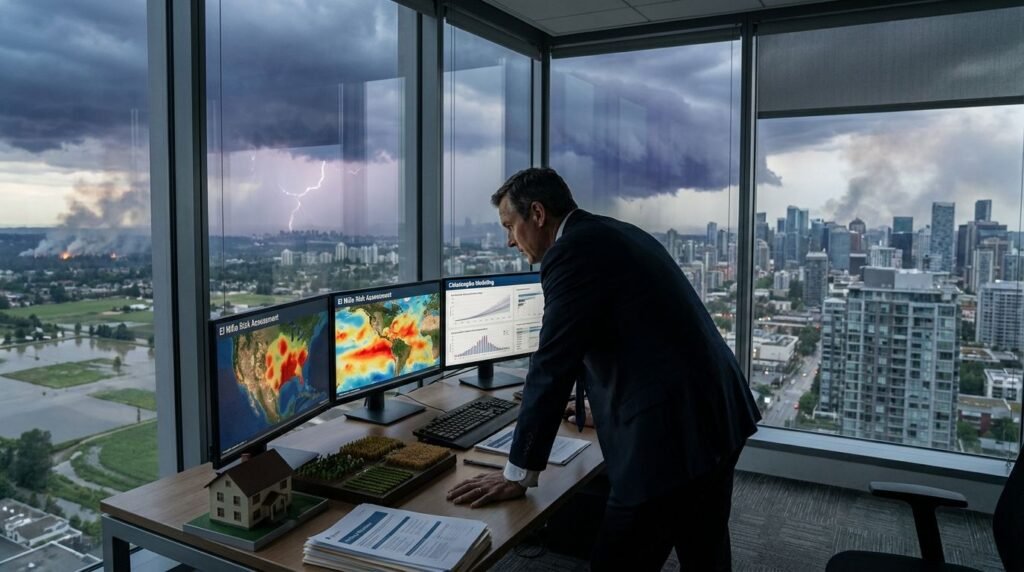
As climate experts monitor signs of a possible return of El Niño, insurers, farmers, businesses, and homeowners are preparing for another period of unpredictable weather. While no one can say with certainty how strong the next event will be, history shows that El Niño can reshape weather patterns across the globe—and with them, the insurance industry.
Why Everyone Is Talking About El Niño Again
From devastating floods to prolonged droughts and record-breaking heat, El Niño has been responsible for some of the world’s most expensive weather disasters.
Meteorologists are closely watching ocean temperatures in the tropical Pacific Ocean because even small shifts can trigger widespread changes in rainfall, storms, and temperatures across continents.
For the insurance industry, this isn’t just another weather event. It represents a potential increase in billions of dollars in insured losses.
What Is El Niño?
El Niño is a naturally occurring climate pattern that develops when sea surface temperatures in the central and eastern Pacific Ocean become warmer than average.
These warmer waters alter atmospheric circulation, influencing weather patterns around the world.
Depending on the region, El Niño may cause:
Not every country experiences the same effects, but nearly every major insurance market feels its financial impact in one way or another.
Why Insurance Companies Pay Close Attention
Insurance companies don’t simply react after disasters—they try to anticipate them.
Months before severe weather arrives, insurers evaluate:
If the probability of extreme weather increases, insurers may begin adjusting pricing, underwriting standards, and catastrophe reserves well before policyholders notice any changes.
Could Insurance Premiums Rise?
One of the biggest questions homeowners ask is whether El Niño could make insurance more expensive.
The answer is: possibly.
Insurance pricing depends on expected future risk rather than past weather alone.
If climate models suggest increased flooding, wildfires, hailstorms, or severe storms in certain regions, insurers may respond by:
Not every customer will see higher premiums, but areas with elevated catastrophe risk are generally more vulnerable to insurance cost increases.
Property Insurance Could Face Greater Pressure
Homes remain one of the largest sources of insured losses during major climate events. Depending on the region, El Niño may contribute to:
Flood Damage
Heavy rainfall can overwhelm drainage systems, rivers, and reservoirs, causing expensive flooding that damages homes and businesses.
Wind and Storm Damage
Some regions may experience stronger storms capable of damaging roofs, siding, windows, and electrical systems.
Wildfire Risk
While some locations become wetter during El Niño, others experience prolonged dry periods that increase wildfire danger.
Wildfires have become one of the fastest-growing sources of insurance losses in recent years.
Farmers May Face a Different Kind of Risk
Agriculture often experiences some of the earliest and most severe impacts of El Niño. Potential challenges include:
Crop insurance providers carefully monitor seasonal forecasts because weather conditions directly influence claim frequency.
Farmers may also adjust planting schedules, irrigation plans, and crop selection to reduce exposure.
Reinsurance Companies Could Feel the Biggest Impact
Behind every insurance company are global reinsurers that help absorb catastrophic losses.
When natural disasters become more frequent or more expensive, reinsurers often face enormous payouts. If climate risks continue increasing, reinsurance companies may:
Those higher costs often flow through the insurance market and eventually reach consumers.
Which Regions Could Be Most Affected?
Although every El Niño behaves differently, several regions typically receive increased attention. Tap a region to see how it’s typically affected.
North America▾
Some areas may experience wetter winters, while others face drought, severe storms, or wildfire conditions.
Australia▾
El Niño has historically been associated with hotter and drier weather, increasing bushfire risk.
South America▾
Western South America often experiences heavier rainfall and flooding during strong El Niño events.
South Asia▾
Rainfall patterns can shift significantly, affecting agriculture, reservoirs, and water supplies.
Southeast Asia▾
Certain countries may experience drought conditions that affect food production and water availability.
How Insurers Are Preparing
Insurance companies rarely wait until disasters occur. Preparation often includes:
Many insurers are also investing in artificial intelligence, satellite imagery, and advanced climate modeling to improve risk prediction.
What Homeowners Can Do
While weather cannot be controlled, preparation can reduce financial losses. Consider:
Small preventive measures can make a significant difference after severe weather.
What Farmers Should Consider
Agricultural producers may benefit from:
Early planning often reduces long-term financial losses.
Climate Change Is Making Risk Assessment More Complex
Scientists continue studying how climate change interacts with natural climate cycles like El Niño.
While El Niño itself is not caused by climate change, a warmer atmosphere can amplify some extreme weather events, making forecasting and insurance pricing increasingly challenging.
This uncertainty is driving insurers to invest more heavily in climate science, predictive analytics, and long-term resilience planning.
The Bottom Line
Whether the next El Niño develops into a weak or powerful event, the insurance industry is already paying close attention.
For homeowners, businesses, and farmers, the return of El Niño could mean more than unusual weather—it could influence insurance premiums, policy availability, agricultural planning, and disaster preparedness.
While forecasts will continue to evolve in the coming months, one thing is clear: understanding climate risk before disaster strikes is becoming just as important as recovering afterward.
As insurers refine their models and governments strengthen resilience efforts, staying informed may be one of the most valuable forms of protection available.
↑ Back to top