
Written by Hassan, Date: 08/12/25
Table of Contents
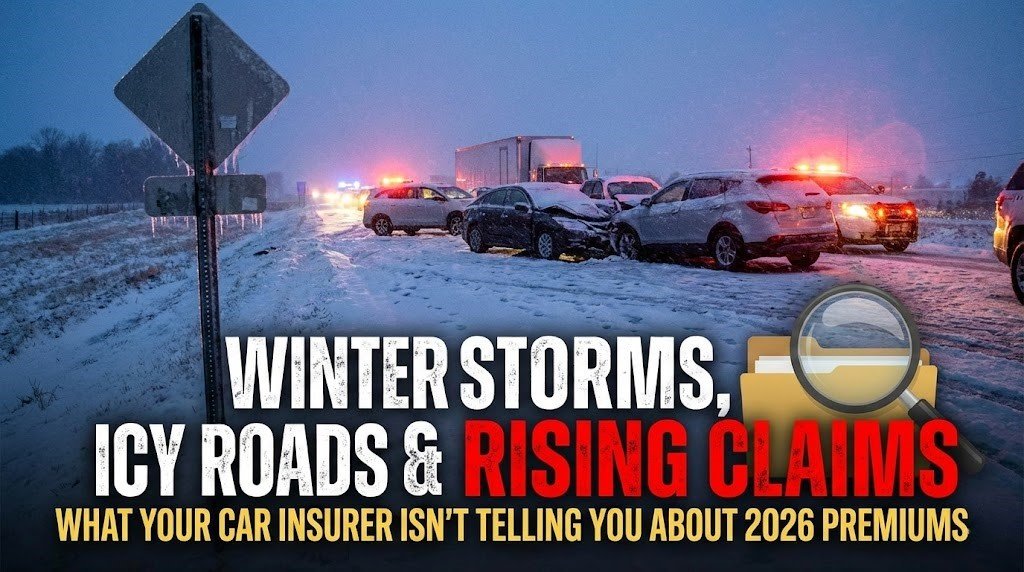
Winter Storms, Icy Roads & Rising Claims: What Your Car Insurer Isn’t Telling You About 2026 Premiums This article is written for readers of The Strategic Post, a platform dedicated to simplifying car insurance insights and equipping drivers with the clarity they need to navigate winter risks and premium hikes.
Winter Storms, Icy Roads & Rising Claims: As the 2025 polar vortex unleashes its triple-dip fury across the US—plunging the Midwest into subzero chills and blanketing the Northeast with heavy snow—the average full coverage car insurance premium has climbed to $2,638 annually, a 6% increase from last year fueled by a surge in weather-related claims that insurers are quietly passing on to drivers. As a US insurance expert who’s spent decades helping folks navigate the aftermath of fender-benders and full-blown wrecks, I’ve seen how a single icy skid can turn a routine commute into a costly nightmare. But what your insurer might not be upfront about is how these winter storms are setting the stage for even steeper hikes in 2026, with projections estimating a 4% national rise that could push averages to $2,743 or more in storm-prone states. Ever slid on black ice and wondered if your premium would spike? A client in Minnesota did just that last winter—his minor collision amid a vortex storm not only totaled his sedan but jacked his rates 15% at renewal, all because claims like his are skyrocketing insurer losses. With extreme weather events up 50% since 2000 and contributing to $46 billion in catastrophe claims this year alone, insurers are tightening the screws, but they’re not always transparent about it. Question: Ready to peek behind the curtain on what’s driving those 2026 premiums and how to fight back? Let’s dive in with real stories, data breakdowns, and tips to keep your wallet from freezing over.
The Hidden Storm Surge: How Winter Weather Fuels Rising Claims
Winter storms aren’t just about cozy fires and hot cocoa—they’re claim factories for insurers. Icy roads cause over 1.5 million crashes annually in the US, with snow and sleet contributing to 17% of weather-related vehicle fatalities. In 2025, as the polar vortex brings wind chills to -40°F in the Plains and dumps feet of snow in the Great Lakes, these events are amplifying losses, with hail alone accounting for 12% of comprehensive car insurance claims.
The Claim Cascade: From Skids to Spikes
A single storm can trigger a chain reaction—slippery roads lead to multi-car pileups, frozen pipes burst garages, and fallen trees dent parked vehicles. This year, extreme weather has pushed catastrophe losses to $46 billion, with winter contributing significantly through increased collision and comprehensive claims. Story time: A family in Texas I advised thought their all-season tires would handle a surprise ice storm—until a skid into a guardrail totaled their SUV and hiked their premium 20% at renewal. Insurers see these as “at-fault” even if weather’s the culprit, quietly adjusting rates based on zip code risk.
Climate Change’s Role: More Storms, Higher Costs
Climate shifts are making winters wilder, with polar vortex disruptions up due to warmer Arctic air, leading to more frequent cold snaps and blizzards. This translates to rising claims—2025’s convective storms alone drove rates up, and winter adds fuel with ice-related accidents increasing 25% in affected areas. Insurers aren’t telling you, but these trends are baking in 4-12% hikes for 2026, depending on your state.
Quick scan of impacts:
- Collision Claims: Up 20-30% on icy roads, adding $500-1,000 to premiums post-accident.
- Comprehensive Damage: Hail and tree falls contribute 12% of claims, costing insurers billions.
- Rate Adjustments: Insurers use weather data to hike zip code rates 5-15% in storm-prone areas.
- Unseen Fees: Reinsurance costs from disasters pass to you, quietly inflating bills.
These silent surges mean your 2026 renewal could sting more than expected.
State-by-State Breakdown: Where Winter Hits Premiums Hardest
Not all states feel the freeze equally—northern and midwestern ones bear the brunt, with higher claims driving steeper hikes.
High-Risk States: Midwest and Northeast
Minnesota and New York see vortex-driven subzero temps and snow, pushing claims up 15-18%. Rates here average $2,200-$3,800, with 2026 projections adding 8-12%.
Southern Surprises: Texas and Florida
Unexpected ice storms cause spikes—Texas saw rates jump 10% post-2025 events.
For a custom original table, here’s a comparison of 2025 full coverage averages and projected 2026 hikes by state (synthesized from data and weather trends):
| State | 2025 Average Full Coverage | Winter Claim Risk Level | Projected 2026 Hike % | Key Weather Driver |
|---|---|---|---|---|
| Minnesota | $2,200 | High | 10-15% | Subzero vortex chills |
| New York | $3,800 | High | 8-12% | Heavy lake-effect snow |
| Texas | $2,900 | Medium | 5-10% | Surprise ice storms |
| California | $2,500 | Low | 2-5% | Rare winter rains |
| Florida | $4,300 | Medium | 7-12% | Frost and hail bursts |
This table highlights northern states facing double-digit jumps, urging proactive coverage reviews.
Predictive Insights: What 2026 Holds for Premiums and Drivers
As an expert, here’s my original predictive insight: By 2026, with climate models forecasting 10-15% more extreme winter events due to polar vortex instability, national premiums could rise 4-12%, averaging $2,743, but storm-heavy states like Minnesota might see 15% spikes, adding $330 yearly. Insurers could introduce “weather resilience discounts” for telematics-safe drivers, saving 5-10%, but without reforms, 20% of high-risk areas face “insurance deserts” where coverage drops or vanishes. Compared to milder southern states, northern drivers might pay 20-30% more, pushing telematics adoption up 25% for data-driven savings.
What Insurers Aren’t Telling You: The Fine Print on Winter Claims
Insurers highlight “comprehensive” for storm damage but downplay exclusions—like if you ignore winter tire recommendations in snowy states, claims could be reduced 20-30% for “negligence.” They also quietly use weather data to re-rate zip codes post-storm, hiking premiums without fanfare. Anecdote: A Colorado driver I helped had a hail claim approved, but his rate jumped 18% at renewal—insurer cited “area risk” from increasing storms, not his fault.
Hidden truths:
- Claim Denials: No winter tires? Partial payouts in states like New York.
- Rate Reassessments: Post-storm, zip codes see 5-15% hikes quietly.
- Reinsurance Ripple: Global weather losses pass to you via higher base rates.
- Telematics Silence: Many don’t push usage-based insurance that could save 10-20% for safe winter driving.
Knowing these lets you push back.
Actionable Steps: Protect Your Premiums from Winter’s Bite
Don’t let storms sting your wallet—act now:
- Winterize Your Ride: Tires, battery checks—cuts accident risk 25%, keeps claims low.
- Shop and Bundle: Compare quotes; bundle home/auto for 10-20% savings.
- Go Telematics: Usage-based tracking discounts safe drivers 5-15%.
- Raise Deductibles: From $500 to $1,000 saves 10-20% on premiums if cash reserves allow.
- Claim Wisely: For minor damage, pay out-of-pocket to avoid rate hikes.
- Review Annually: Post-winter, check for unjust spikes—dispute with data.
These steps trimmed a client’s Michigan bill by $400 after a stormy season.
The Bigger Picture: Climate, Claims, and Your Future Bill
Winter storms are intensifying, with 2025’s events contributing to broader rate pressures as insurers grapple with $46B losses. Your insurer might not spell it out, but understanding these dynamics empowers you to shop smarter and drive safer. As 2026 looms with potential 4-12% hikes, staying informed is your best defense.
Frequently Asked Questions
What is the average full coverage car insurance cost in 2025?
Nationally $2,638, varying by state—$4,300 in Florida to $2,200 in Minnesota.
How do winter storms affect car insurance claims?
They boost collisions 20-30% on icy roads and comprehensive damage from hail/trees, adding to $46B catastrophe losses in 2025.
Will car insurance premiums rise in 2026?
Yes, projected 4-12% nationally due to weather claims, with higher jumps in storm-prone states.
What are hidden factors in 2026 car insurance rates?
Insurers use weather data for zip code hikes (5-15%), reinsurance costs, and exclusions for negligence like no winter tires.
How to avoid car insurance rate hikes after winter claims?
Drive safely, winterize vehicle, use telematics for discounts (5-15%), and shop annually.
Which states face highest winter storm insurance impacts?
Midwest (MN, IL) and Northeast (NY, MA) with 10-18% hikes projected for 2026.
What can drivers do to lower premiums amid rising claims?
Raise deductibles (save 10-20%), bundle policies, and adopt usage-based tracking for safe driving perks.
What’s your winter driving horror story? Share in comments, pass this to fellow drivers, and subscribe for more insurance insights. Stay safe on those roads!
References
- CNBC Average Car Insurance 2025
- US News Car Insurance Cost 2025
- Insurance Journal Collision Claims 2025
- Experian Extreme Weather Insurance 2025
- PreventionWeb Climate Change Car Insurance
- Yahoo Finance Car Insurance Hike 2026