
The AI Copyright Debate Just Got Bigger
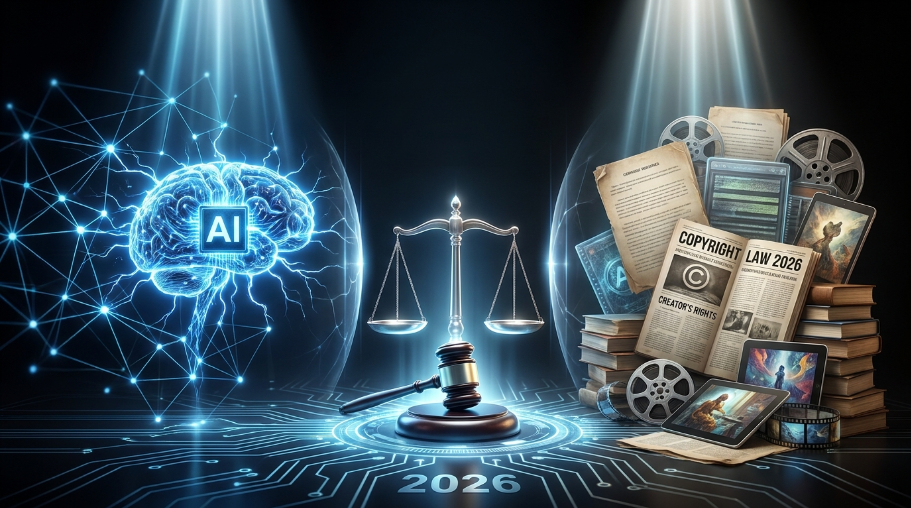
The fight over how artificial intelligence companies use copyrighted content to train AI models has entered another major stage.
On September 2, 2026, the U.S. government filed a brief supporting OpenAI in its ongoing legal dispute with The New York Times and other media organizations.
At the center of the dispute is a major question for the entire AI industry:
Can companies legally use copyrighted material to train artificial intelligence models?
The answer could have enormous consequences.
If courts decide that AI companies can broadly use copyrighted works under fair-use principles, AI developers could have more freedom to train increasingly powerful models.
If courts instead impose significant restrictions, companies may need to obtain licenses, change how their models are trained, or potentially pay creators and publishers for access to their work.
Reuters reported that the U.S. government’s position argues that AI training generally can qualify as fair use and that restrictions could potentially hurt American technological development.
Why AI Companies Need Copyrighted Material
Modern AI systems learn from enormous amounts of information.
Training data can include books, websites, articles, images, code, videos, and other forms of human-created content.
The basic idea is similar to how humans learn from information around them, although AI training is technically much more complicated.
An AI model processes huge amounts of data and identifies patterns. Those patterns allow it to generate text, images, code, audio, and other outputs.
The problem is that much of the information available online is protected by copyright.
That creates a legal and ethical question.
Does using copyrighted material to train an AI model count as a transformative use, or does it require permission from the copyright holder?
There is no universally accepted answer yet, and courts are being asked to determine how existing copyright law should apply to modern AI systems.
The New York Times vs. OpenAI
The New York Times has been one of the most prominent organizations challenging AI companies over training practices.
The newspaper sued OpenAI and Microsoft, arguing that its copyrighted journalism was used without authorization in the development of AI systems.
OpenAI has disputed the claims and argued that training AI models can fall under fair-use principles.
The U.S. government’s recent court filing adds significant weight to the debate because it represents the federal government’s position on an issue that could affect the future of America’s AI industry.
Reuters reported that the government’s brief supports the view that AI training can qualify as fair use and describes AI development as important to technological, economic, and national interests.
However, this does not mean the legal debate is over.
The court still has to consider the arguments, evidence, and existing copyright law.
Why Creators Are Worried
For artists, writers, photographers, musicians, publishers, and other creators, the issue is deeply personal.
Creators spend years developing their skills and producing original work.
If their work becomes part of an AI training dataset without their permission, many argue that they should have some form of control or compensation.
The concern becomes even stronger when AI systems can generate content that competes directly with human-created work.
For example, a writer may worry about AI-generated articles competing with journalism. An illustrator may worry about AI-generated images replacing commissioned artwork. Musicians may worry about AI systems learning from recordings or reproducing recognizable artistic characteristics.
These concerns have already produced multiple lawsuits.
The debate is no longer limited to written articles.
AI companies are facing legal challenges involving images, music, books, software code, and other forms of creative work.
The Government’s Argument
The U.S. government’s position is largely centered on the idea that AI development is strategically important.
Artificial intelligence is increasingly connected to economic competitiveness, national security, scientific research, and technological leadership.
The government has therefore argued that overly broad restrictions could make it harder for American AI companies to compete.
At the same time, officials have acknowledged that creators’ rights matter.
The challenge is finding a legal framework that allows AI innovation without completely removing protections for the people who create the underlying content.
This is one reason the current debate is so complicated.
It is not simply “AI companies versus artists.”
It is a much larger question about how copyright law should work in an era where machines can learn from enormous quantities of human-created information.
Fair Use Is at the Center of the Debate
The term appearing repeatedly in the AI copyright discussion is fair use.
Fair use is a legal doctrine that can allow copyrighted material to be used in certain circumstances without permission.
Courts consider multiple factors when evaluating fair-use claims, including the purpose and character of the use, the nature of the copyrighted work, the amount used, and the effect on the potential market.
AI introduces new complications.
Training a model can involve processing enormous datasets, but the final AI system does not simply reproduce a database containing every original work.
AI companies argue that the process is transformative because models learn statistical and conceptual patterns from training data.
Copyright holders may respond that the original works still provide substantial commercial value to AI companies and that unauthorized use can affect their markets.
That disagreement is likely to remain one of the central legal questions.
Why This Matters to ChatGPT Users
The outcome could eventually affect ordinary AI users.
If AI companies receive greater legal freedom to train models, AI systems could potentially continue expanding their capabilities using larger and more diverse datasets.
That could improve writing, coding, research, image generation, music generation, and other AI applications.
But if courts impose stronger licensing requirements, AI companies may need to negotiate agreements with publishers, artists, music companies, software developers, and other copyright owners.
That could increase costs.
Those costs could eventually influence AI subscriptions, enterprise pricing, available features, or the amount of content companies can legally use for training.
In other words, a copyright case happening in a courtroom could eventually influence the AI tools people use every day.
The Impact on Publishers
Publishers have a particularly complicated relationship with AI.
On one hand, AI can help publishers summarize information, automate certain tasks, analyze data, and create new products.
On the other hand, publishers produce valuable original content that AI systems may use for training.
Some publishers have already explored licensing agreements with AI companies.
This could become a major part of the future AI economy.
Instead of fighting over whether content can be used at all, companies and creators may increasingly negotiate contracts that allow AI systems to access specific content under defined conditions.
That could create a new market for high-quality training data.
Could AI Training Become a Licensing Industry?
One possible future is a large-scale AI licensing ecosystem.
Imagine AI companies paying publishers, photographers, musicians, software developers, and other creators for access to high-quality datasets.
In that scenario, creators could potentially receive revenue when their work is used for AI development.
AI companies would receive legally structured access to valuable information.
And users could benefit from models trained on high-quality data with clearer legal rights.
However, building such a system would be difficult.
There are billions of pieces of content online, ownership can be complicated, and determining how much a particular work contributes to an AI model is not always straightforward.
Still, licensing could become increasingly important as AI becomes more commercially valuable.
The Music Industry Is Facing a Similar Problem
The copyright debate is expanding beyond newspapers and websites.
On September 1, 2026, a group of musicians filed a class-action lawsuit against AI music company Suno, alleging misuse of names, images, and likenesses in connection with AI-generated music. Suno disputed the allegations and said its tools are intended to create original music with safeguards against misuse.
This demonstrates how quickly the legal landscape is expanding.
AI-related lawsuits are increasingly dealing with different forms of intellectual property and personal rights.
The questions surrounding AI may eventually include not only copyright, but also publicity rights, trademarks, privacy, licensing, and ownership of AI-generated content.
What Happens Next?
The biggest takeaway is that the AI copyright debate is far from finished.
The U.S. government’s support for OpenAI represents an important development, but it does not automatically settle the underlying legal questions.
Courts will continue examining whether AI training qualifies as fair use and how existing copyright law should be interpreted in the age of generative AI.
At the same time, governments around the world are developing their own approaches to AI regulation.
The United States has recently advocated for international frameworks that allow AI development while protecting creators’ rights. At a G20 technology meeting, U.S. officials pushed for rules that would avoid unnecessarily restricting AI innovation.
The eventual result could shape the AI industry for decades.
The Future of AI May Depend on This Debate
Artificial intelligence is developing faster than many existing legal frameworks.
Copyright law was created long before AI systems could analyze billions of documents, generate realistic images, write software, compose music, or produce human-like conversations.
That creates a difficult challenge for lawmakers and courts.
They must determine how traditional concepts such as copyright, fair use, ownership, and licensing should apply to technology that did not exist when many of those laws were written.
The goal should not simply be to choose between AI companies and creators.
The bigger challenge is finding a system where innovation can continue while people who create valuable content are not ignored.
The U.S. government’s decision to support OpenAI makes this debate even more important.
For AI companies, the stakes are enormous.
For creators, the stakes may be equally high.
And for everyday users, the final decisions could determine what AI systems can learn, how much they cost, and what they are capable of doing in the future.
The AI revolution is already underway.
Now, the legal system has to decide what rules should govern it.