
Apple Has Officially Entered a New Era
Apple is beginning a major new chapter in 2026.
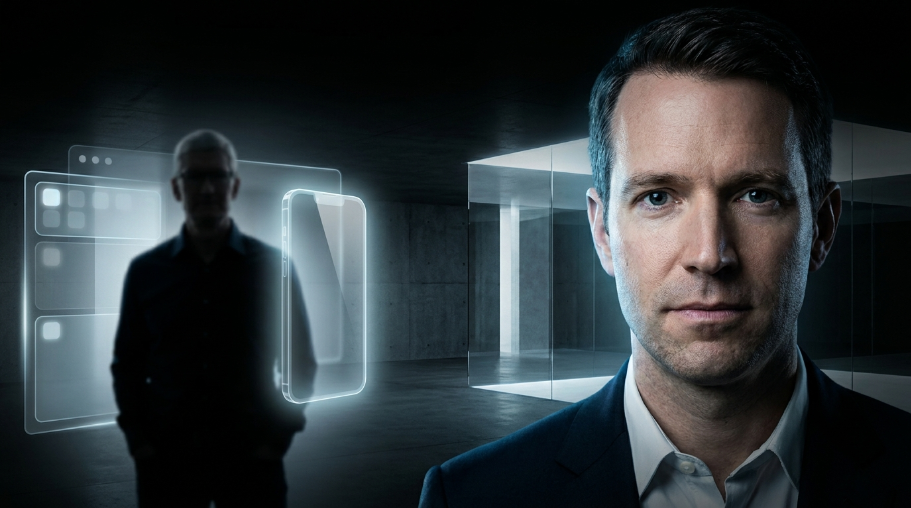
After 15 years at the top, Tim Cook is no longer Apple’s chief executive officer. On September 1, 2026, John Ternus officially became Apple’s new CEO, while Cook moved into the role of executive chairman of Apple’s board.
The transition is one of the most important leadership changes in Apple’s modern history. Cook took over from Steve Jobs in 2011 and spent more than a decade building Apple into one of the world’s most valuable companies. Under his leadership, Apple dramatically expanded its services business, strengthened its supply chain, and grew its global ecosystem.
Now, the company is placing a hardware veteran in charge.
John Ternus has spent years inside Apple and most recently served as senior vice president of Hardware Engineering. Apple says the succession process was planned over the long term and approved unanimously by its board.
But the big question is simple: What does Apple look like under John Ternus?
Who Is John Ternus?
John Ternus is not a newcomer to Apple.
He has been part of the company’s hardware leadership for years and has been closely involved in some of Apple’s most important products. His background is heavily focused on engineering and product development, making his promotion particularly interesting at a time when Apple is facing increasing pressure to accelerate innovation.
Unlike Cook, whose leadership was strongly associated with operations, supply-chain management, services, and business growth, Ternus comes from a more engineering-focused background.
That could influence how Apple approaches its next generation of products.
Apple has spent years building an ecosystem where the iPhone, Mac, Apple Watch, iPad, AirPods, and services work together. The company’s next challenge is not simply selling more devices. It is finding new product categories and making artificial intelligence a meaningful part of the Apple experience.
Ternus could therefore represent a shift toward a more product- and engineering-driven Apple.
Tim Cook Is Not Completely Leaving Apple
Although Tim Cook has stepped down as CEO, this does not mean he has disappeared from Apple.
Cook is becoming executive chairman, meaning he will remain closely connected to the company and its board.
That could provide Apple with an unusual combination of continuity and change.
Cook understands Apple’s business, supply chain, global operations, services strategy, and relationships with governments around the world. Keeping him involved could help Ternus transition into the role while giving Apple access to Cook’s extensive experience.
At the same time, the CEO position gives Ternus authority to establish his own priorities.
This is important because Apple is entering a period where several major challenges are converging at once.
Apple’s Biggest Challenge May Be Artificial Intelligence
One of the biggest questions surrounding John Ternus is Apple’s AI strategy.
Artificial intelligence has become one of the most competitive areas in technology. Companies across the industry are investing heavily in AI models, assistants, chips, cloud infrastructure, and consumer applications.
Apple has introduced Apple Intelligence, but the company has faced criticism for moving more slowly than some competitors.
That makes AI one of the areas where Ternus could face immediate pressure.
Apple has a major advantage: it controls both hardware and software. The company designs its own chips, operating systems, devices, and increasingly sophisticated on-device technologies.
That combination could allow Apple to build AI features that are deeply integrated into the iPhone, Mac, iPad, and other products.
The challenge is turning that potential into products consumers actually notice.
Could Apple Become More Focused on Hardware Innovation?
Ternus’ engineering background could also influence Apple’s hardware strategy.
For years, Apple has continued refining existing product categories. The iPhone remains the company’s most recognizable product, while Macs, iPads, Apple Watches, and AirPods continue to evolve.
But consumers and investors are increasingly interested in what comes next.
The technology industry is watching for new form factors, improved AI hardware, smarter devices, and potentially entirely new product categories.
A CEO with a strong hardware background could encourage Apple to take a more aggressive approach to product development.
That does not necessarily mean Apple will suddenly release dozens of new devices.
Apple traditionally prefers a small number of highly polished products rather than flooding the market with different hardware.
Instead, the change could appear through more ambitious upgrades to existing products and a stronger focus on the technologies underneath them.
The iPhone Remains Extremely Important
Despite all the attention surrounding AI and new technology, the iPhone will remain central to Apple’s business.
The company has built one of the world’s strongest smartphone ecosystems, and each new generation gives Apple an opportunity to introduce better processors, cameras, displays, battery technology, connectivity, and software features.
Under Ternus, the iPhone could increasingly become an AI-first device.
That could mean more AI processing directly on the device, smarter personal assistance, improved photography and video tools, and deeper integration between apps and Apple’s operating systems.
The advantage of on-device processing is particularly important for Apple because privacy has become one of its major selling points.
Instead of sending every request to remote servers, Apple can perform certain AI tasks directly on compatible hardware.
This approach could help Apple differentiate itself from competitors while making its custom silicon even more important.
Why the Leadership Change Matters for Investors
Apple’s CEO transition also matters to investors.
Tim Cook’s leadership was closely associated with Apple’s extraordinary growth and operational efficiency. Investors therefore want to know whether Ternus can maintain that performance while pushing the company into its next phase.
The market is likely to pay close attention to Apple’s product roadmap, AI investments, services growth, margins, and capital spending.
A successful transition would require Ternus to balance two very different priorities.
First, he needs to protect the enormous business Apple has already built.
Second, he needs to create the next major growth story.
That is not an easy combination.
Apple cannot afford to disrupt its existing ecosystem unnecessarily, but it also cannot remain dependent on the same products forever.
Could John Ternus Change Apple’s Culture?
Leadership changes can influence corporate culture even when a company does not dramatically change its strategy.
Ternus comes from Apple’s engineering organization, which means his approach to product development could become more influential throughout the company.
That could potentially result in more emphasis on engineering decisions, product experimentation, hardware capabilities, and long-term technology development.
However, Apple is still Apple.
The company is unlikely to abandon its focus on simplicity, integration, privacy, design, and ecosystem control simply because it has a new CEO.
Instead, the most interesting possibility is that Ternus could combine Apple’s existing philosophy with a stronger emphasis on technological innovation.
What Happens Next?
John Ternus has inherited one of the strongest technology companies in the world.
He also inherits enormous expectations.
Consumers will want more exciting products. Investors will want continued growth. Developers will want better platforms. And the technology industry will be watching Apple’s response to the AI revolution.
The transition from Tim Cook to John Ternus therefore represents more than a change in job titles.
It could mark a change in Apple’s priorities.
Cook helped Apple become an enormous global technology and services company. Ternus now has the opportunity to shape what Apple becomes during the next era of AI, advanced hardware, and increasingly intelligent personal devices.
The most important question is not whether Apple will change.
It is how much Apple will change while still remaining Apple.
For now, the company has chosen an internal leader with deep hardware experience to guide it into that future. Apple officially confirmed that Ternus became CEO on September 1, while Cook moved to executive chairman.
That makes 2026 one of the most significant transition years in Apple’s recent history.
And the products released over the next few years may ultimately reveal just how different the Ternus era will be.