

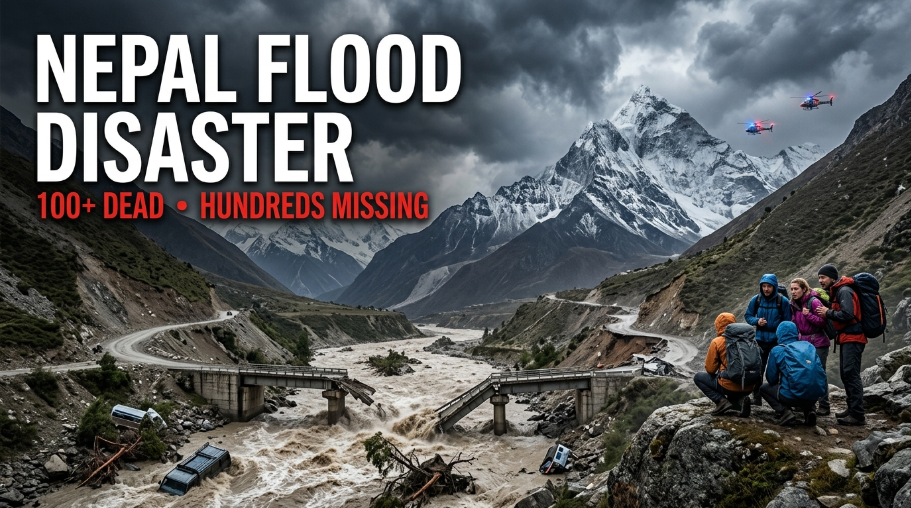
A devastating flash flood on the Nepal-Tibet border has killed at least 95 people and left hundreds of tourists, workers and local residents missing, turning a busy Himalayan travel corridor into a major disaster zone. The flooding struck northern Nepal and the adjoining Tibet region of China on Wednesday, August 26, 2026, sweeping away homes, roads, bridges and other infrastructure.
The disaster is still unfolding, and casualty figures have changed rapidly as rescue teams reach isolated areas. Nepalese authorities have reported dozens of deaths and hundreds of missing people, while Chinese authorities have separately reported casualties and missing people in Tibet. Early reports indicate that many of those unaccounted for were foreign tourists and pilgrims traveling through the region.
For travelers, families and anyone following the situation, understanding where the Nepal-Tibet flash flood happened, what caused it, who is missing and how rescue operations are progressing is essential.
What Happened in the Nepal-Tibet Border Flood?
The catastrophic flooding struck the Himalayan border region around Nepal’s Rasuwa district and China’s Gyirong County in Tibet. The affected area includes the Bhote Koshi River corridor, a geographically challenging region that connects Nepal with Tibet and is used by tourists, pilgrims, traders and local communities.
A huge mass of mud and rock reportedly collapsed into a river, triggering a sudden surge of water and debris. Initial reports have pointed to a combination of geological activity, landslides, possible glacial or avalanche-related events and heavy monsoon conditions as factors being investigated.
The flood moved with enormous force through valleys and settlements. Buildings were damaged or destroyed, vehicles were swept away and important roads and bridges became unusable.
Reuters reported that the disaster had caused at least 95 confirmed deaths in Nepal, while Chinese authorities reported three additional deaths in Tibet. Hundreds of people remained unaccounted for across the wider disaster area.
Because rescue teams are still working through damaged areas, the death toll and missing-person figures may continue to change.
Hundreds of Tourists and Foreign Nationals Are Missing
One of the most alarming aspects of the Nepal-Tibet border flash flood is the large number of tourists and foreign nationals reported missing.
Nepal’s Tourism Board reported hundreds of travelers unaccounted for, including both Nepali citizens and foreign nationals. Reports have identified missing people from several countries, including India, the United States, the United Kingdom, Australia, Malaysia and Canada.
The affected region is particularly important for religious tourism. Some travelers were heading toward Mount Kailash and Lake Mansarovar in Tibet, while others were visiting or trekking in northern Nepal.
The region’s popularity means that a natural disaster can affect people from many countries at the same time. Families overseas may also face difficulties getting immediate confirmation about whether relatives are safe because roads, communications and transportation networks have been disrupted.
Authorities are working to verify lists of missing people, meaning early numbers should not automatically be interpreted as confirmed deaths.
Why Is This Region So Vulnerable to Flash Floods?
The Himalayas are naturally vulnerable to sudden flooding because of their steep terrain, narrow valleys and rapidly changing weather conditions.
Steep Mountain Valleys Increase the Speed of Floodwater
In flat areas, floodwater may spread across a wide region. In the Himalayas, however, water can be forced through narrow valleys and river channels. This can dramatically increase the speed and destructive power of a flash flood.
A sudden release of water upstream can therefore reach communities downstream with very little warning.
Glaciers and Landslides Add Another Layer of Risk
The Himalayan region contains thousands of glaciers and high-altitude lakes. When ice, rocks or landslides suddenly block or alter a river, water can accumulate before being released downstream.
A similar transboundary flood in the same general Nepal-China border region in July 2025 was linked to the rapid drainage of a supraglacial lake on the Purepu Glacier, demonstrating how quickly high-altitude water hazards can affect communities far downstream.
Scientists and disaster specialists have increasingly emphasized the need to monitor glacial lakes, unstable slopes and river systems across national borders.
The Human Impact Goes Beyond the Death Toll
The number of people killed or missing is only one part of the disaster.
The flooding has also damaged critical infrastructure, potentially leaving communities without reliable roads, electricity and communications. Bridges and sections of highways have been damaged, making it harder for rescue teams to reach affected locations.
Power facilities and construction sites in the region have also been affected. Some workers were among those reported missing.
For residents, the consequences can continue long after floodwater disappears. Homes may become unsafe, businesses can be destroyed and access to food, medicine and transportation can be interrupted.
For tourists, the immediate concern is reaching safe areas and establishing contact with family members, embassies, tour operators or local authorities.
Rescue Operations Face Major Challenges
Search-and-rescue teams are operating under extremely difficult conditions.
Flooding has damaged roads and bridges, while mud and debris can make entire areas inaccessible. Rising river levels and unstable slopes also create additional dangers for rescuers.
Nepalese security forces have been involved in rescue operations, including helicopter-supported efforts where conditions permit. However, helicopters cannot always land safely in areas affected by flooding, debris and poor weather.
On the Chinese side, authorities have also launched emergency response efforts in Tibet’s Gyirong area after a mudslide caused deaths and left hundreds missing.
The disaster’s cross-border nature makes coordination especially important. Rescue agencies need to exchange information about missing people, river conditions, transportation routes and affected communities.
What Travelers Should Know About the Affected Region
For anyone planning a trip to Nepal or Tibet, the disaster highlights the importance of checking conditions before traveling into remote Himalayan areas.
Check Official Travel Advisories
Travelers should monitor government travel advisories, local disaster authorities, tourism departments and their embassy or consulate before entering an area affected by flooding.
Social media posts can provide useful eyewitness information, but they may also contain outdated casualty numbers or unverified claims.
Avoid Rivers and Flood Zones
During severe weather, travelers should never approach swollen rivers to take photographs or attempt to cross damaged roads and bridges.
Flash floods can occur even when rain is not falling directly at a person’s location. Water released or displaced upstream can arrive suddenly.
Keep Emergency Contacts Accessible
People traveling through remote mountain areas should keep copies of passports, travel insurance information, emergency contacts and accommodation details.
It is also wise to tell someone outside the affected region about the planned route and expected travel schedule.
How This Disaster Compares With Earlier Himalayan Floods
The August 2026 disaster is not an isolated warning for the Himalayan region.
In July 2025, a major flood near Rasuwagadhi on the Nepal-China border killed people, left others missing and destroyed infrastructure including the bridge connecting Nepal and China. Nepal’s disaster authority later identified a rapid release from a supraglacial lake as the trigger.
The repeated nature of such events demonstrates why Himalayan disaster planning cannot focus only on rainfall forecasts. Flood risks can also come from glaciers, landslides, avalanches, unstable slopes and sudden changes in high-altitude lakes.
Better monitoring systems could potentially provide communities downstream with additional warning time.
Why Early Warning Systems Matter
One of the most important lessons from the Nepal-Tibet border flood is the need for stronger early warning systems.
A successful warning system requires more than simply detecting heavy rainfall. It needs monitoring stations capable of identifying unusual changes in rivers, glaciers, lakes and mountain slopes.
Warnings also need to reach people quickly. In remote Himalayan communities, mobile connectivity may be limited, while tourists may not understand local warning systems or languages.
Cross-border cooperation between Nepal and China could therefore play an important role in reducing future risks. Information gathered upstream could potentially give downstream communities valuable minutes to evacuate.
What Happens Next?
The immediate priority is finding survivors and locating people who remain missing.
Rescue teams will likely continue searching damaged settlements, roads, riverbanks and other areas where people may have become trapped. Authorities must also identify safe evacuation routes and provide shelter and medical assistance to survivors.
At the same time, governments will need to establish a clearer picture of the total damage.
The final death toll may differ significantly from early reports because missing-person lists are still being verified. Some people initially listed as missing may eventually be located, while others could be confirmed among the deceased.
International governments are also expected to assist with identifying and supporting their citizens who may have been caught in the disaster.
What the Nepal-Tibet Flood Means for Himalayan Travel
The tragedy is a reminder that the Himalayas remain one of the world’s most spectacular but environmentally challenging travel destinations.
Trekking, pilgrimage and adventure tourism bring significant economic benefits to communities in Nepal and Tibet, but visitors entering remote mountain areas must recognize that conditions can change extremely quickly.
Climate change, changing glacier conditions, intense rainfall and expanding development in vulnerable valleys can make disaster preparedness increasingly important. The exact causes of this particular flood are still being investigated, so it would be premature to attribute the entire disaster to a single factor.
What is clear is that better monitoring, stronger infrastructure, reliable communication and coordinated emergency planning can reduce the risks faced by both local residents and international visitors.
Conclusion: Nepal-Tibet Flash Flood Leaves a Region in Crisis
The flash flood on the Nepal-Tibet border has become one of the region’s most serious recent disasters, with at least 95 deaths confirmed in Nepal, additional deaths reported in Tibet and hundreds of people still missing. Foreign tourists, pilgrims, workers and local residents are among those affected.
As rescue operations continue, authorities are facing damaged infrastructure, difficult Himalayan terrain and rapidly changing conditions. The final human and economic cost of the disaster is not yet known.
For travelers, the event reinforces the importance of checking official warnings, avoiding dangerous waterways and maintaining emergency communication plans when visiting remote mountain regions.
For the wider Himalayan region, the disaster highlights an even larger challenge: developing stronger systems to detect and respond to flash floods, landslides and glacier-related hazards before they become catastrophic.
The situation remains active, and casualty and missing-person figures may change as rescue teams gain access to affected areas. Readers should rely on verified updates from Nepalese and Chinese authorities, official tourism agencies and reputable news organizations for the latest information.