

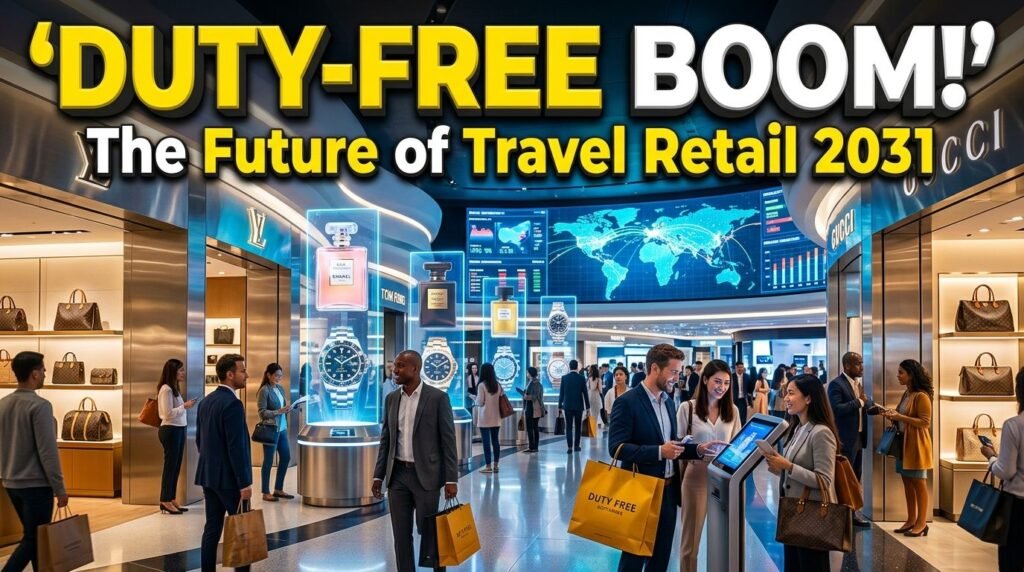
The Future of Duty-Free: How a Multi-Billion-Dollar Travel Retail Revolution Will Transform Global Airports by 2031
From Luxury Shopping to Digital Innovation, the Global Duty-Free Market Is Entering Its Most Exciting Decade Yet
The global duty-free industry is undergoing one of the most significant transformations in its history. Once viewed primarily as a convenient place for travelers to purchase tax-free perfumes, cosmetics, alcohol, and luxury goods, duty-free retail is rapidly evolving into a sophisticated, technology-driven marketplace that shapes the modern travel experience.
Between 2022 and 2031, industry analysts expect the global travel retail and duty-free sector to experience remarkable growth, fueled by rising international tourism, expanding airport infrastructure, increasing disposable incomes, and revolutionary digital shopping experiences. As millions of travelers return to the skies following years of disruption, airports, retailers, and luxury brands are investing heavily to redefine what duty-free shopping means for the next generation of consumers.
The coming decade is expected to create new opportunities for retailers, airlines, airports, luxury brands, and travelers alike, making duty-free one of the most exciting segments of the global tourism economy.
Understanding the Global Duty-Free Market
Duty-free shopping refers to goods sold without certain local taxes and duties, allowing international travelers to purchase products at reduced prices. These stores are commonly located in airports, cruise terminals, border crossings, and international transit hubs.
Traditionally, duty-free retailers have focused on categories such as:
- Luxury fragrances
- Cosmetics and skincare products
- Watches and jewelry
- Premium alcohol
- Tobacco products
- Fashion accessories
- Electronics
- Gourmet foods and confectionery
Today, however, the market extends far beyond these traditional offerings as brands seek innovative ways to engage travelers before, during, and after their journeys.
The Market’s Impressive Growth Trajectory
The global duty-free market is projected to witness substantial expansion throughout the forecast period. Several economic and consumer trends are contributing to this growth:
Recovery of International Tourism
One of the biggest drivers is the continued recovery and expansion of international travel. As countries reopen and tourism numbers surge, airports are experiencing increasing passenger traffic.
Millions of travelers moving through major hubs each day create enormous opportunities for duty-free retailers to capture spending from consumers seeking convenience, exclusivity, and value.
Rising Middle-Class Consumers
Emerging economies across Asia, the Middle East, Africa, and Latin America are producing millions of new middle-class consumers with greater spending power.
These travelers are increasingly interested in luxury products, premium experiences, and international brands, making duty-free stores attractive shopping destinations.
Airport Expansion Projects
Governments worldwide continue investing billions of dollars in airport modernization and expansion projects.
New terminals, upgraded facilities, and larger retail spaces provide retailers with opportunities to enhance the shopping experience while increasing sales potential.
Major Trends Shaping Duty-Free Retail Through 2031
The future of duty-free shopping will be defined by several transformative trends.
1. Digital Duty-Free Shopping
Technology is fundamentally changing how travelers shop.
Modern consumers increasingly research products online before traveling. Many airports now offer digital pre-order systems that allow passengers to browse catalogs and reserve items before arriving at the airport.
Future developments may include:
- Mobile shopping apps
- AI-powered recommendations
- Personalized offers
- Digital loyalty programs
- Real-time inventory tracking
- Seamless mobile payments
This digital transformation creates a more convenient and personalized experience while helping retailers boost sales.
2. Artificial Intelligence and Personalization
Artificial intelligence is becoming a powerful tool in travel retail.
Retailers can analyze customer behavior, purchase history, and travel patterns to offer personalized recommendations.
Imagine arriving at an airport and receiving customized product suggestions based on previous purchases, destination preferences, and shopping habits.
Such capabilities are expected to become increasingly common by 2031.
3. Luxury Brand Expansion
Luxury brands continue to view airports as strategic retail environments.
Travelers often associate international journeys with premium experiences, making airports ideal locations for luxury purchases.
Brands are responding by launching:
- Exclusive airport collections
- Limited-edition products
- Travel-only releases
- Personalized shopping services
This trend is expected to accelerate as competition among luxury brands intensifies.
📊 Duty-Free Market Growth Drivers (2022–2031)
| Growth Factor | Impact Level |
|---|---|
| International Tourism Recovery | Very High |
| Airport Infrastructure Expansion | High |
| Digital Shopping Adoption | Very High |
| Luxury Product Demand | High |
| Rising Middle-Class Population | Very High |
| Personalized Shopping Experiences | High |
| Travel Retail Innovation | High |
Sustainability Becomes a Priority
Environmental awareness is influencing consumer purchasing decisions across every industry, including duty-free retail.
Travelers increasingly prefer brands that demonstrate sustainability commitments.
Retailers are responding through:
- Eco-friendly packaging
- Sustainable sourcing
- Carbon reduction initiatives
- Refillable beauty products
- Ethical luxury collections
Sustainability is likely to become a major competitive advantage throughout the coming decade.
Regional Markets Driving Growth
Asia-Pacific
Asia-Pacific remains the dominant force in global duty-free retail.
Major hubs such as Singapore, Seoul, Hong Kong, Bangkok, and numerous Chinese airports continue attracting large numbers of international travelers.
The region’s expanding middle class and growing tourism sector position it as a key growth engine.
Middle East
The Middle East has emerged as one of the world’s most influential travel retail markets.
Airports in Dubai, Doha, Abu Dhabi, and Riyadh continue investing heavily in luxury shopping experiences.
Strong airline networks and strategic geographic positioning support long-term growth.
Europe
Europe remains a critical market due to its extensive tourism infrastructure and high concentration of international travelers.
Luxury brands continue viewing European airports as essential retail locations.
North America
North America is increasingly embracing advanced retail technologies and digital commerce strategies, creating new opportunities for duty-free operators.
The Rise of Experiential Shopping
Future duty-free stores may look dramatically different from today’s retail environments.
Instead of simply displaying products, retailers are creating immersive experiences that encourage engagement.
Examples include:
- Interactive beauty consultations
- Virtual reality product demonstrations
- Smart mirrors
- Product customization stations
- Live brand experiences
These innovations transform shopping from a transaction into an experience.
Challenges Facing the Industry
Despite strong growth prospects, several challenges remain.
Economic Uncertainty
Global economic fluctuations can influence consumer spending behavior.
Regulatory Changes
Changes to customs regulations, taxation policies, and international trade agreements may affect market dynamics.
E-Commerce Competition
Online shopping continues growing rapidly, forcing duty-free retailers to offer unique value propositions.
Supply Chain Disruptions
Global supply chain challenges can impact inventory availability and operational efficiency.
What Travelers Can Expect by 2031
By 2031, duty-free shopping may become more personalized, convenient, and immersive than ever before.
Travelers can expect:
- Faster shopping experiences
- Greater product selection
- Personalized recommendations
- Enhanced loyalty benefits
- Exclusive airport-only products
- Sustainable purchasing options
- Fully integrated digital services
The distinction between physical and online shopping will continue to blur as retailers create seamless omnichannel experiences.
Final Thoughts
The future of duty-free retail extends far beyond tax-free purchases. Between 2022 and 2031, the industry is expected to undergo a profound transformation driven by technology, luxury innovation, sustainability initiatives, and changing consumer expectations.
As airports evolve into lifestyle destinations and brands seek deeper engagement with global travelers, duty-free retail is poised to become one of the most dynamic sectors within the worldwide tourism ecosystem.
For travelers, the next decade promises a smarter, more personalized, and more exciting shopping experience. For retailers and airports, it represents a multi-billion-dollar opportunity to redefine the future of global travel commerce.