

Tropical Storm Watch: What It Means, Why It Matters, and How Communities Can Stay Safe During Severe Weather Threats
Every year, millions of people living near coastlines and tropical regions face the growing threat of tropical storms. Weather agencies issue alerts to warn residents before dangerous conditions arrive, and one of the most important alerts is a Tropical Storm Watch.
While many people hear the phrase on television, social media, or weather apps, they often misunderstand its meaning and underestimate its seriousness. A Tropical Storm Watch is not simply a routine weather update. It is an early warning system designed to give communities enough time to prepare for potentially life-threatening conditions.
As climate patterns continue to shift and ocean temperatures rise, tropical storms are becoming stronger, wetter, and more unpredictable. Understanding what a Tropical Storm Watch means can make a significant difference in protecting lives, homes, and businesses.
What Is a Tropical Storm Watch?
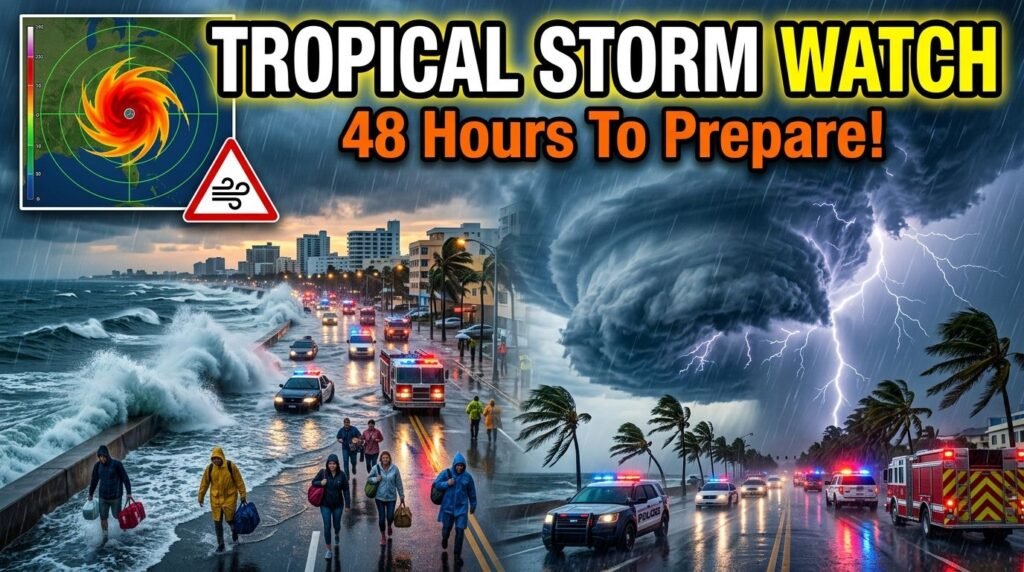
A Tropical Storm Watch is an official alert issued by meteorological authorities indicating that tropical storm conditions are possible within a specific area, generally within the next 48 hours.
These conditions include:
- Sustained winds between 39 and 73 mph (63 to 118 km/h)
- Heavy rainfall
- Flash flooding
- Coastal flooding
- Dangerous waves
- Storm surges
- Potential power outages
A watch means people should begin preparing immediately because weather conditions can deteriorate quickly.
It is important to understand that a watch does not guarantee a storm will hit a particular location. Instead, it signals that conditions are favorable enough that residents should be ready to act.
Tropical Storm Watch vs Tropical Storm Warning
Many people confuse these two terms.
Tropical Storm Watch
- Tropical storm conditions are possible.
- Usually issued 48 hours before expected impacts.
- Preparation should begin immediately.
Tropical Storm Warning
- Tropical storm conditions are expected.
- Usually issued within 36 hours.
- Protective actions should already be underway.
The progression often looks like this:
Weather Disturbance → Tropical Depression → Tropical Storm → Tropical Storm Watch → Tropical Storm Warning → Storm Arrival
The earlier people prepare, the safer they will be.
How Tropical Storms Form
Tropical storms develop over warm ocean waters when several atmospheric conditions come together.
The process typically begins when:
- Ocean temperatures exceed 26.5°C (80°F).
- Warm water evaporates into the atmosphere.
- Rising moist air creates areas of low pressure.
- Winds begin rotating due to Earth’s rotation.
- Thunderstorms cluster around the system.
- The storm strengthens and organizes.
When sustained winds reach 39 mph, the system officially becomes a tropical storm and receives a name.
If winds exceed 74 mph, it becomes a hurricane, cyclone, or typhoon depending on the region.
Why Tropical Storm Watches Are Becoming More Important
Scientists have observed several trends that make early warnings increasingly essential.
Warmer Oceans
Rising sea surface temperatures provide more energy for storms.
Increased Rainfall
Modern tropical storms often produce record-breaking rainfall totals.
Rapid Intensification
Storms can strengthen dramatically within a short period.
Larger Flood Risks
Even weaker tropical storms can cause devastating floods.
Longer Storm Seasons
Many regions are seeing tropical activity earlier and later in the year.
These factors make preparation more important than ever.
Areas Most Vulnerable to Tropical Storm Watches
Regions frequently affected include:
North America
- Gulf Coast
- Southeastern United States
- Florida
- Texas
- Louisiana
Caribbean
- Bahamas
- Jamaica
- Cuba
- Dominican Republic
- Puerto Rico
Asia-Pacific
- Philippines
- Japan
- Taiwan
- Vietnam
- Southern China
Central America
- Belize
- Honduras
- Nicaragua
South Pacific Regions
- Fiji
- Vanuatu
- Solomon Islands
Millions of people live in these high-risk areas every year.
Major Dangers Associated With Tropical Storms
Many people mistakenly believe tropical storms are less dangerous than hurricanes.
In reality, they can still be extremely destructive.
Strong Winds
Powerful winds can:
- Uproot trees
- Damage roofs
- Break windows
- Destroy power lines
- Turn debris into dangerous projectiles
Flash Flooding
Flooding is often the deadliest component of tropical storms.
Heavy rainfall can overwhelm:
- Streets
- Rivers
- Drainage systems
- Urban infrastructure
Storm Surge
Storm surge occurs when seawater is pushed inland.
This can lead to:
- Coastal flooding
- Erosion
- Property destruction
Dangerous Waves
Large waves create hazards for:
- Boaters
- Swimmers
- Coastal communities
Power Outages
Electrical grids often suffer damage, leaving thousands without electricity.
What To Do When a Tropical Storm Watch Is Issued
Preparation should begin immediately.
Build an Emergency Kit
Your emergency supplies should include:
- Drinking water
- Non-perishable food
- Flashlights
- Extra batteries
- First aid kit
- Portable chargers
- Prescription medications
- Important documents
- Cash
Charge Electronic Devices
Prepare:
- Smartphones
- Laptops
- Power banks
- Radios
Secure Outdoor Items
Bring inside:
- Patio furniture
- Garbage bins
- Decorations
- Bicycles
Fuel Your Vehicle
Gas stations may become crowded before the storm arrives.
Review Evacuation Routes
Know:
- Safe shelters
- Alternate roads
- Emergency contact points
Stay Informed
Monitor trusted weather updates regularly.
Tropical Storm Watch Safety Checklist
| Task | Completed |
|---|---|
| Stock emergency food and water | ✔ |
| Charge all devices | ✔ |
| Secure outdoor objects | ✔ |
| Fuel vehicles | ✔ |
| Prepare emergency contacts | ✔ |
| Gather important documents | ✔ |
| Review evacuation plans | ✔ |
| Monitor weather alerts | ✔ |
Common Mistakes People Make
Many injuries occur because people underestimate tropical storms.
Avoid these mistakes:
Waiting Too Long
Do not delay preparation.
Ignoring Official Alerts
Always follow instructions from local authorities.
Driving Through Floodwaters
Just a small amount of moving water can sweep away vehicles.
Going Outside During Strong Winds
Flying debris can cause serious injuries.
Relying Only on Social Media
Always verify information through official weather agencies.
Technology Improving Tropical Storm Forecasting
Meteorologists now use advanced tools to improve prediction accuracy.
These technologies include:
Weather Satellites
Provide real-time storm tracking.
Ocean Buoys
Measure:
- Water temperatures
- Wave heights
- Atmospheric pressure
Hurricane Hunter Aircraft
Aircraft fly directly into storms to collect critical data.
Supercomputers
Advanced models predict storm paths and intensity.
Artificial Intelligence
AI helps improve forecasting speed and precision.
These technologies save countless lives every year.
Economic Impact of Tropical Storms
Tropical storms can create billions of dollars in damages.
Affected sectors include:
Housing
- Structural damage
- Flood repairs
- Insurance claims
Agriculture
- Crop destruction
- Livestock losses
Tourism
- Hotel closures
- Flight cancellations
Transportation
- Road closures
- Port shutdowns
Businesses
- Temporary closures
- Supply chain disruptions
Recovery can take weeks, months, or even years.
Climate Change and Future Storm Risks
Many climate experts believe tropical storms will continue evolving.
Potential future trends include:
- Stronger storms
- More rainfall
- Faster intensification
- Greater flooding risks
- Increased coastal vulnerability
Cities worldwide are investing heavily in resilience projects.
These include:
- Sea walls
- Flood barriers
- Improved drainage systems
- Smart weather monitoring networks
Adaptation will become increasingly important in the coming decades.
How Families Can Create a Storm Preparedness Plan
Every household should establish a plan before storm season begins.
Discuss:
- Emergency meeting locations
- Shelter options
- Communication methods
- Evacuation routes
- Pet safety arrangements
Children should understand:
- Emergency numbers
- Safe rooms
- Basic storm safety procedures
Practice emergency drills regularly.
Final Thoughts
A Tropical Storm Watch is far more than a weather notification. It is an early warning designed to protect communities before dangerous conditions arrive.
Preparation during those crucial 48 hours can save lives, reduce property damage, and help families stay safe during uncertain weather events.
As storms become more unpredictable across the world, awareness and readiness will remain the most effective tools people have.
The message is simple: Do not wait for the storm to arrive before taking action. When a Tropical Storm Watch is issued, preparation should begin immediately.