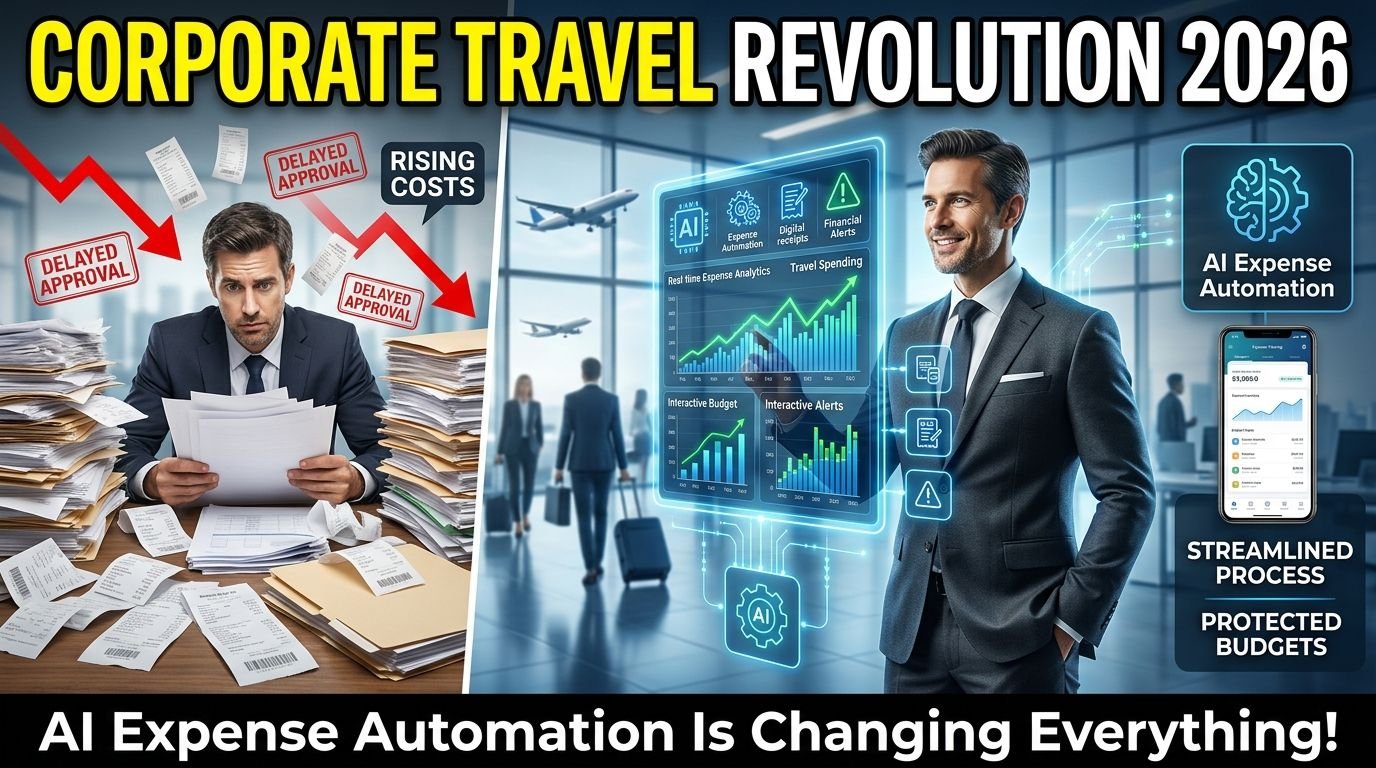

Conquering Corporate Travel Chaos: How Rydoo CEO Sebastien Marchon Says Real-Time Expense Automation and Dynamic Frameworks Are Revolutionizing Finance and Safeguarding Budgets
In today’s fast-moving business world, corporate travel remains an essential component of global expansion, client relationship management, and operational growth. However, behind every successful business trip lies a complex web of expenses, approvals, reimbursement processes, and budget management challenges that can quickly spiral into financial chaos.
Traditional expense management systems are no longer sufficient to keep up with the speed of modern business. Companies are increasingly searching for smarter solutions that provide visibility, control, and automation in real time.
According to Sebastien Marchon, the future of corporate travel finance depends on embracing intelligent automation and dynamic financial frameworks that allow organizations to make instant, data-driven decisions.
As CEO of Rydoo, Marchon is leading a significant transformation in how businesses manage travel expenses, reduce financial waste, and protect corporate budgets from unnecessary overspending.
This shift is not simply about replacing spreadsheets with software. It represents a complete rethinking of how companies approach travel spending in an increasingly unpredictable economic environment.
The Growing Complexity of Corporate Travel
Corporate travel has become significantly more complicated over the past decade.
Businesses must now navigate:
- Rising airfare costs
- Dynamic hotel pricing
- Inflation-driven travel expenses
- Global economic uncertainty
- Changing employee expectations
- Sustainability initiatives
- Strict compliance regulations
Finance teams are under immense pressure to maintain budget discipline while ensuring employees can travel efficiently and comfortably.
The traditional reimbursement model often creates several problems:
- Delayed expense submissions
- Human errors
- Fraud risks
- Lost receipts
- Slow approval cycles
- Poor spending visibility
- Budget overruns
By the time finance departments identify excessive spending, the damage has already been done.
Companies need visibility before problems occur—not after.
Why Real-Time Expense Automation Is Becoming Essential
Real-time expense automation is fundamentally changing expense management.
Instead of employees collecting receipts and filing reports weeks later, expenses are captured instantly as transactions happen.
The process includes:
- Employees make purchases using company cards.
- Expenses are automatically recorded.
- Receipts are digitally scanned.
- AI categorizes expenses.
- Policies are verified instantly.
- Managers receive immediate notifications.
- Finance teams gain live spending visibility.
This approach dramatically reduces administrative burdens and improves financial control.
Organizations can instantly identify unusual spending patterns and take corrective action before budgets are exceeded.
The Hidden Cost of Manual Expense Management
Many organizations underestimate how expensive manual processes truly are.
Finance departments often spend countless hours on repetitive administrative work.
Hidden costs include:
Employee Productivity Loss
Employees waste valuable time:
- Searching for receipts
- Filling forms
- Waiting for approvals
- Correcting mistakes
Finance Team Overload
Finance professionals spend excessive time:
- Reviewing reports
- Chasing missing information
- Checking policy compliance
- Processing reimbursements
Delayed Decision Making
Outdated systems create information gaps.
Executives cannot accurately answer:
- How much are we spending?
- Which departments exceed budgets?
- Where are unnecessary costs occurring?
- Which vendors are most expensive?
Without real-time data, financial decisions become reactive instead of proactive.
Sebastien Marchon’s Vision for Dynamic Financial Frameworks
Marchon advocates moving away from rigid budgeting systems.
Traditional annual budgets often become obsolete within months due to changing market conditions.
Dynamic frameworks offer greater flexibility.
These systems continuously adjust spending strategies based on real-time data.
Businesses can respond faster to:
- Economic fluctuations
- Seasonal travel demand
- Currency exchange rates
- Market disruptions
- Business priorities
Dynamic financial frameworks empower organizations to make smarter spending decisions without sacrificing operational efficiency.
How Artificial Intelligence Is Transforming Corporate Finance
Artificial Intelligence has become one of the most powerful tools in expense management.
AI can automate processes that previously required human intervention.
Capabilities include:
Smart Receipt Recognition
AI extracts information such as:
- Merchant names
- Dates
- Amounts
- Taxes
- Categories
Fraud Detection
AI identifies suspicious behavior, including:
- Duplicate submissions
- Unusual spending patterns
- Out-of-policy purchases
Predictive Budgeting
AI forecasts future expenses using historical trends.
Companies can prepare for potential budget overruns before they happen.
Intelligent Recommendations
Systems can suggest:
- Cost-effective travel options
- Preferred vendors
- Budget adjustments
- Spending optimizations
AI transforms finance departments from administrative centers into strategic decision-making hubs.
Real-Time Visibility: The New Competitive Advantage
Instant access to financial information has become a significant competitive advantage.
Real-time dashboards allow organizations to monitor spending across all departments simultaneously.
Key metrics include:
- Travel costs per employee
- Department spending trends
- Monthly budget consumption
- Vendor performance
- Compliance rates
Decision-makers no longer wait until the end of the month to understand financial performance.
Instead, they can act immediately.
This level of transparency enables faster responses and stronger budget protection.
Employee Experience Also Improves
Expense management is not solely about finance.
Employees benefit significantly from automation.
Common frustrations disappear.
Instead of lengthy reimbursement processes, employees enjoy:
- Faster submissions
- Automatic receipt scanning
- Mobile expense tracking
- Quicker reimbursements
- Simplified approvals
A seamless travel experience improves overall employee satisfaction and productivity.
Workers can focus on business objectives instead of administrative tasks.
The Role of Mobile Technology
Modern expense platforms are mobile-first.
Employees can manage expenses directly from smartphones.
Features include:
- Photo receipt uploads
- GPS-based mileage tracking
- Instant notifications
- Digital approvals
- Real-time spending alerts
This mobility aligns perfectly with today’s hybrid and remote work environments.
Employees can submit expenses from anywhere in the world within seconds.
Sustainability Is Becoming Part of Financial Strategy
Corporate sustainability initiatives are increasingly influencing travel decisions.
Businesses are under pressure to reduce their environmental footprint.
Expense platforms now help organizations track:
- Carbon emissions
- Sustainable travel options
- Transportation choices
- Eco-friendly accommodations
Finance and sustainability teams can work together to achieve both cost-saving and environmental goals.
This integrated approach supports long-term corporate responsibility initiatives.
Key Benefits of Real-Time Expense Automation
Organizations adopting these technologies experience numerous advantages.
Financial Benefits
- Lower operational costs
- Reduced budget leakage
- Improved cash flow management
- Better forecasting accuracy
Operational Benefits
- Faster approvals
- Reduced manual workload
- Improved efficiency
- Stronger compliance
Strategic Benefits
- Better decision-making
- Enhanced transparency
- Greater agility
- Stronger budget control
Employee Benefits
- Simplified processes
- Faster reimbursements
- Improved user experience
- Reduced administrative burden
Challenges Companies Must Overcome
Digital transformation is not without obstacles.
Businesses may encounter:
Resistance to Change
Employees accustomed to old systems may hesitate to adopt new technologies.
Integration Complexity
Companies must ensure compatibility with:
- ERP systems
- Accounting software
- Payroll platforms
- Banking systems
Data Security Concerns
Sensitive financial information requires strong cybersecurity measures.
Organizations must prioritize:
- Data encryption
- Access controls
- Regulatory compliance
Training Requirements
Employees need proper onboarding to maximize adoption.
Successful implementation depends on education and support.
The Future of Corporate Travel Finance
The next decade will bring even greater technological advancements.
Emerging innovations may include:
- Autonomous expense processing
- AI-powered travel assistants
- Predictive spending intelligence
- Blockchain verification systems
- Advanced fraud prevention tools
Corporate finance will become increasingly proactive rather than reactive.
Organizations that embrace automation early will gain substantial competitive advantages.
Why Businesses Can No Longer Delay Digital Transformation
The financial landscape is evolving rapidly.
Companies relying on outdated systems risk:
- Budget inefficiencies
- Higher operational costs
- Employee dissatisfaction
- Competitive disadvantages
Real-time expense automation is quickly becoming a business necessity rather than a luxury.
Organizations that delay modernization may struggle to remain agile in an increasingly data-driven world.
Final Thoughts
Corporate travel will always remain a critical business function, but managing its financial complexity requires a new approach.
Under the leadership of Sebastien Marchon, Rydoo is championing a future where finance teams have complete visibility, employees enjoy frictionless experiences, and organizations can protect budgets through intelligent automation.
Real-time expense management and dynamic financial frameworks are no longer futuristic concepts—they are today’s most effective solutions for conquering corporate travel chaos.
As businesses face rising costs, global uncertainty, and increasing demands for efficiency, the ability to make instant, informed financial decisions will determine which organizations thrive and which fall behind.
The era of delayed reimbursements, manual spreadsheets, and reactive budgeting is coming to an end.
The future belongs to intelligent, agile, and automated finance ecosystems that empower businesses to travel smarter, spend wiser, and grow faster.