


Foods That Represent Nations: A Culinary Journey Around the World in 2026

In 2026, as the global culinary tourism market surges toward $1.23 trillion, up 15.6% from the previous year, travelers aren’t just chasing beaches or landmarks—they’re hunting flavors. Imagine biting into a juicy burger in a bustling New York diner, or savoring spicy biryani under the stars in Lahore. Have you ever wondered why certain dishes become the soul of a country? They’re more than meals; they’re stories of history, migration, and resilience. I remember my first taste of poutine in Montreal—it was late at night, cheese curds squeaking with every bite, gravy dripping everywhere. Messy? Absolutely. Unforgettable? You bet. As a culinary explorer who’s wandered through markets from Marrakech to Tokyo, I’m diving into iconic foods that define nations. We’ll explore trends shaping these dishes in 2026, like the fiber frenzy and global flavor fusions, and I’ll share tips to bring them into your kitchen. Buckle up—this is your passport to the world’s plate.
What Defines a National Dish?
National dishes aren’t decreed by governments (though some are). They’re born from tradition, availability of ingredients, and cultural pride. Think about it: Why does sushi represent Japan? It’s not just raw fish—it’s precision, freshness, and centuries of rice cultivation. According to food historians, these foods often evolve from humble origins, like survival meals during hard times, into symbols of identity. In 2026, with wellness trends emphasizing gut-friendly ferments and protein-fiber combos, many are getting modern twists—think kimchi-infused tacos or plant-based kebabs.
But here’s a fun anecdote: During a trip to Hungary, I joined a family making goulash over an open fire. The grandmother insisted on adding extra paprika, saying, “Without spice, it’s just soup!” It reminded me how these dishes foster connection. Ready to tour the globe?
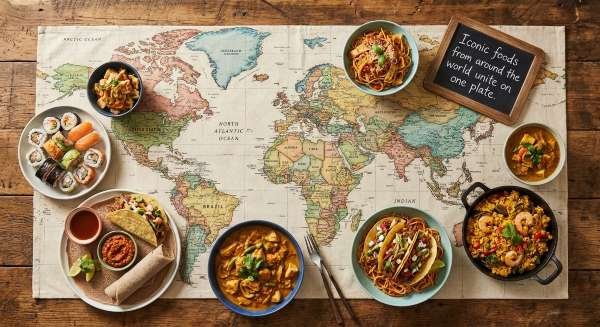
North American Icons: Comfort and Innovation
North America’s foods scream abundance and fusion, reflecting immigrant histories.
United States: The Classic Burger
Ah, the burger—layers of beef, cheese, lettuce, and tomato between soft buns. Born in the late 19th century, it’s a nod to America’s fast-paced life and cattle ranching. In 2026, with the “tallow takeover” trend, expect grass-fed versions cooked in beef fat for extra richness.
- Key ingredients: Ground beef, buns, toppings like pickles and onions.
- Why it represents the U.S.: Symbolizes backyard barbecues and drive-thrus.
Canada: Poutine
Fries drowned in gravy and topped with cheese curds—simple, yet genius. Originating in Quebec in the 1950s, it’s hearty fare for cold winters. Pair it with a craft beer for that authentic touch.
Mexico: Tacos
Soft corn tortillas filled with meats, salsa, and lime. Tacos trace back to Aztec times, embodying Mexico’s vibrant street food culture. In 2026, “fricy” (fruity-spicy) trends might add mango-jalapeño twists.
South American Staples: Bold and Fresh
South America’s dishes highlight indigenous ingredients like corn and seafood.
Peru: Ceviche
Fresh fish “cooked” in lime juice with onions and chili. It’s Peru’s coastal pride, fresh and zingy. As sensory snacks rise, textured versions with crunchy corn could trend.
Argentina: Asado
Grilled meats over open flames— a social ritual. Beef is king here, slow-cooked for tenderness.
Brazil: Feijoada
Black bean stew with pork and sausage, a legacy of Portuguese and African influences. Hearty and communal.
Chile: Empanada
Pastry pockets filled with beef, olives, and eggs. Portable and flavorful, perfect for on-the-go.
European Classics: Tradition Meets Elegance
Europe’s foods vary from rustic to refined, often tied to seasons.
Italy: Pizza
Thin crust topped with tomato, mozzarella, and basil. Naples’ gift to the world, it’s all about simplicity. In 2026, fiber-maxxing might see whole-grain doughs.
France: Boeuf Bourguignon
Beef braised in red wine with mushrooms and onions. Julia Child made it famous—rich and comforting.
Spain: Paella
Saffron rice with seafood and meats from Valencia. It’s a fiesta on a plate.
United Kingdom: Fish & Chips
Battered cod with fries, wrapped in newspaper (traditionally). Crispy, salty bliss.
Germany: Bratwurst
Grilled sausage with mustard. Oktoberfest essential, hearty and beer-friendly.
Greece: Moussaka
Layered eggplant, meat, and béchamel. Ottoman influences shine through.
Russia: Borscht
Beet soup with sour cream—vibrant and nutritious.
Portugal: Bacalhau
Salted cod in various forms. Portugal’s “faithful friend.”
Ireland: Irish Stew
Lamb, potatoes, and carrots—simple farm fare.
Poland: Pierogi
Dumplings stuffed with potato or meat. Comfort food at its best.
Czech Republic: Svíčková
Beef sirloin in cream sauce with dumplings. Elegant yet homey.
Hungary: Goulash
Paprika-spiced stew—Hungary’s fiery heart.
Sweden: Knäckebröd
Crisp rye bread, often topped with cheese. Healthy and crunchy.
Finland: Karjalanpiirakka
Rye pastry with rice pudding. Northern simplicity.
Norway: Gravlax
Cured salmon with dill—fresh from fjords.
African Flavors: Spicy and Communal
Africa’s dishes are bold, using grains and spices.
Nigeria: Jollof Rice
Tomato rice with peppers—West Africa’s pride. Debates rage over the best version!
South Africa: Braai
Barbecued meats—a social barbecue tradition.
Morocco: Tagine
Slow-cooked stew in earthenware—aromatic with cumin.
Egypt: Koshari
Rice, lentils, pasta with tomato sauce—street food staple.
Ethiopia: Injera
Sourdough flatbread with stews. Eat with your hands!
Middle Eastern and Asian Delights: Spice and Balance
These regions blend herbs, rice, and meats.
Turkey: Kebab
Grilled meats on skewers—Ottoman legacy.
Israel: Falafel
Chickpea balls in pita—crunchy and herby.
Lebanon: Hummus
Chickpea dip with tahini—creamy and versatile.
Iran: Chelo Kebab
Rice with grilled kebabs—Persian elegance.
Saudi Arabia: Kabsa
Spiced rice with chicken—Arabian warmth.
India: Biryani
Layered rice with spiced meat— Mughal masterpiece.
Pakistan: Biryani
Similar to India’s, but often spicier with potatoes.
Bangladesh: Rice & Lentils (Khichuri)
Comforting mash—monsoon favorite.
China: Dumplings
Filled pockets steamed or fried—family bonding.
Japan: Sushi
Vinegared rice with fish—artful minimalism.
South Korea: Kimchi
Fermented cabbage—gut-health hero in 2026.
Thailand: Pad Thai
Stir-fried noodles with shrimp—sweet, sour balance.
Vietnam: Phở
Noodle soup with herbs—morning ritual.
Indonesia: Nasi Goreng
Fried rice with egg—everyday indulgence.
Oceania’s Unique Twists: Fresh and Hearty
Down under, foods mix indigenous and colonial.
Australia: Meat Pie
Pastry with minced meat—footy game essential.
New Zealand: Hāngi
Earth-oven cooked meats and veggies—Māori tradition.
Predictive Insight: How National Dishes Evolve in 2026
Looking ahead, 2026’s trends like intentional fermentation and mini formats will reshape these icons. Expect sustainable swaps: plant-based burgers in the U.S. for eco-conscious eaters, or fermented twists on biryani in South Asia for gut health. Culinary tourism will boom, with apps guiding you to authentic spots. But challenges loom—climate change might scarce ingredients like Peruvian fish, pushing innovations like lab-grown alternatives. My prediction? Hybrid dishes, like phở tacos, will dominate fusion scenes, blending borders in exciting ways.
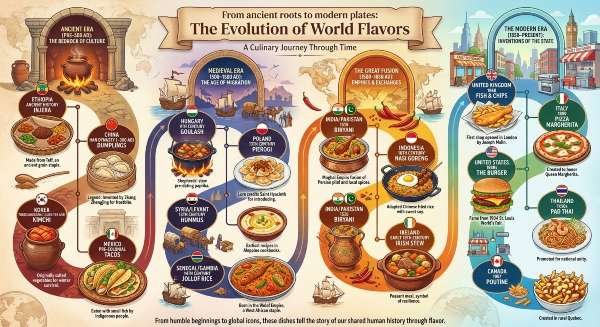
Custom Comparison Table: Nutritional Snapshot of Select Dishes
Here’s an original table comparing five dishes on calories, protein, and fiber—key in 2026 trends. (Data approximated from standard recipes; consult nutritionists for precision.)
| Dish | Country | Approx. Calories (per serving) | Protein (g) | Fiber (g) | Notes |
|---|---|---|---|---|---|
| Burger | United States | 500-700 | 25-30 | 2-4 | High in iron; opt for turkey for less fat. |
| Biryani | India/Pakistan | 600-800 | 20-25 | 5-7 | Rice boosts fiber; add veggies for more. |
| Sushi | Japan | 300-500 | 15-20 | 3-5 | Omega-3 rich; brown rice amps fiber. |
| Jollof Rice | Nigeria | 400-600 | 10-15 | 4-6 | Tomatoes add antioxidants. |
| Paella | Spain | 500-700 | 25-30 | 4-6 | Seafood variant high in protein. |
This table shows how rice-based dishes align with fiber trends.
Actionable Tips: Bring the World to Your Table
Want to try these at home? Here’s how:
- Start simple: For tacos, use store-bought tortillas and grill chicken with cumin.
- Source authentically: Hunt ethnic markets for spices like Hungarian paprika.
- Host a global potluck: Assign friends countries—turn dinner into a cultural exchange.
- Go mini: Follow 2026’s one-bite trend with falafel sliders.
- Sustainably: Choose local alternatives, like plant-based kebabs to cut carbon.
- Pair wisely: Match phở with herbal tea for digestion.
These steps make global eating accessible and fun.
Preparing your download… 30s
References for Credibility
- James Beard Foundation: 2026 Food Trends
- Food & Wine: Biggest Food Trends of 2026
- Taste of Home: Food Trends 2026
- Kroger: Food Trend Predictions 2026
- Wikipedia: National Dishes
- The Business Research Company: Culinary Tourism Market Report
Frequently Asked Questions
What is the national dish of the United States? The burger represents the U.S., a symbol of casual dining and innovation.
What food represents India? Biryani, a flavorful rice dish with spices and meat.
What is Pakistan's national food? Also biryani, often with a bolder spice profile.
What is Japan's most famous dish? Sushi, showcasing fresh seafood and rice.
What represents French cuisine? Boeuf bourguignon, a rich beef stew.
What is a traditional Mexican food? Tacos, versatile and street-style.
What dish defines Italy? Pizza, simple yet globally beloved.
Which national dish sparks your wanderlust? Share this Blog with friends and initiate Discussion—share your favorites or twists! If this inspired you, share on social media or subscribe for more culinary adventures. Let's eat the world together.
#NationalDishes #WorldFoods #CulinaryTourism #FoodTrends2026 #GlobalCuisine #TravelEats #FoodieAdventures #CulturalFlavors
🍽️ National Dishes of the World Quiz
Test Your Global Food Knowledge!