
By Saad
Why Do We Need Food? What Are 5 Reasons We Need Food?
The other afternoon I was halfway through answering emails when I realized I’d been staring at the same sentence for nearly five minutes. I rubbed my eyes, stood up, and wandered into the kitchen. There wasn’t anything fancy waiting for me. Just leftover rice, a fried egg, and a glass of water. Twenty minutes later I sat back down, read the same sentence again, and this time it made perfect sense.
It sounds almost too simple. Eat food. Think better.

For a long time I underestimated how much of my mood, attention, and energy depended on something as ordinary as lunch. I treated food like a chore to squeeze between “real” work. I skipped meals because I was busy. Then I wondered why I felt tired, impatient, and strangely foggy by three in the afternoon.
That small lunch reminded me that food isn’t background noise in our lives. It’s the thing quietly keeping everything else running.
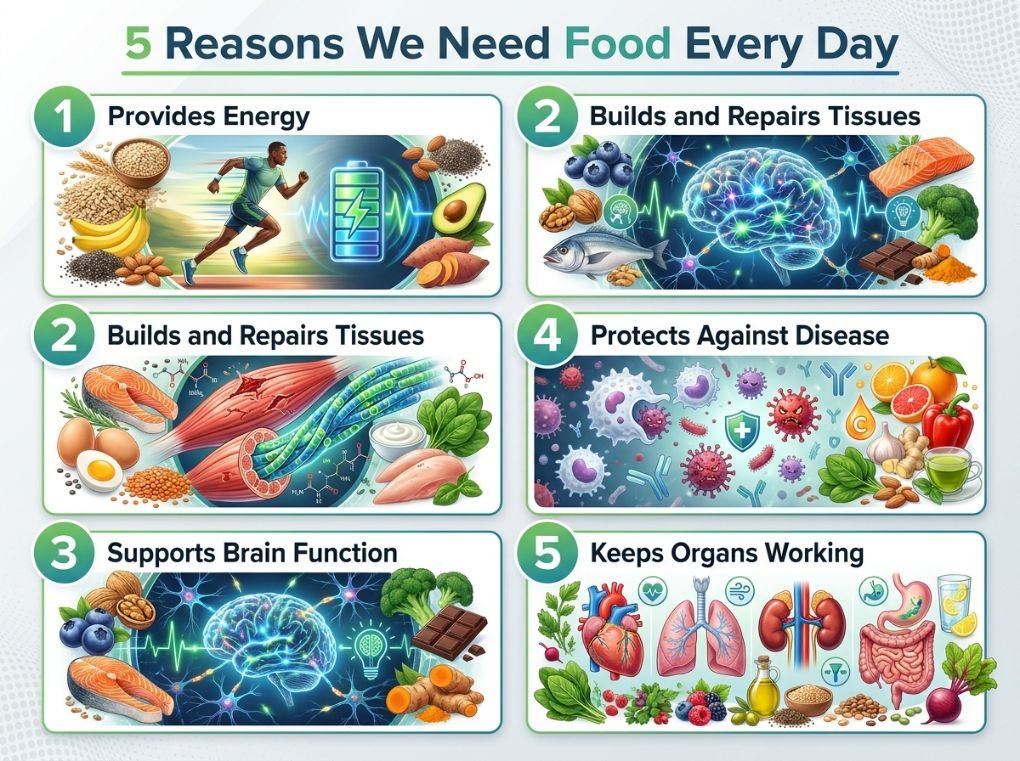
Food gives us energy
The first thing food does is the most obvious, but I still think it’s the easiest to ignore.
Food is fuel.
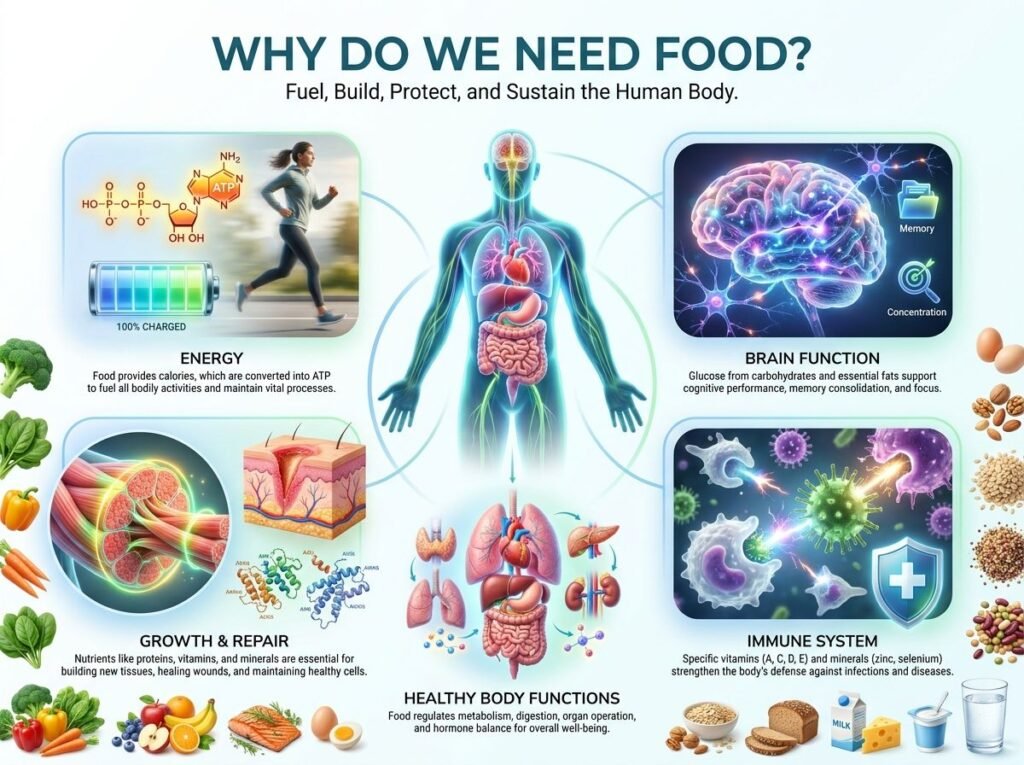
When we eat carbohydrates, fats, and proteins (the three main nutrients our bodies use in large amounts), our bodies break them down into usable energy. That energy powers everything from blinking to walking upstairs to remembering where we left the car keys.
I learned this the hard way during a weekend when I skipped breakfast because I wanted to “save time.” By eleven o’clock I wasn’t saving anything. I was slower, distracted, and somehow annoyed by tiny problems that normally wouldn’t have mattered. My stomach wasn’t even growling anymore. It had moved past hunger into exhaustion.
People often compare the human body to a car, and while the comparison isn’t perfect, it’s useful. Nobody expects a car to drive hundreds of miles without fuel. Somehow many of us expect that from ourselves.
The lesson: energy doesn’t appear out of nowhere.
Food helps our bodies repair themselves
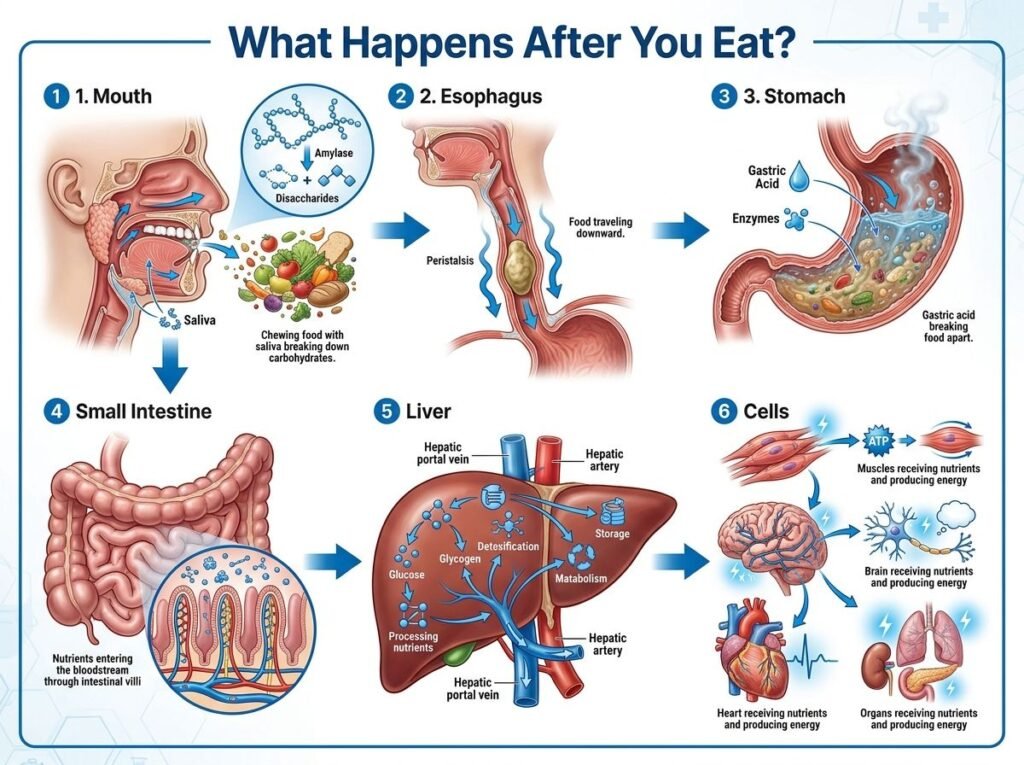
A scraped knee eventually heals. A paper cut disappears. Muscles recover after exercise. None of that happens by magic.
Food provides the raw materials.
Protein, for example, supplies amino acids, which are small building blocks the body uses to repair muscles and many other tissues. Vitamins and minerals help countless tiny repair jobs happen every single day, most of which we never notice.
I remember helping a friend move apartments one summer. We carried boxes up three flights of stairs for hours. The next morning my legs felt like concrete. After a couple of days of eating normally, resting, and drinking enough water, they gradually recovered.
That soreness wasn’t just “going away.” My body was rebuilding.
The lesson: food isn’t only fuel. It’s construction material.
Food keeps the brain working
I keep thinking about that afternoon with the leftover rice and fried egg because it surprised me how quickly my mind seemed to wake up.
The brain uses a remarkable amount of energy for an organ that weighs only a few pounds. It constantly needs a steady supply of nutrients to keep thoughts, memory, attention, and mood working the way they’re supposed to.
This doesn’t mean every snack turns someone into a genius (if only). But it does explain why being underfed often makes concentrating feel strangely difficult.
I’ve noticed something else too. When I’m hungry, every little inconvenience feels bigger. An email sounds ruder than it really is. A delayed delivery feels personal. Then I eat, and suddenly the world seems much more reasonable.
Nothing around me changed. I did.
The lesson: sometimes the problem isn’t the day. It’s lunch.
Food protects our health
This is the part most people hear growing up.
“Eat your vegetables.”
As a kid I rolled my eyes every single time someone said it. Now I understand the point wasn’t vegetables themselves. The point was variety.
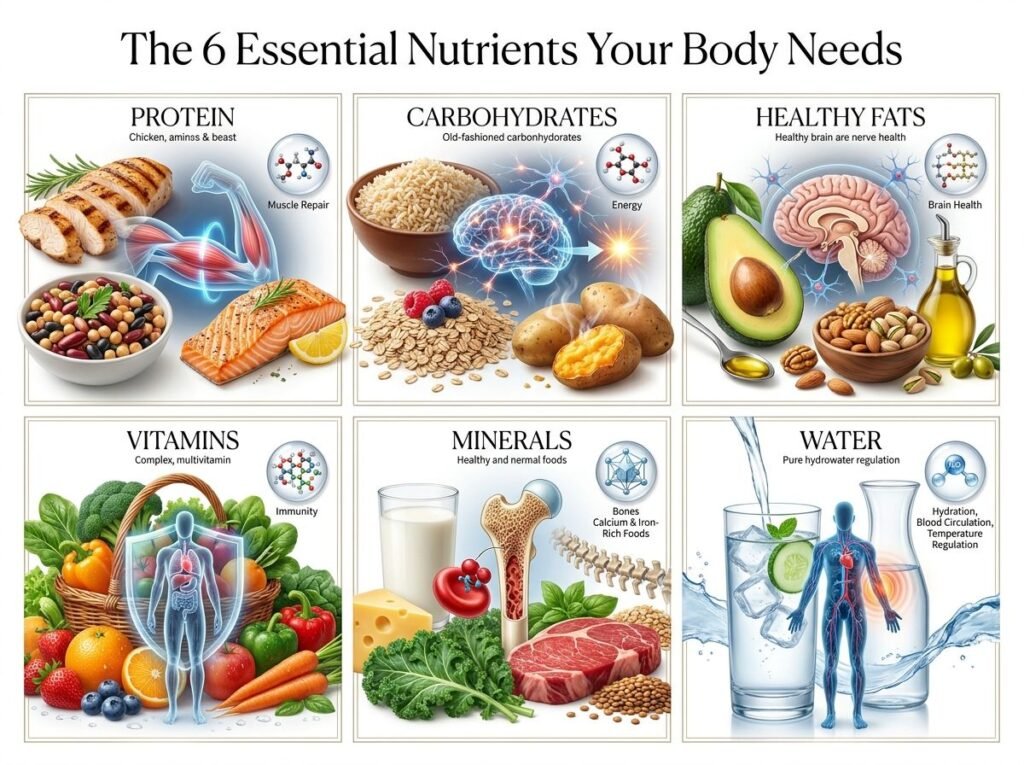
Different foods contain different vitamins, minerals, fiber, and healthy fats. Fiber is the part of plant foods our bodies don’t fully digest, and it helps support healthy digestion. Calcium helps keep bones strong. Iron helps carry oxygen in the blood. Vitamin C supports healing and the immune system, which is our body’s defense against illness.
No single food contains everything we need.
That’s why balanced eating matters more than chasing one “superfood.” Nobody calls bricks the most important part of a house while ignoring the roof, windows, and foundation. Food works the same way. One nutrient can’t do every job.
The lesson: health is usually built from ordinary meals repeated over time.
Food connects us with other people
This reason surprised me the most because it has nothing to do with calories.
Some of my strongest memories involve food that wasn’t especially remarkable.
A cup of tea handed to me after a long drive.
Fresh bread cooling on a kitchen counter.
Someone insisting, “Take another piece,” even after I’d already said I was full.
The meal wasn’t the point.
The people were.
Every culture has some version of gathering around food. Birthday cakes. Holiday dinners. Wedding feasts. Late-night street food after a concert. Even grabbing coffee with someone because you need to talk.
Nobody says, “Let’s schedule forty-five minutes to exchange emotional support.”
They say, “Let’s get something to eat.”
There’s a reason for that.
The lesson: food feeds relationships as much as bodies.
The mistake I made
For years I thought eating well meant following complicated rules.
I downloaded nutrition apps.
I counted things.
I worried about eating the “perfect” breakfast.
The strange part is that all those rules made me think about food more while enjoying it less.
Eventually I stepped back.
Most days, eating enough vegetables, getting some protein, drinking water, and not skipping meals got me much farther than chasing perfection ever did.
That’s not an excuse to ignore nutrition. It’s just an admission that consistency beats obsession.
I still have days when lunch is later than it should be. I still eat dessert without pretending it’s a health food (there’s nothing wrong with dessert). The difference is I don’t expect one meal to fix everything or ruin everything.
The lesson: perfect eating is less useful than steady eating.
The tradeoff nobody mentions
Food can become stressful.
Healthy eating advice often arrives as if there is one correct answer for everyone. One person says avoid carbohydrates. Another says eat more carbohydrates. Someone else insists breakfast is essential, while another person happily skips it.
It gets noisy.
The truth is that bodies differ. Age matters. Activity matters. Medical conditions matter. Personal preferences matter.
That doesn’t mean nutrition has no rules. It means simple principles usually survive where trendy advice doesn’t.
Eat enough.
Eat a variety of foods.
Drink water.
Pay attention to how your own body responds.
That feels less exciting than miracle diets, but ordinary habits have a habit of lasting longer.
The lesson: simple advice is often harder to market because it rarely sounds dramatic.
Coming back to that lunch
I still think about that quiet afternoon with the leftover rice and fried egg.
Nothing about the meal would end up in a cookbook.
Nobody would photograph it.
It wasn’t expensive or carefully planned.
But it reminded me that food isn’t something that interrupts life. It’s one of the things that makes life possible in the first place.
Every conversation, every walk, every laugh, every piece of work I care about depends, in some small invisible way, on what I chose to put on a plate hours earlier.
It is not just a meal. It is tomorrow quietly being built today.