

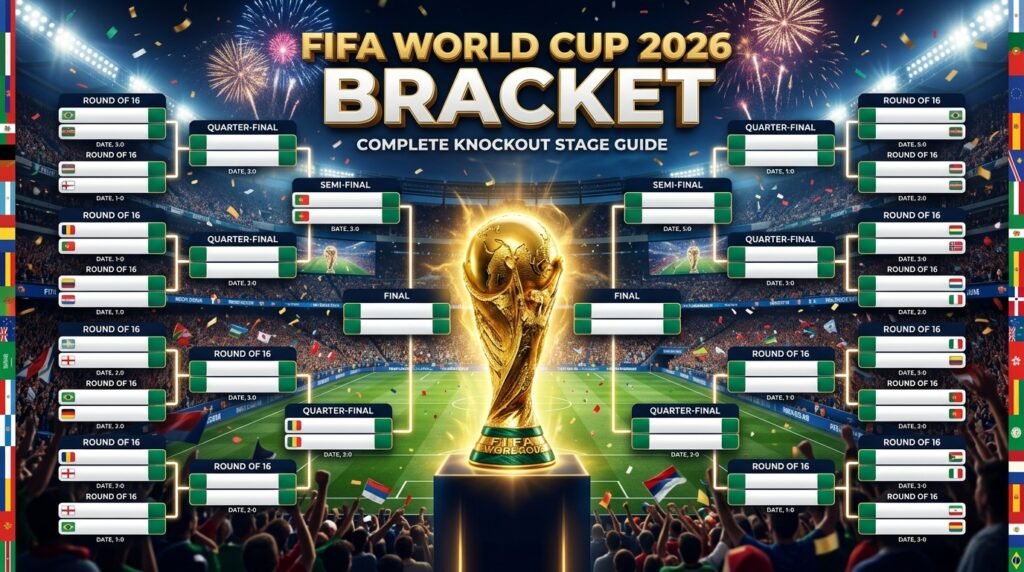
FIFA World Cup 2026 Bracket: Complete Guide to the New Knockout Format
The FIFA World Cup 2026 marks the biggest transformation in football history. For the first time ever, the tournament features 48 national teams, expanding from the traditional 32-team format that had been used since 1998. Hosted across the United States, Canada, and Mexico, the 2026 edition introduces a brand-new knockout bracket with a Round of 32, creating more matches, more drama, and more opportunities for emerging football nations.
Whether you’re trying to understand how the bracket works or looking for a complete breakdown of each knockout round, this guide covers everything you need to know.
What Is the FIFA World Cup 2026 Bracket?
The World Cup bracket is the knockout portion of the tournament where teams compete in single-elimination matches. Unlike previous editions that started the knockout phase with the Round of 16, the expanded tournament now begins with a Round of 32.
This change was introduced because the competition now includes 48 teams divided into 12 groups of four teams each. After the group stage, the top two teams from every group automatically qualify for the knockout stage. They are joined by the eight best third-place finishers, making a total of 32 teams in the bracket. (Wikipedia)
FIFA World Cup 2026 Tournament Format
Group Stage
- 48 Teams
- 12 Groups (A to L)
- 4 Teams in each group
- Every team plays 3 matches
Teams receive:
- Win = 3 Points
- Draw = 1 Point
- Loss = 0 Points
After all group matches conclude:
- Top 2 teams from each group qualify.
- Best 8 third-place teams also qualify.
This creates the 32-team knockout bracket. (Wikipedia)
FIFA World Cup 2026 Knockout Bracket Structure
48 Teams

↓

Group Stage

↓

32 Qualified Teams

↓

Round of 32
(32 Teams)

↓

Round of 16
(16 Teams)

↓

Quarterfinals
(8 Teams)

↓

Semifinals
(4 Teams)

↓

Third Place Match

↓

Final

↓

World Champion
Round of 32
The biggest addition to the tournament is the Round of 32.
Instead of jumping directly into the Round of 16, all 32 qualified nations now play an extra knockout match.
Key Facts:
- 32 Teams
- 16 Matches
- Single elimination
- Winners advance
- Losers are eliminated
This stage significantly increases the excitement because every match becomes a do-or-die encounter.
Round of 16
The sixteen winners from the previous round move into the Round of 16.
Here, the competition becomes even more intense as football’s biggest nations fight for a place in the quarterfinals.
At this stage:
- 16 Teams
- 8 Matches
- Single elimination
Quarterfinals
Only eight teams remain.
These matches usually feature the strongest squads in the tournament and often produce unforgettable moments.
Quarterfinal Format:
- 8 Teams
- 4 Matches
- Winners qualify for the semifinals.
Semifinals
Only four nations remain.
Winning here guarantees a place in the World Cup Final.
The losing teams still have one more opportunity to earn a medal by playing the Third Place Match.
Third Place Match
The semifinal losers compete for third place.
Although it does not determine the champion, it remains an important fixture for national pride and FIFA rankings.
FIFA World Cup Final
The final is the biggest football match in the world.
The two remaining teams compete for the FIFA World Cup Trophy.
If the score is level after 90 minutes:
- Extra Time (30 Minutes)
- Penalty Shootout if necessary
The winner becomes the FIFA World Cup Champion.
How Teams Qualify for the Bracket
Qualification is determined entirely by group stage performance.
The order is:
- Points
- Goal Difference
- Goals Scored
- Head-to-head record
- Fair Play record
- Drawing of lots (if necessary)
The eight best third-place teams are ranked using these criteria before filling the remaining knockout spots. (Talksport)
Why FIFA Expanded the Bracket
FIFA expanded the tournament for several reasons:
- More countries can participate.
- Increased global representation.
- More competitive matches.
- Greater opportunities for smaller football nations.
- Increased fan engagement worldwide.
- Higher commercial value for the tournament.
The expanded competition also increases the total number of matches from 64 to 104. (Wikipedia)
Advantages of the New Format
More Nations
Teams that previously struggled to qualify now have a realistic chance of reaching the World Cup.
More Knockout Football
Fans enjoy an entirely new Round of 32 filled with high-stakes matches.
More Underdog Stories
The expanded format allows emerging football nations to surprise traditional powerhouses.
Increased Global Interest
More countries participating means more supporters following the tournament worldwide.
Possible Challenges
Despite its advantages, the new bracket has sparked debate.
Some experts believe:
- Players may experience greater fatigue because of additional matches.
- The tournament lasts longer.
- Some group-stage matches may become less meaningful due to more qualification spots.
However, many analysts believe the added knockout round more than compensates by delivering additional excitement. (Forbes)
Expected Favorites
Several nations enter the tournament as strong contenders:
- Argentina
- France
- Brazil
- England
- Spain
- Portugal
- Germany
- Netherlands
However, the expanded knockout bracket gives more opportunities for surprise teams to make deep tournament runs.
Frequently Asked Questions
How many teams are in the FIFA World Cup 2026?
There are 48 teams, making it the largest FIFA World Cup in history.
How many teams qualify for the knockout bracket?
A total of 32 teams advance.
Why is there a Round of 32?
The tournament expanded from 32 to 48 teams, requiring an additional knockout round.
How many matches are played in the tournament?
There are 104 matches in total.
Is the knockout stage single elimination?
Yes. Every knockout match is winner-takes-all. If a match is tied after 90 minutes, it goes to extra time and, if necessary, penalties.
Final Thoughts
The FIFA World Cup 2026 bracket represents the biggest structural change in the tournament’s history. With 48 participating nations, a Round of 32, and 104 total matches, fans can expect more drama, more unforgettable moments, and greater global representation than ever before.
While some debate the expanded format, one thing is certain: the new bracket creates more opportunities for underdog stories, thrilling knockout clashes, and historic achievements. As the tournament unfolds across the United States, Canada, and Mexico, every match in the knockout bracket will bring teams one step closer to football’s ultimate prize—the FIFA World Cup trophy.
Read More Interesting Stories by Thestrategicpost Here