

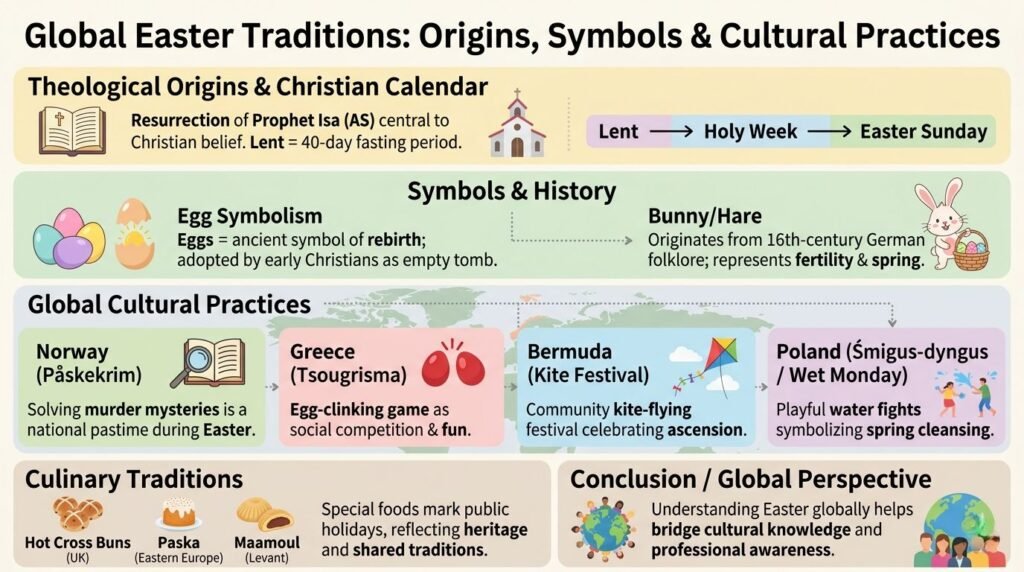
Easter Traditions and Their Origins
As a global news and lifestyle platform, we often explore the diverse traditions that shape our world. While Easter is not a tradition within the Muslim faith, understanding the customs of other major global populations is essential for a well-rounded perspective on international culture. From the historical roots in Europe to the unique social customs in the Americas and Scandinavia, here is an objective look at how this season is observed across the globe.
Theological Origins and the Christian Calendar
For the Christian world, this period is the most significant event in their liturgical calendar. It is based on the narrative of the resurrection of Jesus (Prophet Isa, peace be upon him), as described in Christian scripture. While Islamic theology holds a different view regarding the events surrounding Prophet Isa (AS), for billions of Christians, this period represents the core of their belief system.
The season is preceded by Lent, a 40-day period where many Christians practice various forms of fasting or abstinence. This culminate in Holy Week, which includes several specific days of observance leading up to the final Sunday celebrations.
Origins of Modern Symbols: A Blend of History
Many of the most recognizable symbols associated with this time, such as eggs and rabbits, actually have roots that pre-date Christian theology, often originating from ancient European folk traditions related to the arrival of spring.
The Symbolism of the Egg
Historically, the egg has been used in many ancient cultures as a sign of nature’s “rebirth” after winter. Early Christian communities in the Middle East and Europe adopted this symbol to represent the empty tomb. In many traditional cultures, eggs were dyed red to signify sacrifice. Today, this has largely shifted toward the commercialized “Easter Egg Hunt” and chocolate confectionery.

The European “Hare” and the Modern Bunny
The concept of a “bunny” or hare delivering treats originated in 16th-century German folklore. Because rabbits are known for their high fertility, they were used by ancient Germanic tribes as symbols of the spring season. These folk customs were later carried to the Americas by immigrants, evolving into the commercialized figure seen in global media today.
Diverse Cultural Observances Around the World
Different nations have developed social customs that are often more cultural than religious. Understanding these provides insight into how various societies spend their public holidays:
1. Norway: The Tradition of “Easter Crime” (Påskekrim)
In a unique social phenomenon, Norway observes the holiday by engaging with murder mystery novels and television specials. This started in the 1920s as a successful marketing campaign by a publisher and has since become a national pastime, where the public spends the holiday solving fictional crimes.
2. Greece: Social Games and Traditions
In Greek culture, the holiday is a major social event. One common tradition is tsougrisma, a game where people clink red-dyed eggs together to see whose egg remains uncracked. It is treated as a social icebreaker and a bit of friendly competition among families.
3. Bermuda: The Kite Flying Festival
In Bermuda, the public holiday is marked by the flying of elaborate, colorful kites. While it started with a religious analogy about ascension, it has transformed into a massive community festival where people showcase their craftsmanship in the wind.
4. Poland: “Wet Monday” (Śmigus-dyngus)
In Poland, the day following the main celebration involves a playful tradition where people throw water on each other. Historically a folk custom for spring cleansing, it is now a large-scale, friendly water fight that involves entire neighborhoods.
Culinary Traditions Across Borders
Public holidays often revolve around specific foods that define a culture’s heritage:
- Hot Cross Buns: Spiced buns common in the UK and former colonies, usually eaten on the Friday before the main holiday.
- Paska: A highly decorative, traditional bread found in Eastern Europe.
- Maamoul: Interestingly, in parts of the Levant (Lebanon, Syria, Jordan, and Palestine), Christian communities share the tradition of making Maamoul—shortbread cookies stuffed with dates or nuts—which are also a staple during Muslim Eid celebrations, showing a shared regional culinary heritage.
Conclusion: A Global Perspective
Observing these traditions from a distance allows us to understand the social fabric of different nations. For the Muslim world, these reports serve as an educational bridge, highlighting how history, geography, and ancient folklore merge to create the modern world’s diverse cultural landscape. As we navigate a globalized society, being informed about the practices of others helps in maintaining a professional and knowledgeable worldview.
Conclusion in Roman Urdu/Hindi
Easter ka tyuhaar duniya ki ek bari abadi ke liye mazhabi aur saqafati ahmiyat rakhta hai. Agarchay ye Islami aqayid ka hissa nahi hai, lekin ek khabarnama aur blog website hone ke naate, duniya bhar ki riwayaat ko samajhna hamari maloomat mein izafa karta hai. Europe ki purani lok-kahaniyon se lekar Scandinavia ke anokhay “Crime Mystery” riwaaj tak, ye maloomat humein batati hain ke mukhtalif qoumein apne din kaise guzarti hain.
In riwayaat mein aksar purane zamane ki saqafat aur mausam-e-bahar (spring) ki khushiyan shamil hoti hain. Surkh andon ka khel ho ya patang bazi, ye sab insani tareekh ke mukhtalif rang hain. Middle East ke kuch hisson mein masihi baradri Easter par “Maamoul” banati hai, jo ke hamari Eid ki riwayaat se milti julti ek dilchasp cheez hai.
Ek musalman ke tor par hamara maqsad doosri qoumon ke taur-tareeqon ko parakhna aur unke baray mein ilm rakhna hai, taake hum duniya ke badalte hue halaat aur saqafaton se ba-khabar reh saken. Ye blog sirf maloomati maqsad ke liye hai taake hum apne qarien ko duniya ke har goshay ki khabron aur riwayaat se aagah rakh saken.
Understanding Easter Traditions
An objective, educational exploration of how history, geography, and ancient folklore merge to create diverse cultural observances across the globe.
Origins of Modern Symbols
Many recognizable symbols associated with this season have roots that pre-date Christian theology, originating from ancient European folk traditions celebrating the arrival of spring. The chart below visualizes the estimated blend of historical influences on modern commercial traditions.
The Symbolism of the Egg
Historically used in ancient cultures as a sign of nature’s “rebirth” after winter. Adopted by early communities to represent the empty tomb, originally dyed red to signify sacrifice.
The European Hare
Originating in 16th-century German folklore, highly fertile rabbits were symbols of spring. Immigrants brought this folk custom to the Americas, evolving into the modern commercial bunny.
Diverse Cultural Observances
Different nations have developed social customs that are often more cultural than religious. Understanding these unique practices provides insight into how various societies spend their public holidays.
Norway
“Påskekrim” (Easter Crime). A unique phenomenon where the public observes the holiday by reading murder mystery novels, a tradition sparked by a 1920s marketing campaign.
Greece
A major social event featuring “tsougrisma” (clinking red-dyed eggs for luck) and the famous Chios Rocket War, firing homemade rockets at rival bell towers.
Bermuda
The public holiday is marked by flying elaborate, colorful handmade kites. Originally a religious analogy, it is now a massive community craftsmanship festival.
Poland
“Śmigus-dyngus” (Wet Monday). A playful tradition of throwing water on each other, historically for spring cleansing, now a large-scale friendly water fight.
Tradition Engagement Profiles
Culinary Traditions & Shared Heritage
Public holidays revolve around specific foods that define a culture’s heritage. Interestingly, some of these traditions reveal deep, shared regional practices that bridge different communities.
Hot Cross Buns
Spiced buns common in the UK and former colonies, typically eaten on the Friday preceding the main holiday.
Paska
A highly decorative, rich traditional bread found throughout Eastern Europe, emphasizing ornate design.
Maamoul Shared Heritage
In the Levant, Christian communities make these date/nut-stuffed shortbread cookies. They are also a staple during Muslim Eid celebrations, showcasing a beautiful shared regional culinary heritage.