
The Pawsitive Care Guide: A Beginner’s Manual for Paw Maintenance and Irritation Relief
As a new pet owner, it can be startling to look down and see your dog focused intently on their paw, licking rhythmically for minutes on end. In the veterinary world, we often say that a dog’s tongue is their primary tool for communication. While licking is a natural behavior, it is also a “message” that something—whether environmental, physical, or emotional—is out of balance. My goal as an educator is to help you decode that message so you can provide the relief your companion needs.
1. Introduction: Understanding the “Message” Behind the Lick
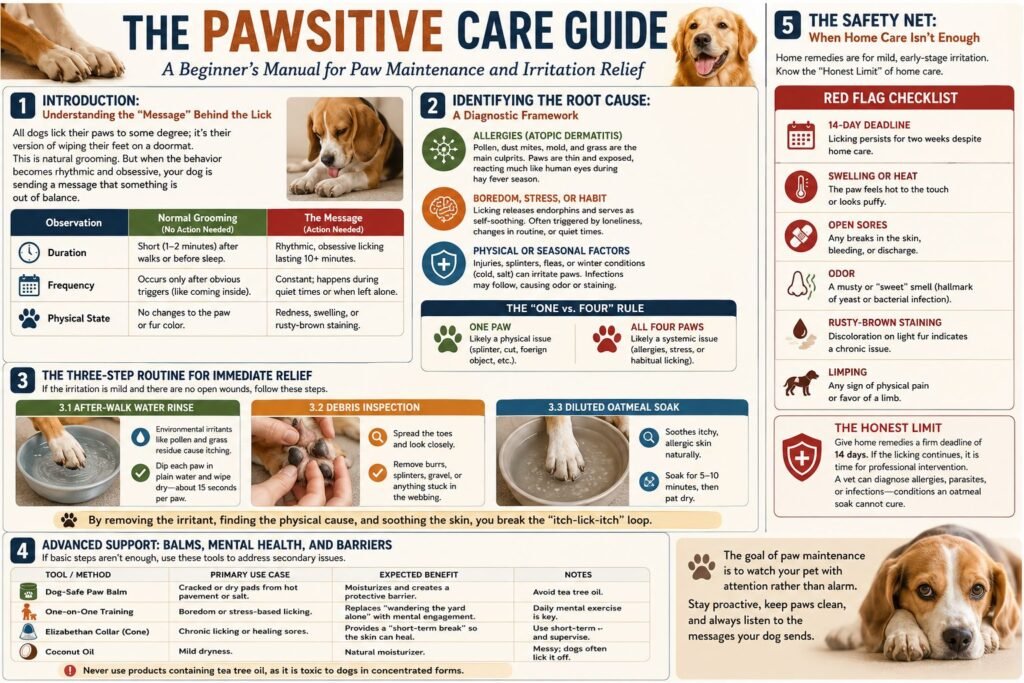
The first step in paw maintenance is distinguishing between routine hygiene and a cry for help. All dogs lick their paws to some degree; it is their version of wiping their feet on a doormat. We call this a “closing ritual”—a brief cleaning after a walk or before a nap. However, when the behavior shifts into a methodical, rhythmic habit, your dog is sending you a message that they are uncomfortable.
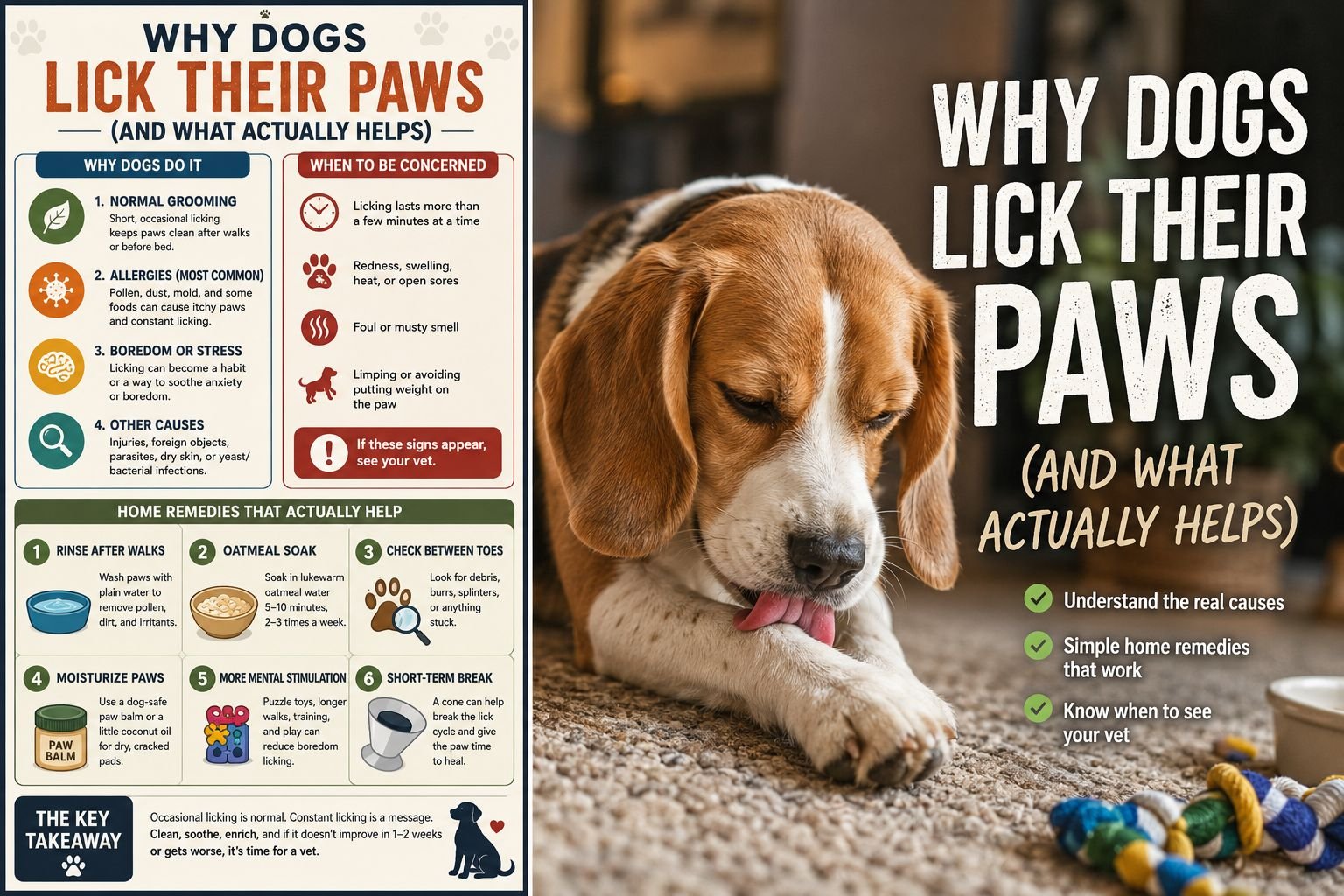
The table below highlights the key differences to help you determine if your dog is simply grooming or signaling a problem:
| Observation | Meaning & Action |
|---|---|
| Duration: Short (1–2 minutes) after walks or before sleep. | Normal Grooming: A natural hygiene ritual; no action needed. |
| Duration: Rhythmic, obsessive licking lasting 10+ minutes. | The Message: A sign of underlying irritation or stress. |
| Frequency: Occurs only after obvious triggers (like coming inside). | Normal Grooming: Low-level maintenance behavior. |
| Frequency: Constant; happens during quiet times or when left alone. | The Message: Behavioral habit or chronic physical discomfort. |
| Physical State: No changes to the paw or fur color. | Healthy Baseline: The skin is intact and comfortable. |
| Physical State: Redness, swelling, or rusty-brown staining. | Chronic Irritation: Saliva reactions or infection are present. |
Once you recognize that the licking has become obsessive, you can begin the process of identifying the underlying cause.
2. Identifying the Root Cause: A Diagnostic Framework
To help your pet, you must think like a detective. Irritation usually falls into one of three primary categories:
- Allergies (Atopic Dermatitis): This is the most common trigger for chronic licking. Environmental factors like pollen, dust mites, mold, and grass are the main culprits. Because the skin on the paws is thin and exposed, it reacts to these irritants much like human eyes water during hay fever season.
- Boredom, Stress, or Habit: Licking releases endorphins and serves as a form of self-soothing. If a dog is left alone frequently or experiences a major life change, they may lick their paws to fill the silence or manage anxiety. This often manifests in “specific situations,” such as when the house gets quiet or when you leave for work.
- Physical or Seasonal Factors: This includes external injuries (splinters, cuts), parasites like fleas, or “winter paws” caused by cold air and sidewalk salt. Physical causes can also lead to secondary yeast or bacterial infections, which produce a distinct musty, slightly sweet smell.
The “One vs. Four” Rule
A simple way to narrow down the cause is to count the affected paws:
- One Paw: If your dog is focused on a single, specific paw, you are likely looking at a physical issue like a splinter, a cut, or a foreign object stuck between the toes.
- All Four Paws: If the licking involves all feet, it is typically a sign of a systemic issue, such as seasonal allergies or a deep-seated behavioral habit.
Understanding whether the issue is localized or systemic allows you to choose the most effective physical action.
3. The Three-Step Routine for Immediate Relief
If the irritation is mild and there are no open wounds, these home-based preventative steps can significantly reduce discomfort.
3.1 The After-Walk Water Rinse
Environmental irritants like pollen and grass residue sit on the paws and cause itching long after the walk is over.
- Action: Keep a shallow bowl of plain water by the door.
- Process: Dip each paw and wipe it dry. Spend roughly 15 seconds per paw. This simple step removes the “trigger” before it can cause a reaction.
3.2 The Debris Inspection
Sometimes the solution is hiding in plain sight.
- Action: Physically spread your dog’s toes and inspect the webbing.
- Process: Look for hidden culprits like burrs, small bits of gravel, or splinters. These cause focused irritation that no amount of licking will fix.
3.3 The Diluted Oatmeal Soak
Plain oatmeal has natural anti-itch properties that soothe allergic skin.
Items Needed:
- [ ] 1 cup of plain, unflavored oatmeal (the “boring” kind).
- [ ] A blender or food processor.
- [ ] A bowl or tub of lukewarm water.
- [ ] Warning: Avoid “instant” packets with sugar or scents; these can aggravate yeast infections and attract more licking.
Application Instructions:
- Grind the oatmeal into a fine powder and stir it into lukewarm water until cloudy.
- Have your dog stand in the soak for 5 to 10 minutes.
- Gently pat the paws dry.
- Repeat a few times a week to soothe skin without drying it out.
By removing the irritant (Step 1), finding the physical cause (Step 2), and soothing the skin (Step 3), you are physically breaking the “itch-lick-itch” loop where licking causes more irritation, which in turn leads to more licking.
4. Advanced Support: Balms, Mental Health, and Barriers
If the basic routine isn’t enough, you may need to address specific secondary issues like dryness or the behavioral cycle.
Remedy Toolbox
| Tool / Method | Primary Use Case | Expected Benefit |
|---|---|---|
| Dog-Safe Paw Balm | Cracked or dry pads from hot pavement or salt. | Moisturizes and creates a protective barrier. Avoid tea tree oil. |
| One-on-One Training | Boredom or stress-based licking. | Replaces “wandering the yard alone” with mental engagement to stop the habit. |
| Elizabethan Collar (Cone) | Chronic licking or healing sores. | Provides a “short-term break” so the skin can heal without interference. |
| Coconut Oil | Mild dryness. | A natural moisturizer, but be warned: it is messy and dogs often lick it straight off. |
Note: Never use products containing tea tree oil, as it is toxic to dogs in concentrated forms.
While home care is a powerful tool for maintenance, you must always be aware of the boundaries of DIY treatment.
5. The Safety Net: When Home Care Isn’t Enough
Home remedies are designed for mild, early-stage irritation. It is vital to recognize the “Honest Limit” of home care. If your dog’s condition does not improve, your efforts haven’t “failed”—you have simply gathered valuable data for your veterinarian.
Red Flag Checklist
If you notice any of the following, stop home treatment and consult a professional:
- 14-Day Deadline: Licking persists for two weeks despite your home care routine.
- Swelling or Heat: The paw feels hot to the touch or looks puffy.
- Open Sores: Any breaks in the skin, bleeding, or discharge.
- Odor: A musty or “sweet” smell (the hallmark of a yeast or bacterial infection).
- Rusty-Brown Staining: Discoloration on light fur, which indicates a chronic, long-term issue.
- Limping: Any sign of physical pain or favor of a limb.
The Honest Limit
Give home remedies a firm deadline of 14 days. If the licking continues past this point, it is time for professional intervention. A vet can perform tests to distinguish between allergies, parasites, or infections—conditions an oatmeal soak cannot cure.
The goal of paw maintenance is to watch your pet with attention rather than alarm. By staying proactive with rinses and inspections, you ensure that your dog stays comfortable and that their “messages” are always heard.