

The Ghost Market: Why Spy Agencies Are Buying Stolen Passports
By Saad
The Ghost Market: Why Spy Agencies Are Buying Stolen Passports
We treat passports like valuable things when we travel.
We hide them in belts check our pockets really carefully at airport security and feel really relieved when they are safely locked in a hotel safe.
To us that little book with paper and special chips is a ticket to a vacation, a business trip or a journey home.
Behind the scenes of spying, crime and war your passport isn’t just an ID card.
It’s a tool for countries.
When a passport goes missing it doesn’t just vanish.
It gets recorded, sold, traded, changed or copied.
It enters what people in the know call The Lost Passports Ledger—a secret network where identity is super valuable.
In an era with lots of surveillance, tracking and computers the secret trade in travel documents hasn’t stopped.
In fact it has become a high-stakes game, between spies and enemy countries.
Here is the story of what happens when a country loses control of its documents and the hidden realities of passport theft.
1. The Geometry of the Ghost Market: High-Value vs. Low-Value Paper
To understand how the Ledger works, you have to throw out the idea that all stolen passports are used the same way. The black market for travel documents is as strictly tiered as a corporate ladder, divided cleanly by utility, nationality, and biometric integrity.
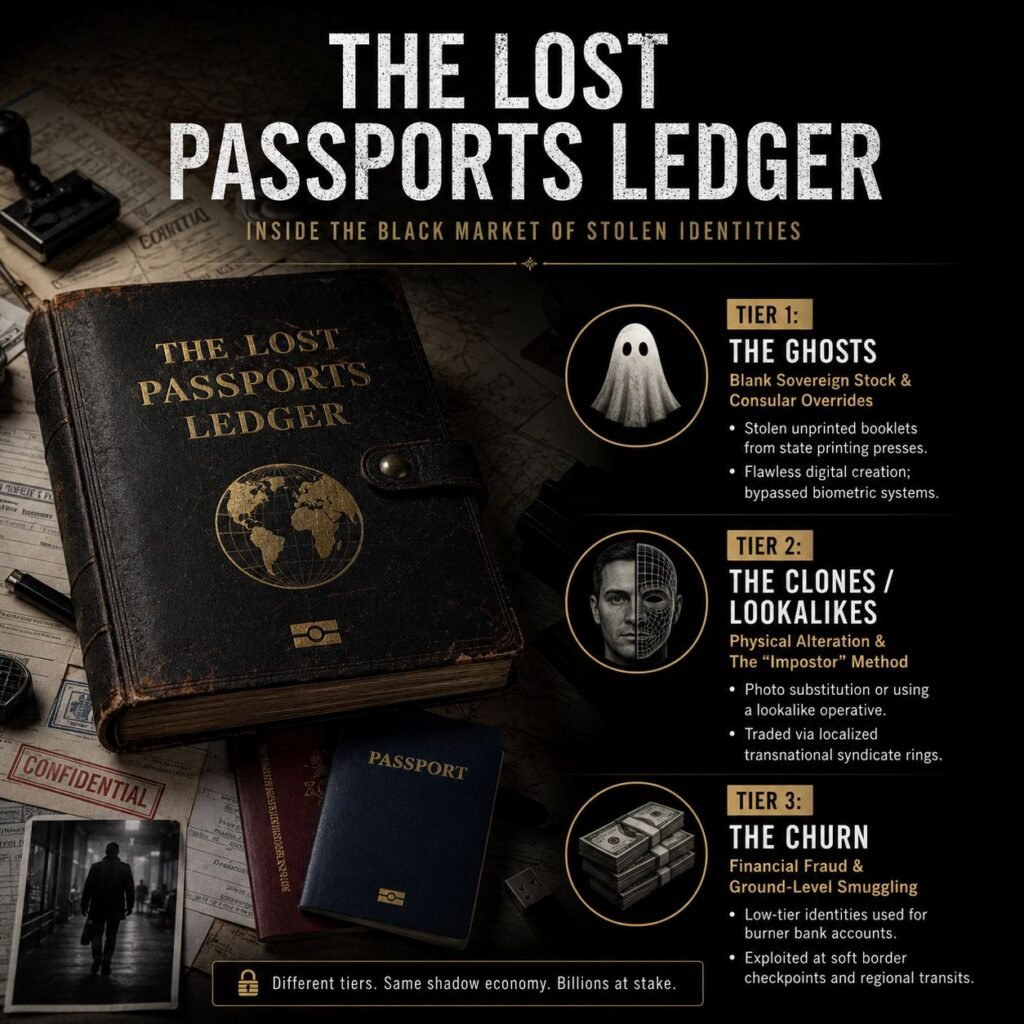
Tier 1: The Sovereign Holy Grail (Blank Booklets)
The absolute gold standard in the ledger isn’t a stolen passport taken from a tourist’s backpack in Barcelona. It is blank sovereign stock—unprinted, unassigned passport booklets stolen directly from state printing facilities or secure consular shipments.
When a hostile intelligence agency or an elite criminal syndicate gets their hands on blank stock, they aren’t just forging a document; they are legitimately manufacturing a real passport with fake information. They have the real paper, the real UV-reactive threads, and the genuine watermarks. All they need is a rogue or cloned cryptographic key to program the embedded RFID chip, and they can create a “Ghost”—an operative with a completely flawless, un-trackable background who can sail through automatic e-gates anywhere in the world.
Tier 2: The Lookalike and the “Photo-Sub”
For lower-tier syndicates, the process involves modifying an already-issued passport.
- The Lookalike Method: A passport from a high-mobility country (like Germany, Singapore, or the US) is stolen or bought from a desperate traveler. The criminal organization then finds an operative who bears a striking physical resemblance to the original owner.
- The Photo-Substitution (“Photo-Sub”): Highly skilled document doctors split the laminated pages of a passport using specialized chemicals, peel back the security overlays, swap out the original photo for the buyer’s photo, and re-seal it using counterfeit laminates.
Tier 3: The Financial Churn
Not all stolen passports are used to cross borders. Thousands of low-mobility or flagged passports are fed into localized syndicates every day to serve as secondary IDs. They are used to set up synthetic identities, open shell bank accounts, register burner corporations, or buy dark-web servers. In the ledger, every shred of sovereign paper has a price tag.
2. The Geopolitical Chessboard: State-Sponsored Theft Operations
While street-level thieves steal bags for quick cash, foreign intelligence agencies view passport theft as a structured, state-sanctioned procurement strategy. For nations operating under heavy international sanctions or engaged in asymmetric gray-zone conflicts—such as Russia, Iran, and North Korea—the acquisition of foreign travel documents is a matter of national security.
The Consular Raid and the Gray-Zone Intercept
Historically, state actors have gone to extreme lengths to secure foreign identities. During the Cold War, the Soviet KGB ran dedicated units to harvest Western passports from sympathetic tourists or through targeted burglaries of diplomatic personnel.
In the modern geopolitical landscape, this has evolved into targeted cyber-physical operations. State-sponsored hacking groups breach the servers of global hotel chains, car rental agencies, and airlines to scrape high-resolution scans of data pages and biometric records. If an intelligence agency wants to build a deep-cover legend for an operative, they don’t just guess an identity; they extract a real, active passport number belonging to an unsuspecting citizen who rarely travels internationally, ensuring the duplicate doesn’t trigger immediate alarms on global tracking networks.
The Passport Factory Towns
In certain politically unstable or deeply corrupt regions of the world, sovereign passport facilities have essentially been co-opted by state-aligned criminal enterprises. For years, Western intelligence agencies have flagged specific embassies in weak states where diplomats, strapped for hard currency, quietly sell genuine diplomatic passports under the table to non-citizens, including arms dealers, sanctioned oligarchs, and cartel leaders. When a state begins selling its own sovereignty for cash, the very architecture of global border control begins to fracture.
3. The Digital Backline: Interpol’s SLTD and the Cryptographic War
To counter the tidal wave of document fraud, the international community relies on a massive, real-time defensive shield: Interpol’s Stolen and Lost Travel Documents (SLTD) database.
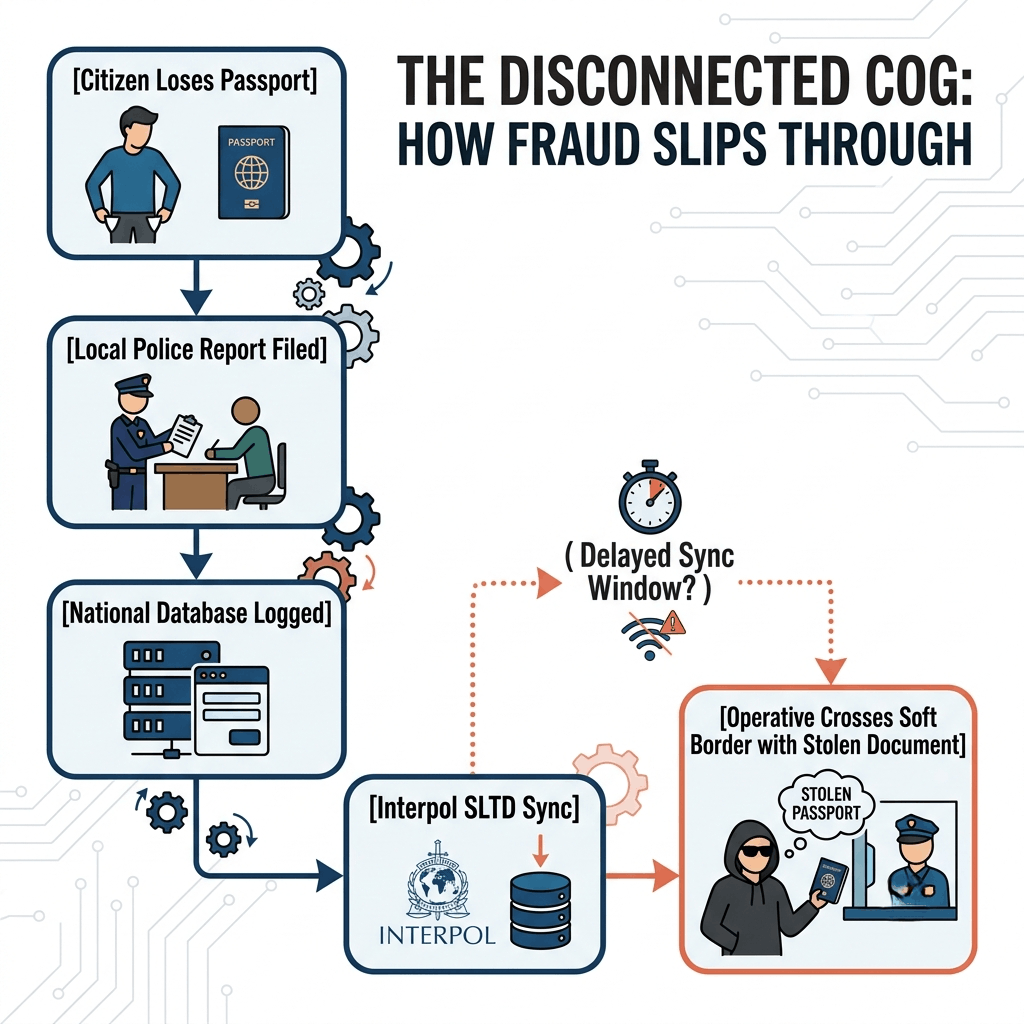
Established in the wake of the September 11 attacks, the SLTD database is a global clearinghouse that allows border control officers, airlines, and maritime authorities to check within seconds whether a presented passport has been flagged as lost, stolen, or revoked. As of 2026, the database holds over 100 million records contributed by more than 180 countries.
It sounds foolproof, but the reality on the ground is riddled with systemic vulnerabilities:
- The Latency Gap: The SLTD database is only as good as the speed at which individual nations upload their data. If a tourist has their passport lifted in a chaotic transit hub like Bangkok or Rome, it can take hours, days, or even weeks for that local police report to scale up to national police networks and finally sync with Interpol. In that narrow window of latency, an experienced courier can cross multiple regional borders before the document goes “red” in the system.
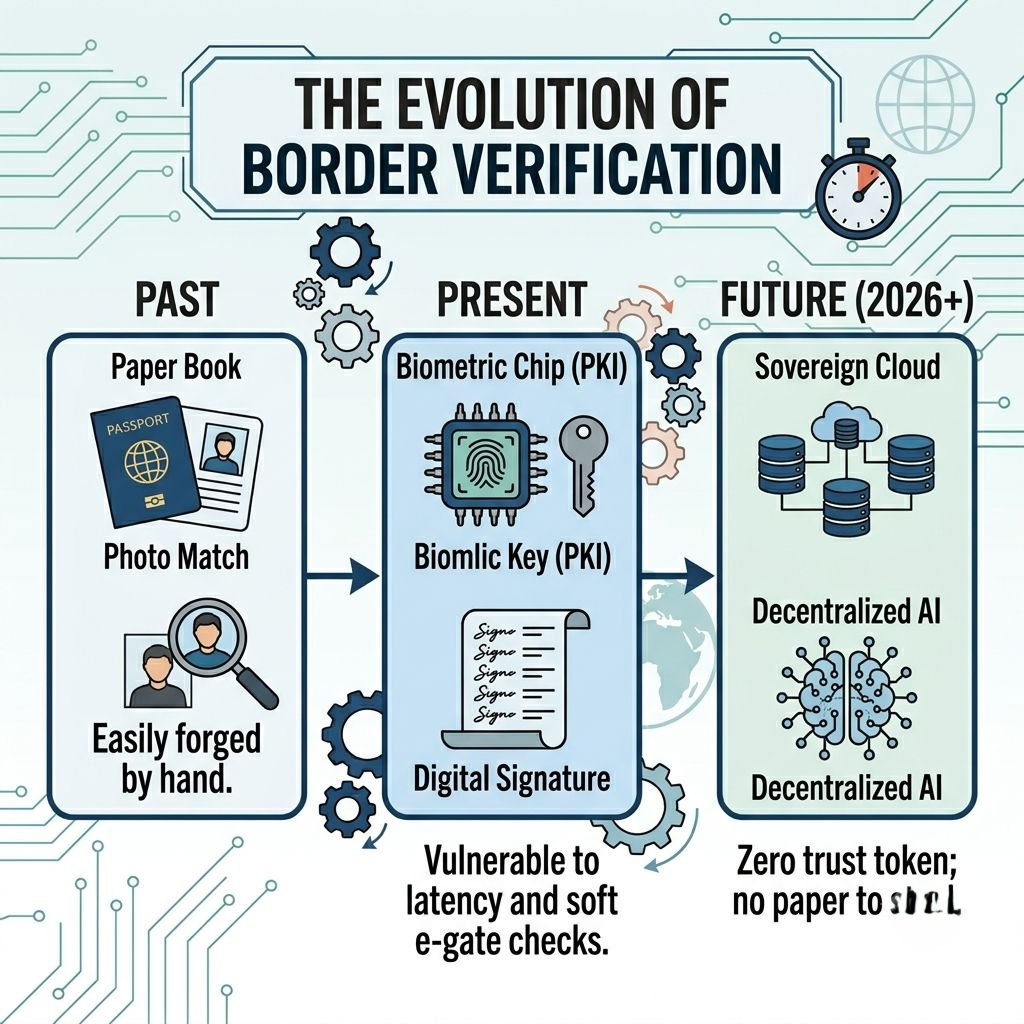
- The Cryptographic Bypasses: Modern passports feature an embedded electronic chip containing the holder’s biometric data, protected by a country-specific Public Key Infrastructure (PKI) signature. When you scan your passport at an e-gate, the machine checks if the digital signature matches the issuing government’s official cryptographic key. However, many smaller or underfunded border checkpoints worldwide fail to properly maintain up-to-date PKI master lists. They fall back on a “soft check”—reading the printed optical data page while failing to cryptographically verify the chip, opening a massive backdoor for sophisticated forgeries.
4. The Human Toll and “Identity Colonialism”
When we look at document theft through a macro-geopolitical lens, it’s easy to forget that every entry in the Lost Passports Ledger belongs to a real person. For the average citizen, losing a passport is a logistical nightmare; for a victim of targeted identity cloning by state actors, it can be life-ruining.
The Weaponization of the Innocent
When an operative uses your stolen identity to conduct espionage, launder money, or facilitate illicit arms transfers, your name goes onto international watchlists. Travelers have flown into foreign airports only to be swarmed by tactical police units because a cloned version of their passport was used by a transnational criminal group across the world three days prior. Trying to prove to a foreign intelligence apparatus that you were actually asleep in your suburban home while “you” were opening a shell bank account in Nicosia is an agonizing, uphill legal battle.
Identity Colonialism
There is a stark, uncomfortable power dynamic inherent in the passport trade. Passports from Tier 1 Western countries or powerful Asian hubs (like Japan or South Korea) command astronomical prices on the black market because they grant visa-free entry to the vast majority of the globe. Criminal syndicates and hostile states systematically harvest paper from these privileged nations to bypass the stringent visa filters imposed on citizens of developing countries. It is a form of structural exploitation—where the global mobility of a wealthy nation’s citizen is stolen and commodified to shield the movements of illicit actors.
5. The Future of Sovereignty: Biometrics, AI, and the Post-Paper Era
As we march deeper into the late 2020s, the traditional paper passport is facing an existential crisis. The integration of advanced artificial intelligence and decentralized identity frameworks is fundamentally altering how borders function, turning the physical document into a relic of a simpler time.
The Rise of Digital Identity and Zero-Trust Borders
Governments are rapidly moving toward fully digitized, cloud-native travel credentials. Pilot programs across the European Union, Singapore, and Middle Eastern transit hubs are rolling out “paperless corridors” where a traveler’s identity is verified purely through facial recognition, iris scans, and biometric tokens anchored to secure sovereign servers.
When your face is your passport, there is no physical booklet to pickpocket, no laminate to alter with chemicals, and no blank stock to steal from a warehouse. The verification process shifts to a Zero-Trust architecture, where identity is dynamic and must be constantly authenticated against live state databases rather than a static piece of paper.
The AI Forgery Counter-Revolution
But as defenses harden, the attackers are evolving. The greatest threat to the next generation of identity security is the weaponization of generative AI and deepfake technology. Intelligence agencies are already experimenting with synthetic identity generation—using AI to blend the biometric traits of multiple real people into a single, synthetic face that can fool automated facial recognition algorithms while matching a stolen passport profile.
The war over the Lost Passports Ledger is shifting from physical workshops filled with scalpels and UV lamps to sovereign data centers where AI defense algorithms battle AI generation engines in real time.
The Verdict: The Lasting Power of Paper
Despite the rapid onset of the digital age, the physical passport remains one of the final, universally recognized symbols of a nation-state’s absolute authority over its people and its borders. Until every remote border crossing from the steppes of Central Asia to the tropical entry points of South America is equipped with high-speed satellite internet and biometric scanners, the physical booklet will endure.
And as long as that paper endures, the Lost Passports Ledger will remain open. The next time you hold your passport in your hands, take a closer look at the intricate engraving, the embedded thread, and the tiny chip inside. It’s not just a travel document. It is a piece of sovereign territory—and there is an entire shadow world waiting for you to drop it.